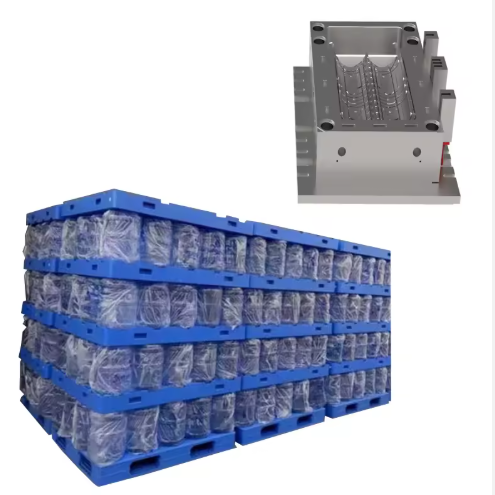
Understanding Water Rack Mold Requirements
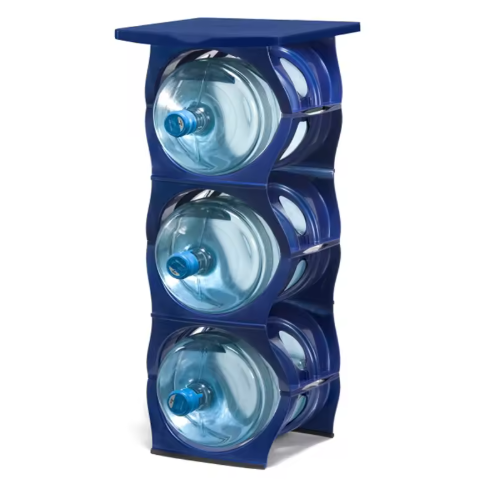
Water rack molds play a critical role in manufacturing storage solutions for various industries, from household organization to industrial facilities. These molds must withstand high-volume production cycles while maintaining dimensional accuracy and surface quality. The unique challenges of water rack molding include creating uniform wall thicknesses, ensuring proper cooling for efficient production, and designing for durability to handle the weight of water-filled containers.
The material selected for water rack molds must balance several key properties: sufficient hardness to resist wear during repeated injection cycles, good thermal conductivity for uniform cooling, and adequate toughness to prevent cracking under the stress of mold clamping and ejection. Additionally, the material must be compatible with common injection molding plastics used for water racks, typically polypropylene (PP) or polyethylene (PE), which require specific mold surface finishes to achieve the desired product texture and release characteristics.
Material Selection for Water Rack Molds
The optimal material for water rack molds combines durability, machinability, and cost-effectiveness. For this application, a medium carbon steel is employed, which provides an excellent balance of mechanical properties suitable for the demands of water rack production. This material offers the necessary hardness to maintain dimensional stability over thousands of molding cycles while remaining easy to machine into complex mold geometries.
The selected steel undergoes a carefully controlled heat treatment process to optimize its performance. The material is heated to 820-840°C for uniform austenitization, followed by oil quenching to achieve a hardness of 42-45 HRC in the mold cavity and core components. A subsequent tempering process at 550-580°C for 2-3 hours reduces internal stresses while maintaining the required hardness, resulting in a mold material with excellent wear resistance and toughness. This heat treatment regimen ensures the mold can withstand the thermal cycling and mechanical stresses of high-volume injection molding operations.
Injection Molding Parameters for Water Racks
Successful water rack production requires precise control of injection molding parameters to ensure part quality and mold longevity. The molding process begins with material drying to remove moisture, typically at 80-90°C for 2-3 hours, which prevents surface defects in the final product. The injection unit temperature profile should be set with a gradual increase from the rear (200-210°C) to the front (220-230°C) to ensure proper plasticization without material degradation.
Injection pressure is critical for filling the mold cavity completely while avoiding excessive stress on mold components. A first-stage pressure of 60-80 MPa followed by a holding pressure of 40-60 MPa is recommended, with a total injection time of 20-30 seconds depending on part complexity. The mold temperature should be maintained at 40-60°C using a closed-loop cooling system to ensure consistent part cooling and reduce cycle time.
Cycle time optimization is essential for efficient water rack production. A typical cycle ranges from 45-60 seconds, with cooling time accounting for 50-60% of the total cycle. Ejection should be synchronized to prevent part deformation, with a slow initial ejection speed of 2-3 mm/s increasing to 5-8 mm/s once the part is free from the cavity. These parameters ensure minimal stress on both the mold and the molded part, reducing scrap rates and extending mold life.
Mold Structure Design Considerations
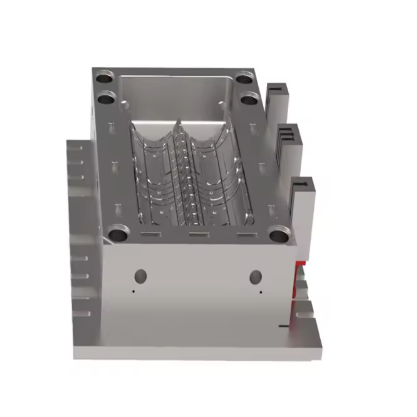
Water rack mold design must address several critical factors to ensure production efficiency and part quality. The mold base should be constructed with sufficient rigidity to prevent deflection during clamping, using standardized mold components where possible to reduce manufacturing costs. The cavity layout should optimize material flow and cooling, with multi-cavity designs incorporating balanced runner systems to ensure uniform filling.
Cooling system design is particularly important for water rack molds, as uniform cooling prevents warping and reduces cycle time. The mold should incorporate a network of cooling channels 8-12 mm in diameter, positioned 15-20 mm from the cavity surface. For complex geometries, conformal cooling channels may be employed to follow the part contour, ensuring consistent temperature distribution. The cooling system should maintain a temperature differential of no more than 5°C across the mold surface.
Ejection system design must accommodate the typically large surface area of water rack parts. A combination of ejector pins and stripper plates is recommended, with pins positioned to avoid visible marks on the finished product. The ejection stroke should be sufficient to clear the part from all undercuts, with a safety factor of 10-15% added to the calculated required stroke.
Industry Standards and Quality Control
Water rack molds must adhere to strict industry standards to ensure consistent production and product performance. The mold should be designed and manufactured in accordance with ISO 9001 quality management principles, with critical dimensions controlled to ±0.02 mm. Surface finish requirements typically specify a Ra value of 0.8-1.6 μm for cavity surfaces to achieve the desired part texture and release characteristics.
Mold testing and validation are essential before full production. A comprehensive mold tryout should verify: dimensional accuracy of molded parts, absence of surface defects, proper cooling efficiency, and ejection performance. The mold should produce parts that meet all specified requirements for at least 500 consecutive cycles before being approved for production.
Regular maintenance is required to ensure mold longevity and consistent part quality. A preventive maintenance schedule should include: cleaning of cooling channels every 5000 cycles, inspection of guide pins and bushings for wear, and verification of cavity dimensions. Any repairs or modifications should be documented and tracked to maintain quality control records.
Advanced Techniques for Water Rack Mold Optimization
Incorporating advanced manufacturing techniques can significantly improve water rack mold performance and longevity. Computer-aided engineering (CAE) tools should be used during the design phase to simulate mold filling, cooling, and warpage, allowing for optimization before mold fabrication. This reduces the need for costly modifications and shortens the development cycle.
For high-volume production, hot runner systems offer significant advantages over cold runners, reducing material waste by up to 30% and improving part consistency. The hot runner should be designed with balanced flow channels and properly sized nozzles to match the plastic material and part geometry.
Surface treatments can further enhance mold performance. A nitride coating with a thickness of 5-10 μm can increase surface hardness to 65-70 HRC, significantly improving wear resistance. For molds producing parts with critical aesthetic requirements, a polished mirror finish (Ra 0.025-0.05 μm) may be specified, requiring specialized polishing techniques and equipment.
Troubleshooting Common Water Rack Mold Issues
Even with careful design and manufacturing, water rack molds may encounter production issues that require troubleshooting. Warpage is a common problem, typically caused by uneven cooling or excessive residual stress. This can be addressed by adjusting cooling channel layout, modifying packing pressure profiles, or optimizing mold temperature.
Flash formation at the parting line indicates either excessive clamping force, worn mold components, or misalignment. Regular inspection of mold closing tolerances and maintenance of guide pins and bushings can prevent this issue. If flash occurs, checking for worn cavity inserts or adjusting the clamping force may be necessary.
Poor surface finish on molded parts can result from several factors, including inadequate mold temperature, material contamination, or surface degradation of the mold cavity. Maintaining proper mold cooling, using filtered and dried raw materials, and implementing regular mold cleaning procedures will help ensure consistent part quality.
Conclusion
The successful design and manufacture of water rack molds require a comprehensive approach that balances material selection, heat treatment, injection molding parameters, and structural design. By following the guidelines outlined in this guide, manufacturers can produce molds that deliver consistent part quality, maximize production efficiency, and achieve extended service life.
Continuous improvement through monitoring and optimization is essential for maintaining competitiveness in the water rack market. Implementing preventive maintenance programs, staying current with industry standards, and leveraging advanced manufacturing technologies will ensure that water rack molds meet the evolving demands of production volume, part complexity, and quality requirements.
By integrating these principles into mold design and manufacturing processes, producers can achieve reliable, cost-effective water rack production that meets the needs of both manufacturers and end-users, while ensuring long-term mold performance and return on investment.
Water Rack Mold – FAQ
1. What is a Water Rack Mold used for?
A Water Rack Mold is used to produce water racks for drainage, storage, or water management systems.
2. What materials can the Water Rack Mold support?
It is suitable for FRP, SMC, BMC, plastic, and other composite or polymer materials.
3. Can the Water Rack Mold be customized?
Yes, the Water Rack Mold can be customized in size, structure, cavity number, and surface finish.
4. What molding processes are available?
Common processes include compression molding, injection molding, and resin transfer molding.
5. What is the mold material?
The Water Rack Mold is typically made from high-quality steel or aluminum for durability and precision.
6. What is the mold service life?
With proper maintenance, the Water Rack Mold can support long-term, high-volume production.
7. Do you provide sample testing before delivery?
Yes, trial molding and sample inspection are available before final shipment.