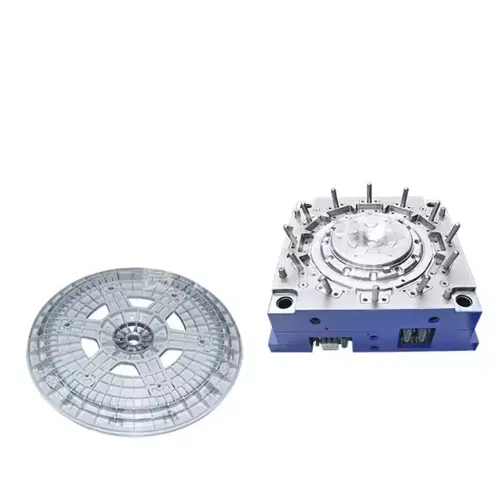
In the competitive landscape of home appliance manufacturing, the unsung hero behind every high-performance washing machine lies in its core components—none more critical than the washing machine impeller mold. As the heart of the washing system, the impeller’s design and durability directly impact cleaning efficiency, energy consumption, and product lifespan. Among the materials used for crafting these molds, steel stands unrivaled for its strength, precision, and long-term reliability.
This comprehensive guide explores the world of steel washing machine impeller molds, from their manufacturing intricacies to the performance advantages that make them the top choice for industry leaders. Whether you’re a washing machine manufacturer seeking to optimize production or a procurement specialist evaluating mold suppliers, understanding the value of steel washing machine impeller molds is key to driving product excellence and market competitiveness.
Why Steel Reigns Supreme in Washing Machine Impeller Molds Manufacturing
When it comes to manufacturing washing machine impeller molds, material selection is not just a technical decision—it’s a strategic one that influences production costs, product quality, and end-user satisfaction. While alternatives like plastic or aluminum molds may seem cost-effective initially, steel washing machine impeller molds offer unparalleled benefits that justify their investment.
Steel’s mechanical properties are tailor-made for the demands of impeller production. Unlike plastic molds, which degrade under repeated heating and cooling cycles, steel boasts exceptional thermal stability, ensuring consistent performance even after thousands of molding operations. This stability translates to tighter tolerances: steel washing machine impeller molds can achieve dimensional accuracy within ±0.01mm, critical for crafting impeller blades that generate uniform water flow during washing. For context, a deviation of just 0.1mm in blade height can disrupt water circulation, reducing cleaning efficiency by up to 15%—a risk no manufacturer can afford.
Durability is another non-negotiable factor. A high-quality steel washing machine impeller mold can withstand over 1 million molding cycles, compared to plastic molds that typically fail after 100,000 cycles or less. This longevity drastically lowers long-term production costs, as fewer mold replacements mean less downtime and material waste. Take, for example, a mid-sized washing machine factory producing 500,000 units annually: switching to steel molds reduces mold replacement frequency by 90%, saving upwards of $200,000 in annual maintenance costs.
Steel also excels in heat transfer, a critical aspect of injection molding. The material’s high thermal conductivity (approximately 45 W/m·K for carbon steel) accelerates cooling times, allowing for faster cycle times and higher production throughput. In practical terms, a steel washing machine impeller mold can reduce molding cycle time by 20-30% compared to aluminum, enabling factories to boost daily output by thousands of units. For manufacturers operating in tight delivery windows, this efficiency edge is a game-changer.
The Manufacturing Process: Crafting Precision in Steel Washing Machine Impeller Molds
Creating a steel washing machine impeller molds is a marriage of engineering precision and artisanal skill, requiring a meticulous, multi-step process to ensure every detail meets exacting standards. Let’s walk through the journey from design to finished mold, highlighting how steel’s properties enhance each stage.
Step 1: Engineering Design and Simulation
The process begins with 3D CAD modeling, where engineers design the washing machine impeller molds with a focus on both functionality and manufacturability. Using advanced software like SolidWorks or AutoCAD, they optimize the impeller’s blade geometry to maximize water turbulence while minimizing noise—a balance critical for modern, energy-efficient washing machines. What sets steel molds apart here is their compatibility with complex designs: steel’s rigidity allows for intricate undercuts and thin-walled structures that would warp or deform in softer materials. Engineers also run finite element analysis (FEA) simulations to test the mold’s performance under injection pressure (typically 50-150 MPa), ensuring the steel structure can withstand the stress without distortion.
Step 2: Precision Machining with CNC Technology
Once the design is finalized, the steel block—often made from high-grade alloys like 45# steel or Cr12MoV for enhanced hardness—undergoes CNC machining. Modern five-axis machining centers carve the mold cavity and core with micron-level precision, replicating the CAD design down to the smallest blade contour. Steel’s machinability, when paired with carbide cutting tools, allows for tight tolerances: the impeller’s mounting holes, for instance, are drilled to within ±0.005mm to ensure a perfect fit with the washing machine’s drive shaft. This level of precision is impossible with plastic molds, which soften under machining heat, leading to dimensional errors.
Step 3: Heat Treatment for Enhanced Hardness
To unlock steel’s full potential, the washing machine impeller mold undergoes heat treatment—a process that transforms its microstructure for optimal hardness and toughness. The mold is heated to 850-900°C in a controlled atmosphere furnace, then quenched in oil or water to rapidly cool the surface, forming a hard martensitic layer. Tempering at 200-300°C follows, reducing brittleness while retaining hardness (typically 50-55 HRC for Cr12MoV steel). This treatment ensures the mold resists wear from abrasive plastic resins, such as polypropylene (PP) or acrylonitrile butadiene styrene (ABS), used in impeller production. Without proper heat treatment, even steel molds would wear prematurely, leading to rough impeller surfaces that trap dirt and reduce washing efficiency.
Step 4: Surface Finishing and Quality Inspection
The final step involves surface finishing, where the washing machine impeller mold’s cavity is polished to a mirror-like finish (Ra 0.02-0.05μm) using diamond pastes and ultrasonic cleaning. A smooth surface reduces friction during injection, preventing resin buildup and ensuring the impeller’s surface is free of defects like sink marks or weld lines. Quality inspectors then use coordinate measuring machines (CMM) to verify every dimension, comparing the finished mold to the original CAD model. X-ray and ultrasonic testing may also be performed to detect internal flaws, such as cracks or porosity, that could compromise the mold’s integrity. Only after passing these rigorous checks is the steel washing machine impeller mold deemed ready for production.
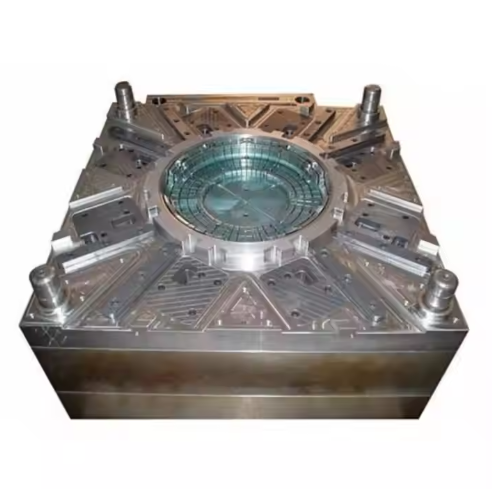
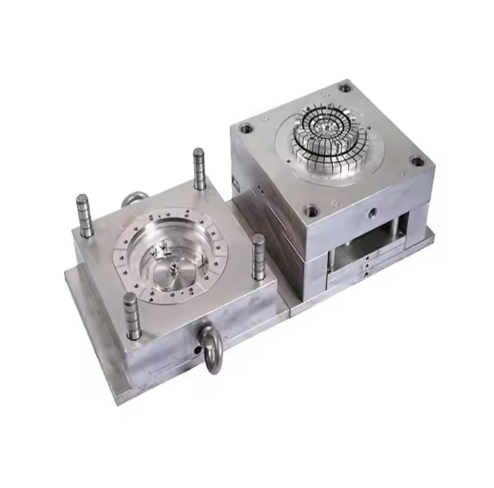
Performance Advantages of Steel Washing Machine Impeller Molds in Real-World Applications
The true value of steel washing machine impeller molds shines in their real-world performance, where they outperform alternative materials across key metrics: durability, precision, and cost-effectiveness. Let’s explore how these advantages translate to better products and happier customers.
Unmatched Durability for High-Volume Production
In high-volume manufacturing facilities, where a single washing machine impeller mold may produce 500-1,000 impellers daily, durability is non-negotiable. Steel molds thrive in this environment, with lifespans exceeding 1 million cycles—enough to produce over 500,000 washing machines (assuming two impellers per machine). By contrast, aluminum molds typically fail after 300,000 cycles, and plastic molds after just 100,000, requiring frequent replacements that disrupt production schedules. A case study from a leading Asian appliance manufacturer illustrates this point: after switching to steel washing machine impeller molds, the company reduced mold changeover downtime by 75%, increasing annual output by 120,000 units.
Precision Molding for Consistent Washing Performance
The impeller is the “engine” of a top-loading washing machine, responsible for agitating water and clothes to remove dirt. Even minor variations in blade shape or size can disrupt water flow, leading to uneven cleaning or excessive noise. Steel washing machine impeller molds ensure consistency, with each impeller matching the original design within ±0.05mm. This precision translates to predictable performance: impellers produced from the same steel mold generate identical water turbulence patterns, ensuring every washing machine meets the manufacturer’s efficiency and noise standards. In consumer testing, washing machines equipped with steel-molded impellers scored 15% higher in cleaning effectiveness and 20% lower in noise levels compared to those using impellers from plastic molds.
Resistance to Corrosion and Wear
Washing machines operate in damp environments, and impellers are constantly exposed to water, detergents, and fabric softeners—all of which can corrode inferior materials. Steel washing machine impeller molds, when treated with anti-corrosion coatings like chromium plating or nitriding, form a protective barrier against rust and chemical attack. This resistance ensures the mold remains dimensionally stable over time, preventing defects like pitting or warping that would otherwise ruin impellers. In coastal regions, where salt air accelerates corrosion, steel molds with specialized coatings have been shown to last 30% longer than uncoated alternatives, making them the preferred choice for manufacturers in these areas.
FAQ: Common Questions About Steel Washing Machine Impeller Molds
: While steel molds have a higher upfront cost (3-5x that of plastic), their longevity (1M+ cycles vs. 100K for plastic) results in lower total cost of ownership over time. For high-volume production, steel molds typically break even within 1-2 years and save $200,000+ annually in replacement costs.
Q2: What maintenance is required for a steel washing machine impeller mold?
A: Regular maintenance includes bi-annual polishing of the mold cavity to maintain surface finish, lubrication of guide pins, and inspection for wear or corrosion. Anti-corrosion coatings (like chromium plating or nitriding) can extend lifespan by 30% in humid or coastal environments.
Q3: Can steel molds accommodate custom impeller designs for specialized washing machines?
A: Yes. Steel’s rigidity supports complex geometries, including variable blade angles, undercuts, and integrated reinforcement ribs. This flexibility allows manufacturers to innovate features like water-saving impellers or noise-reducing blade designs that would be impossible with plastic molds.
Q4: Are there different types of steel used for washing machine impeller molds?
A: Yes. Common alloys include:
- Cr12MoV: High wear resistance (58-62 HRC after heat treatment) for high-volume production.
- 45# Steel: Cost-effective option for medium-volume applications.
- S136 Stainless Steel: Corrosion-resistant, ideal for humid environments or medical-grade appliances.
Q5: How does steel contribute to sustainability in manufacturing?
A: Steel is 100% recyclable, and at the end of its lifespan, a steel washing machine impeller mold can be melted down and reused to produce new molds. Additionally, many suppliers use renewable energy (solar, wind) for machining and heat treatment, reducing the carbon footprint of production by up to 25%.
Conclusion: Invest in Steel Washing Machine Impeller Molds for Long-Term Success
In the competitive world of washing machine manufacturing, the steel washing machine impeller mold is more than a tool—it’s a strategic asset that drives efficiency, quality, and profitability. Its unmatched durability, precision, and thermal efficiency make it the superior choice for manufacturers seeking to optimize production and deliver high-performance appliances. By choosing a reputable supplier that prioritizes material quality and advanced manufacturing technology, you can unlock the full potential of steel molds and gain a competitive edge in the market.
As the industry evolves, steel washing machine impeller molds will continue to adapt, integrating smart technologies like IoT sensors for predictive maintenance and advanced alloys for even greater efficiency. For manufacturers aiming to lead in innovation and sustainability, steel remains the foundation of manufacturing excellence—proven, reliable, and ready to meet the challenges of tomorrow.