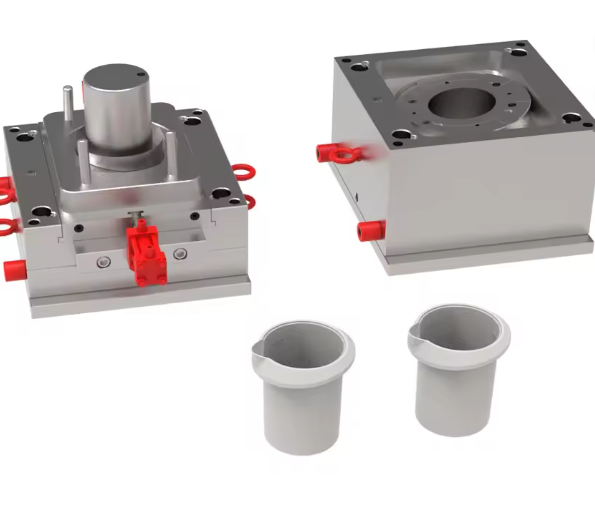
The vacuum insulated cup liner mold represents a specialized category of tooling requiring exceptional precision to achieve the thermal performance and durability demanded by modern beverage containers. This technical guide focuses exclusively on vacuum insulated cup liner mold solutions, addressing the unique material challenges presented by stainless steel forming, surface finish requirements, and thermal insulation performance. The following content provides comprehensive guidelines for vacuum insulated cup liner mold design, material selection, and manufacturing processes to ensure optimal performance and longevity.
Material Selection for Mold
Mirror Finish Stainless Steel S136 for Vacuum Insulated Cup Liner Mold
Application Scenario: Primary cavity material for vacuum insulated cup liner mold requiring superior surface finish and corrosion resistance.
Performance Parameters:
- Hardness: 48-52 HRC after heat treatment
- Surface finish capability:可达 Ra 0.01 μm (SPI#5 diamond finish)
- Corrosion resistance: Passes ASTM B117 500-hour salt spray test
- Polishing efficiency: 30% faster mirror finishing compared to conventional stainless steels
Heat Treatment: Solution annealing at 1050°C followed by triple tempering at 200-500°C.
Advantages for vacuum insulated cup liner mold: Excellent resistance to staining from beverages and cleaning agents; maintains mirror finish after 500,000+ molding cycles; complies with FDA 21 CFR 175.300 for food contact applications critical to vacuum insulated cup liner mold performance.
Premium ESR Steel STAVAX
Application Scenario: High-end vacuum insulated cup liner mold requiring ultra-smooth surfaces for enhanced thermal insulation.
Performance Parameters:
- Hardness: 50-52 HRC after optimized heat treatment
- Microcleanliness: ≤10 μm inclusion size (ASTM E45 Method A)
- Polishing performance: Superior Ra 0.01 μm finish with fewer polishing steps
- Wear resistance: 30% improvement over standard S136
Heat Treatment: Electro-slag remelting followed by 1050°C solution treatment and controlled cooling.
Advantages for vacuum insulated cup liner mold: Reduced polishing time by 40% for complex vacuum insulated cup liner mold geometries; minimizes micro-porosity that could compromise vacuum integrity; ideal for vacuum insulated cup liner mold with integrated drinking spouts and complex contours.
Hot Work Tool Steel H13 for Mold
Application Scenario: Mold components for thermally assisted forming processes in vacuum insulated cup liner mold and bottom dome shaping.
Performance Parameters:
- Hardness: 44-48 HRC after heat treatment
- Thermal conductivity: 42 W/m·K
- Hot tensile strength: 1100 MPa at 500°C
- Thermal fatigue resistance: 15,000+ cycles at 600°C temperature variation
Heat Treatment: 1020°C austenitizing, oil quenching, and triple tempering at 560°C.
Advantages for vacuum insulated cup liner mold: Maintains dimensional stability during high-temperature forming operations in vacuum insulated cup liner mold; withstands the thermal cycling involved in stainless steel liner fabrication; reduces die sticking during deep drawing processes in vacuum insulated cup liner mold.
Design and Manufacturing Considerations
Mold Geometry Requirements
- Dimensional tolerances: ±0.005mm for inner diameter; ±0.01mm for overall height
- Roundness specifications: ≤0.01mm total indicator reading (TIR) across entire liner height
- Surface finish progression: #800 → #1500 → #3000 grit sequence followed by diamond paste polishing
- Draft angles: 0.3-0.5° for straight sections; 1.0° for dome transitions
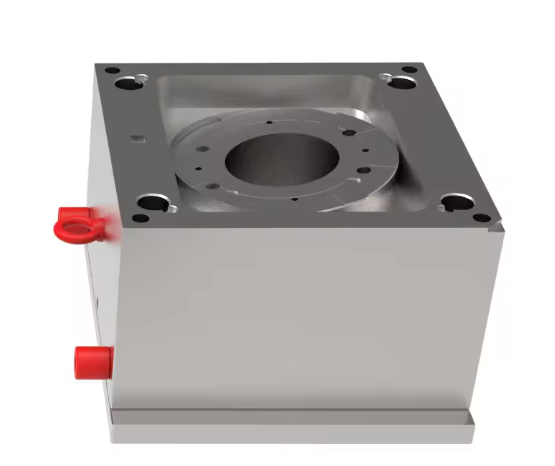
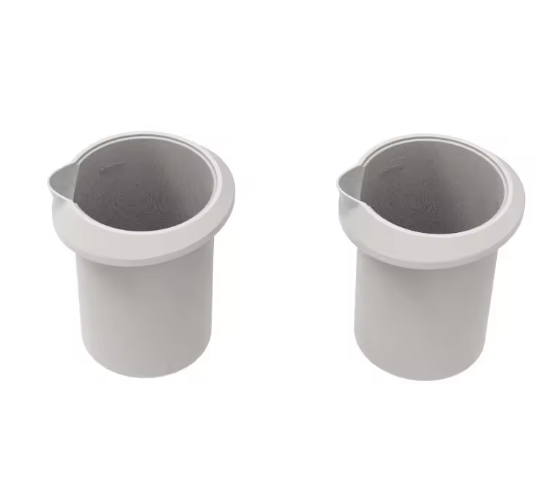
The mold requires these precise geometric controls to ensure proper fit between inner and outer liners, which is critical for maintaining vacuum integrity.
Cooling System Design
- Cooling configuration: Conformal cooling channels positioned 8-10mm from cavity surface with turbulent flow design
- Temperature control: ±2°C variation across the cavity surface
- Flow rate: 6-8 liters per minute per cooling circuit
- Heat transfer efficiency: 90% cooling effectiveness for optimal cycle time reduction
Effective cooling is particularly important in vacuum insulated cup liner mold to prevent thermal distortion during the forming process and ensure consistent wall thickness.
Vent System
- Micro-venting: 0.015-0.02mm depth at parting lines to prevent gas entrapment
- Vent location: Strategic placement at the bottom of deep draws and around complex features
- Vent maintenance: Design for easy cleaning to prevent debris buildup
Proper venting in mold is essential to prevent gas bubbles that could compromise the smooth surface finish required for optimal thermal performance.
Quality Control Standards
Dimensional Inspection for Mold
- Coordinate measuring: CMM with 0.001mm accuracy, measuring 20+ critical dimensions per cavity
- Surface finish verification: Laser profilometer scanning with 0.01μm resolution
- Form analysis: Roundness testing at three height positions (top, middle, bottom)
- Contour verification: 3D optical scanning comparing actual vs. nominal geometry
These rigorous inspection protocols ensure that each mold meets the exacting standards required for consistent performance.
Performance Validation for Mold
- Cycle life testing: Accelerated testing simulating 500,000 molding cycles
- Thermal cycling: -40°C to +120°C for 1000 cycles to verify dimensional stability
- Pressure testing: 1.5× operating pressure (up to 10 bar) for 1 hour to ensure vacuum integrity
- Corrosion testing: Exposure to coffee, tea, soda, and citrus solutions for 1000 hours
These validation procedures confirm that the mold will maintain performance throughout its intended service life.
Frequently Asked Questions
Q1: What makes vacuum insulated cup liner mold different from other beverage container molds?
A: The mold requires exceptional surface finish (Ra ≤0.01μm) and dimensional precision (±0.005mm) to ensure the vacuum seal between inner and outer liners. Unlike standard beverage container molds, vacuum insulated cup liner mold must also accommodate the thermal expansion characteristics of stainless steel during the forming process.
Q2: How does material selection impact vacuum insulated cup liner mold performance?
A: Material selection directly affects mold longevity and performance. Premium steels like STAVAX reduce polishing time by 40% for vacuum insulated cup liner mold, while H13 maintains dimensional stability during the high-temperature forming operations common in vacuum insulated cup liner mold manufacturing.
>>You may also like
Standards & References
The following industry standards are referenced in this article: