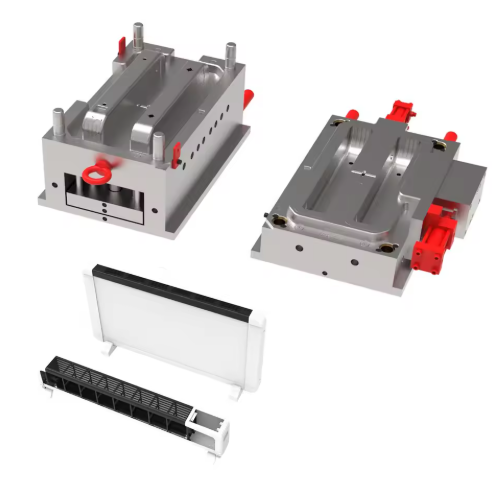
Vacuum cleaners represent a staple of modern household and commercial cleaning equipment, with global demand driving continuous innovation in design and performance. Central to producing these essential appliances are precision molds that shape their complex components, from ergonomic handles to intricate dust collection systems. Steel stands as the material of choice for vacuum cleaner molds, offering the unique combination of durability, precision, and cost-effectiveness required for high-volume production. This guide explores the specialized considerations in material selection, design principles, and manufacturing processes specific to vacuum cleaner molds, highlighting how steel molds enable the production of efficient, reliable cleaning equipment.
Material Selection for Vacuum Cleaner Molds: Balancing Performance and Economics
The selection of steel for vacuum cleaner molds requires careful evaluation of both technical requirements and production economics. Pre-hardened mold steel (typically 30-35 HRC) dominates the industry for mid-to-high volume production, offering:
- Excellent machinability for complex cavity geometries
- Superior polishability enabling Class A surface finishes (Ra ≤ 0.02 μm)
- Adequate wear resistance for 500,000+ molding cycles
- Cost-effectiveness compared to fully hardened steel grades
For premium vacuum cleaner models requiring optical-quality surfaces or extended production runs, corrosion-resistant stainless steel (such as S136 or STAVAX) provides enhanced performance:
- Exceptional resistance to mold fouling and corrosion
- Ability to maintain mirror finishes during extended production
- Reduced maintenance requirements for abrasive plastic compounds
- Compatibility with steam cleaning processes for mold sanitization
Material selection must also consider the specific plastic resins used in vacuum cleaner components. Glass-reinforced materials demand higher wear resistance, while soft-touch elastomers require specialized mold surfaces to prevent sticking. The optimal steel choice balances initial material cost against expected production volume, with higher-grade steels becoming economically viable for production runs exceeding 1 million units.
Precision Design Considerations for Complex Vacuum Cleaner Components
Vacuum cleaner mold design presents unique challenges due to the diverse range of component geometries:
- Ergonomic housing components require multi-axis sliding cores to form complex undercuts and grip textures
- Dust separation systems demand precise tolerances (±0.03mm) for airtight seals
- Motor housing components necessitate uniform wall thickness (±0.1mm) to prevent warping during cooling
- Filter housing molds incorporate fine features for filter retention and airflow management
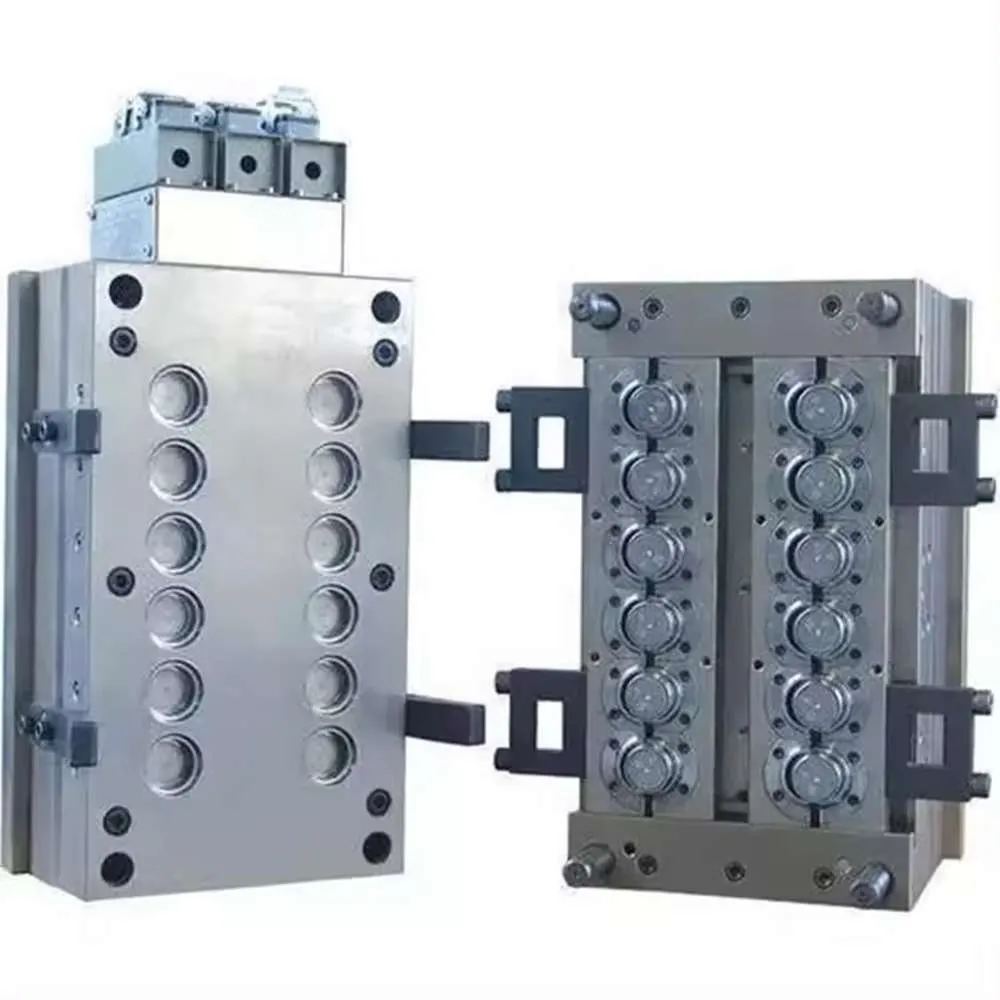
Multi-cavity optimization represents a critical design element, with molds typically featuring 2-4 cavities for large components and up to 16 cavities for smaller parts like wheels and buttons. The arrangement of cavities must ensure balanced filling and uniform cooling, with gate locations strategically positioned to minimize visible weld lines on aesthetic surfaces.
Cooling system design focuses on conformal cooling channels that follow the complex contours of vacuum cleaner housings. These channels, often produced using additive manufacturing or high-precision machining, reduce cycle times by 15-25% compared to conventional cooling layouts. For large components, sequential cooling circuits allow staged cooling to prevent residual stresses and dimensional distortion.
Advanced Manufacturing Processes for Vacuum Cleaner Molds
Producing vacuum cleaner molds demands state-of-the-art manufacturing technologies to achieve the required precision and surface quality:
- High-speed CNC milling with 5-axis capabilities creates complex 3D surfaces with ±0.01mm accuracy
- EDM (Electrical Discharge Machining) generates fine details and undercuts in hardened steel
- Laser texturing applies precise surface patterns (Ra 0.8-6.3μm) for grip enhancement and aesthetic appeal
- Diamond polishing achieves optical-quality finishes for visible surfaces and light guides
Rapid prototyping plays an increasingly important role in vacuum cleaner mold development, with 3D-printed mold inserts enabling functional testing of new designs before committing to full production tooling. This approach reduces development time by 30-40% and allows for design iterations that optimize both manufacturing efficiency and product performance.

Quality Control and Production Efficiency
Maintaining consistent quality in vacuum cleaner mold production requires rigorous testing and inspection protocols:
- Coordinate measuring machines (CMM) verify critical dimensions with ±0.005mm accuracy
- Automated optical inspection detects surface defects as small as 5μm
- Mold flow simulation predicts and prevents potential defects like weld lines and air traps
- Pressure testing ensures cooling channels maintain integrity at operating pressures up to 10 bar
Production efficiency is enhanced through:
- Quick-change mold systems reducing setup time between production runs
- Hot runner technology minimizing material waste and cycle times
- Robotic automation for mold maintenance and part removal
- Predictive maintenance scheduling based on cavity pressure monitoring and cycle counting
These measures collectively contribute to overall equipment effectiveness (OEE) improvements of 15-20% in high-volume vacuum cleaner production facilities.
Application-Specific Mold Solutions for Vacuum Cleaner Types
Different vacuum cleaner designs present unique mold requirements:
- Upright vacuum molds feature large, multi-cavity housings with complex parting lines
- Canister vacuum molds require precise alignment of multiple components for airtight assembly
- Stick vacuum molds emphasize lightweight design with thin walls and reinforcing ribs
- Robotic vacuum molds incorporate intricate sensor housings and battery compartment features
Specialized component molds address specific functional requirements:
- Suction nozzle molds include precision-ground surfaces for optimal airflow
- Brush roll component molds feature fine details for bristle retention
- Cyclonic separator molds require precise geometry to optimize dust separation efficiency
- Power transmission component molds maintain tight tolerances for gear and bearing surfaces
Each application demands a tailored approach to steel selection, surface treatment, and cooling system design to balance production efficiency with component performance.
Maintenance and Longevity of Vacuum Cleaner Molds
Proper maintenance is essential to maximize the service life of vacuum cleaner molds and ensure consistent part quality:
- Regular cleaning protocols remove plastic residue and prevent build-up on cavity surfaces
- Preventive maintenance schedules include inspection of sliding components and cooling channels
- Surface reconditioning restores original finish quality through precision polishing
- Component replacement of wear items like ejector pins and guide bushes before failure occurs
Advanced maintenance technologies extend mold life and performance:
- Laser welding repairs minor damage to cavity surfaces without compromising precision
- Nitride layer restoration enhances wear resistance of critical mold components
- Flow analysis identifies and corrects cooling imbalances that cause part distortion
- Digital mold documentation tracks maintenance history and predicts service requirements
With proper care, high-quality steel vacuum cleaner molds can maintain production-ready condition for 1-3 million cycles, depending on component complexity and material abrasiveness.
Conclusion
Steel molds remain fundamental to the production of high-quality vacuum cleaners, enabling manufacturers to balance performance, aesthetics, and cost-effectiveness. As consumer demands evolve toward more efficient, lightweight, and aesthetically pleasing cleaning equipment, mold technology must advance in parallel. Innovations in materials, manufacturing processes, and design software continue to push the boundaries of what’s possible in vacuum cleaner design and production.
Frequently Asked Questions (FAQ)
Q1: What makes steel the optimal material for vacuum cleaner molds?
Steel provides the unique combination of precision, durability, and cost-effectiveness required for vacuum cleaner production. Its ability to maintain tight tolerances through hundreds of thousands of cycles ensures consistent part quality, while its machinability enables the complex geometries needed for efficient cleaning performance.
Q2: How many cavities are typical in vacuum cleaner mold designs?
Cavity count depends on component size and production volume: large housing components typically use 1-2 cavities, while smaller parts like wheels and buttons often use 8-16 cavities. This balance maximizes production efficiency while maintaining molding consistency.
Q3: What surface finishes are possible with vacuum cleaner molds?
Steel vacuum cleaner molds can achieve finishes ranging from textured (Ra 3.2-6.3μm) for functional surfaces to mirror polish (Ra ≤ 0.01μm) for visible exterior components. Specialized etching processes create custom grip patterns and brand identifiers with precise depth control.
>>You may also like
Standards & References
The following industry standards are referenced in this article: