
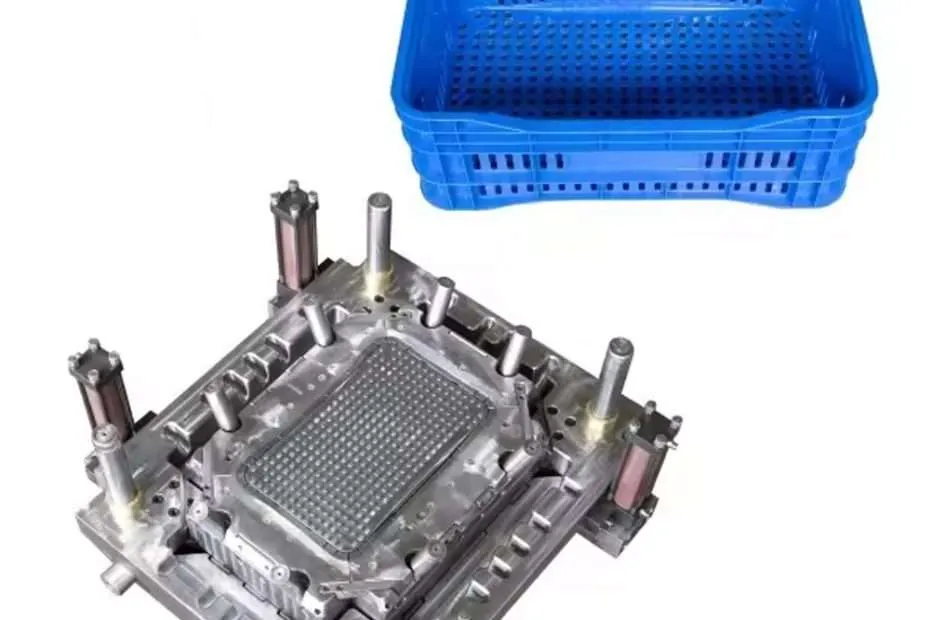
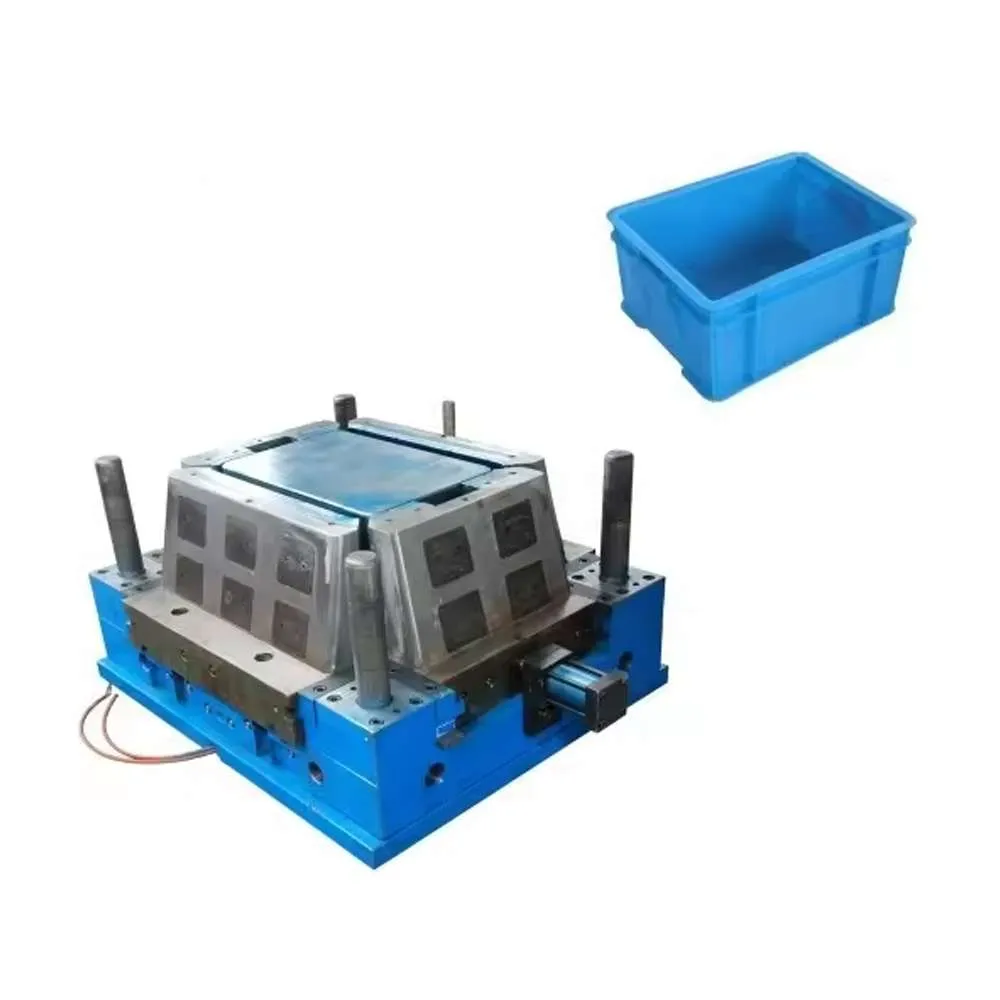
Turnover boxes, also known as plastic storage bins, are essential components in modern logistics and supply chain management, providing efficient storage and transportation solutions across industries. The performance, durability, and cost-effectiveness of these containers depend significantly on the quality of their molds. Turnover box molds require specialized design considerations to accommodate heavy loads, repeated use, and stackability—factors that make steel the material of choice for manufacturing these critical tools. This guide explores the unique requirements of turnover box molds, focusing on steel material selection, precision manufacturing techniques, and quality control measures that ensure consistent performance in demanding logistics environments.
Material Selection: Steel Solutions for Heavy-Duty Applications
Turnover box molds operate under demanding conditions, necessitating steel materials engineered for exceptional strength and durability. Pre-hardened mold steel (typically 30-35 HRC) represents the primary choice for most turnover box applications, offering:
- Excellent machinability for complex cavity geometries and reinforcing rib structures
- Good wear resistance for production volumes up to 1 million cycles
- Cost-effectiveness for high-volume manufacturing
- Adequate toughness to withstand the stresses of ejection and cooling
For heavy-duty turnover boxes designed for extreme loads or abrasive materials, hot-work die steel (such as H13 or SKD61) provides enhanced performance:
- Superior impact resistance (≥25 J/cm² at room temperature)
- Excellent thermal fatigue resistance for high-temperature molding processes
- Enhanced hardenability allowing through-hardening of large mold blocks
- Wear resistance suitable for glass-reinforced plastic materials
Material selection must also consider the specific plastic resins used in turnover boxes. High-density polyethylene (HDPE) and polypropylene (PP) require different mold surface treatments than engineering plastics like polycarbonate (PC) or acrylonitrile butadiene styrene (ABS). The optimal steel choice balances initial material cost against expected production volume and plastic material abrasiveness, with higher-grade steels becoming economically viable for production runs exceeding 2 million units.
Precision Design Considerations for Structural Integrity
Turnover box mold design prioritizes structural strength and stackability while minimizing material usage:
- Reinforcing rib optimization involves computer-aided engineering (CAE) analysis to determine optimal rib height (typically 2-3x wall thickness), spacing (30-50mm), and draft angle (1-2°)
- Stacking feature design incorporates precision ledges and recesses with ±0.1mm tolerance to ensure stable vertical stacking
- Corner reinforcement includes radiused corners (R5-R10mm) and gusseted designs to distribute impact forces
- Integrated handle design features ergonomic grips with draft angles optimized for comfortable lifting while maintaining structural integrity
Mold cavity layout considers both production efficiency and part quality:
- Large turnover boxes (≥100L capacity) typically use single-cavity molds with center gating
- Medium-sized containers often utilize 2-cavity molds with balanced flow paths
- Small parts like lids or dividers may employ multi-cavity molds (4-8 cavities)
- Family molds produce complementary components in a single molding cycle
Cooling system design focuses on uniform temperature distribution across large cavity surfaces:
- Conventional cooling channels (8-12mm diameter) spaced 50-80mm apart
- Bubbler and baffle systems in thick-walled sections to prevent sink marks
- Sequential cooling control to manage different cooling rates in complex geometries
- Insulated hot runners for large-part gating to maintain melt temperature
Manufacturing Processes for Turnover Box Molds
Producing turnover box molds demands robust manufacturing technologies to achieve the required durability and precision:
- Heavy-duty CNC milling with high-torque spindles machines large mold blocks (up to 3m in length)
- EDM (Electrical Discharge Machining) creates precision details in hardened steel sections
- Deep hole drilling produces cooling channels with depth-to-diameter ratios up to 100:1
- Surface grinding achieves flatness tolerances of ±0.01mm/m across large mold bases
Heat treatment processes optimize steel properties for turnover box production:
- Pre-hardened steels receive stress-relief annealing to minimize distortion during machining
- Hot-work steels undergo quenching and tempering to achieve 44-48 HRC with maximum toughness
- Nitriding processes create surface hardness of 65+ HRC for extended wear resistance
- Laser cladding applies wear-resistant coatings to critical mold areas
Assembly and testing ensure mold performance before production:
- Precision guiding systems (leader pins and bushings) with ±0.01mm alignment tolerance
- Ejection system verification to ensure balanced part ejection and prevent deformation
- Mold tryout with actual production materials to validate filling and cooling
- Pressure testing of cooling systems at 10 bar to detect leaks
Quality Control and Performance Testing
Ensuring consistent quality in turnover box molds requires comprehensive testing protocols:
- Coordinate measuring machines (CMM) verify critical dimensions with accuracy of ±0.02mm
- Laser scanning inspects complex 3D geometries and compares to CAD models
- Surface roughness testing confirms Ra values (typically 1.6-3.2μm for structural components)
- Material certification verifies steel chemistry and mechanical properties
Performance testing of molded turnover boxes includes:
- Stacking test: Loaded boxes stacked to 3m height for 24 hours with maximum deflection ≤2mm
- Impact test: 1.5m drop test onto concrete surface with no visible cracking
- Compression test: Uniformly distributed load testing up to 500kg with permanent deformation ≤1%
- Environmental testing: Exposure to -30°C to 70°C temperature cycles to verify dimensional stability
Statistical process control (SPC) monitors production data to maintain consistent quality, with control charts tracking critical dimensions and performance parameters throughout the mold’s service life.
Application-Specific Mold Solutions for Turnover Box Types
Different turnover box designs present unique mold requirements:
- Industrial heavy-duty boxes require thick-walled molds (3-5mm) with extensive reinforcing
- Food-grade containers demand stainless steel molds or special coatings for corrosion resistance
- Collapsible turnover boxes feature complex hinge and locking mechanisms requiring precision molds
- Nested storage containers incorporate tapered sides and precision tolerances for space-efficient nesting
Specialized feature molds address specific functional requirements:
- Anti-slip surface molds create textured bases with controlled friction characteristics
- Label recess molds produce precise areas for barcode or RFID tag application
- Drainage hole molds incorporate core pins with precise spacing and draft angles
- Partition system molds create integrated dividers for component organization
Each application demands a tailored approach to steel selection, cooling system design, and surface treatment to balance production efficiency with container performance requirements.
Maintenance and Longevity of Turnover Box Molds
Proper maintenance is essential to maximize the service life of turnover box molds:
- Preventive maintenance schedules include regular inspection of:
- Cooling channels for mineral deposits and blockages
- Guiding components for wear and alignment
- Ejection systems for proper operation and wear
- Cavity surfaces for scratches and impact damage
- Cleaning protocols remove plastic residue and prevent build-up in cooling channels
- Surface reconditioning restores worn areas through welding and re-machining
- Component replacement of wear items before they cause production defects
Advanced maintenance technologies extend mold life and performance:
- Ultrasonic cleaning removes stubborn deposits from cooling channels
- Thermal imaging detects hot spots indicating cooling inefficiencies
- Vibration analysis identifies潜在 problems in moving mold components
- Predictive maintenance software tracks usage and performance data to schedule maintenance
With proper care, high-quality steel turnover box molds can maintain production-ready condition for 1-3 million cycles, depending on container design and plastic material abrasiveness.
Conclusion
Steel molds remain fundamental to the production of high-quality turnover boxes that drive efficiency in modern supply chains. As logistics demands evolve toward heavier loads, more frequent handling, and extended service life, mold technology must advance in parallel. Innovations in materials, manufacturing processes, and design software continue to improve mold performance while reducing production costs.
Frequently Asked Questions (FAQ)
Q1: What makes steel the preferred material for turnover box molds?
Steel provides the optimal combination of strength, durability, and cost-effectiveness required for high-volume turnover box production. Its ability to maintain precise dimensions through millions of cycles ensures consistent container performance, while its toughness withstands the rigors of logistics applications.
Q2: How do mold designs accommodate the structural requirements of turnover boxes?
Turnover box molds incorporate optimized reinforcing rib patterns, corner gussets, and wall thickness transitions to maximize strength while minimizing material usage. Advanced CAE analysis predicts stress points and optimizes mold geometry to ensure containers can withstand specified loads without deformation.
Q3: What is the typical cavity configuration for turnover box molds?
Cavity configuration depends on container size: small to medium boxes (≤50L) often use 2-cavity molds for production efficiency, while large containers (>100L) typically use single-cavity designs to manage molding pressures and cooling requirements. Family molds may produce complementary components like boxes and lids in a single cycle.
>>You may also like
Standards & References
The following industry standards are referenced in this article: