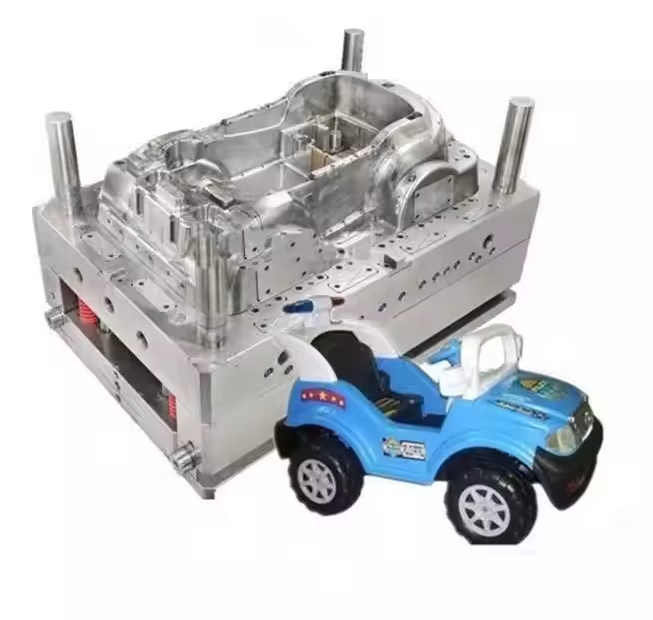
In today’s rapidly evolving era, toys are not merely tools for children’s entertainment; moreover, they have also become significant carriers of education, innovation, and emotional attachment.Among the myriad of toys available, toy cars hold a unique charm and occupy an indispensable part of countless children’s childhood memories. Behind these small, exquisite toy cars lies a complex and intricate production process, with one of the most crucial steps being mold manufacturing. This article will delve into the design and manufacturing of toy car molds and their importance to the toy industry.
Mold Design
We ensure toy car mold designs meet functional, aesthetic, and safety requirements while considering manufacturing costs and efficiency.
Functionality: We design molds to ensure the precise forming of toy car components, including the body, wheels, and doors, guaranteeing the toy car’s proper assembly and functionality.
Aesthetics: We consider the toy car’s appearance, aiming for realistic shapes and attractive color combinations to capture children’s attention.
Safety: We design toy car molds to meet safety standards, avoiding sharp edges and small parts to prevent injuries or choking hazards for children.
Cost Control: We simplify mold structures during the design process to reduce manufacturing difficulty and costs, enhancing production efficiency.
Manufacturability: We consider manufacturing feasibility in mold design, choosing suitable parting lines and gating systems to ensure smooth machining and molding processes.
Manufacturing Processes
Design: We start with mold design, considering product functionality, aesthetics, and safety requirements. We select appropriate parting lines and gating systems to ensure manufacturability and performance.
Machining: Machining is the core of manufacturing, using methods like CNC machining, EDM, wire cutting, and heat treatment. CNC machining offers high precision and efficiency, suitable for complex parts. EDM processes hard materials and intricate shapes. Wire cutting is used for fine details, and heat treatment enhances material hardness and wear resistance.
Assembly: After machining, we assemble the molds, ensuring precise alignment, securing components, and adjusting for proper operation.
Debugging: We perform debugging through trial molding and adjustments to ensure molding quality and production efficiency. We control process parameters like temperature, pressure, and time, promptly identifying and resolving mold issues.

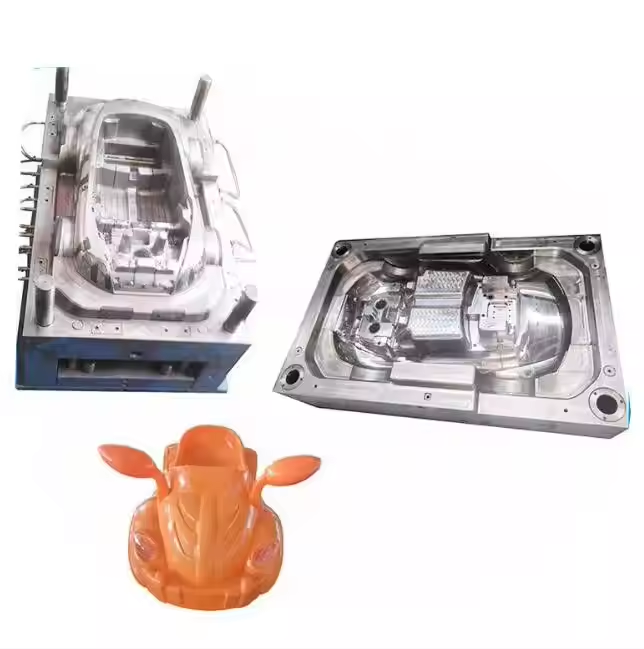
Cost Control
Toy car mold costs comprise design, material, machining, and maintenance expenses. We adopt the following strategies for cost control:
Optimize Design: We reduce manufacturing difficulty and costs while meeting product requirements by simplifying mold structures during the design phase.
Select Materials Wisely: We balance performance and cost by choosing suitable materials based on product needs and production conditions.
Improve Processes: We use efficient, low-cost machining processes to enhance precision and reduce waste.
Regular Maintenance: We develop detailed maintenance plans for regular inspections and care, promptly identifying and resolving mold issues to extend lifespan and reduce replacement frequency.
What should be paid attention to when designing the toy car mold?
Avoid Sharp Edges and Small Parts: We avoid sharp edges and small detachable parts in our designs to prevent injuries or choking hazards for children.
Ensure Structural Stability: We make sure that all toy car components are securely connected to prevent loosening or detachment, enhancing product safety.
Design Removable Parts Carefully: We design removable parts to be child-resistant, preventing accidental disassembly and potential safety risks.
Consider Size and Shape: We consider the size and shape of toy parts to ensure they are not small enough to be swallowed, reducing the risk of choking.
Conclusion
Designing and manufacturing toy car molds is a complex, precise process involving multiple stages and technologies. Through scientific design, rational material selection, and efficient manufacturing processes, we enhance mold quality and lifespan, reduce production costs, and improve product competitiveness. Regular maintenance and timely repairs are also crucial for ensuring mold functionality and extending lifespan. As smart manufacturing develops, toy car mold design will face new opportunities. Green manufacturing technologies create additional challenges. Rapid prototyping enhances design flexibility and responsiveness. These advancements present both opportunities and challenges.