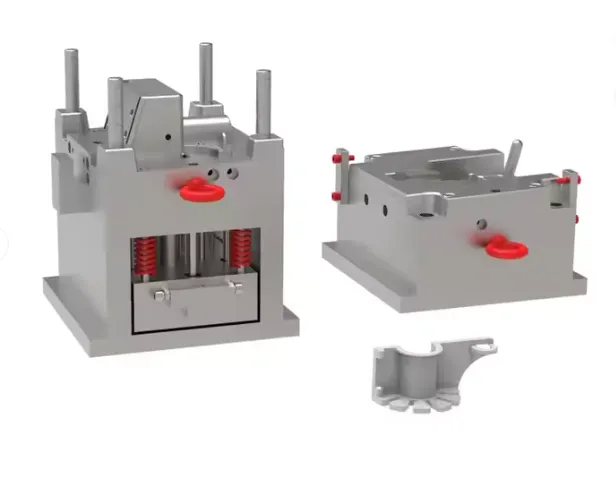
In the competitive landscape of bathroom accessories manufacturing, the toothbrush holder molds stands as a critical component that directly impacts product quality, production efficiency, and long-term profitability. As consumer demand for durable, hygienic, and aesthetically pleasing toothbrush holders continues to rise, manufacturers are increasingly turning to steel as the material of choice for mold production. This comprehensive guide explores the manufacturing process, unique advantages, and industry insights of steel toothbrush holder molds technology, backed by 2024-2025 market data and technical innovations.
The Case for Steel: Why Material Matters in Toothbrush Holder Molds
When it comes to toothbrush holder molds production, material selection is paramount. Steel emerges as the superior choice for high-volume, precision-driven manufacturing, outperforming alternatives like aluminum and plastic in key metrics:
1. Unmatched Durability and Lifespan
Steel molds, particularly grades like Cr12MoV and S136, offer exceptional longevity. A well-maintained Cr12MoV steel toothbrush holder molds can withstand up to 1 million production cycles—a 10x improvement over plastic molds (typically limited to 100,000 cycles). S136 steel, renowned for its corrosion resistance, extends mold life further to 800,000–1,000,000 cycles, making it ideal for manufacturers serving major brands like Procter & Gamble and Colgate.
2. Precision Engineering and Surface Quality
Steel’s rigidity allows for intricate machining with tolerances as tight as ±0.01mm, ensuring consistent part dimensions across millions of units. Advanced polishing techniques achieve mirror-finish surfaces (Ra 0.02μm), eliminating defects like sink marks or warpage. This precision is critical for toothbrush holders, where even minor irregularities can compromise functionality or aesthetics.
3. Thermal Efficiency and Production Speed
With a thermal conductivity of 45 W/m·K, steel molds dissipate heat 30% faster than conventional materials, reducing cooling time and shortening production cycles by up to 24%. For example, a steel toothbrush holder mold can produce 50,000 units in 30 days, compared to 45 days with aluminum molds—a 33% boost in throughput that directly impacts bottom-line profitability.
Manufacturing Process: From Design to Production
Crafting a steel toothbrush holder molds is a meticulous process that blends cutting-edge technology with time-tested engineering. Here’s a step-by-step breakdown:
1. 3D Design and Simulation
Modern toothbrush holder molds development begins with Computer-Aided Design (CAD) software like SolidWorks, where engineers create detailed 3D models. Finite Element Analysis (FEA) and Computational Fluid Dynamics (CFD) simulations optimize cooling channel layouts, ensuring uniform heat distribution and minimizing warpage.
2. Precision Machining
CNC machining centers mill steel blanks with high-speed spindles, achieving the precise geometries required for toothbrush holder features like drainage holes and slot dividers. For complex undercuts, Electrical Discharge Machining (EDM) provides sub-micron accuracy, while wire-cutting techniques shape intricate details.
3. Heat Treatment and Surface Enhancement
To maximize hardness and wear resistance, steel molds undergo 850–900°C quenching followed by 200–300°C tempering, resulting in a hardness of 48–52 HRC. Optional surface treatments like nitriding or diamond-like carbon (DLC) coatings further enhance corrosion resistance and reduce friction, extending mold life by an additional 20%.
4. Assembly and Quality Control
Mold components—including cavities, cores, and ejector pins—are assembled with precision alignment. Rigorous testing ensures smooth operation, with trial runs producing sample toothbrush holders to verify dimensional accuracy and surface finish. Only molds passing ISO 9001 standards proceed to mass production.
Market Trends and Competitive Advantages
The global toothbrush holder molds market is poised for robust growth, driven by urbanization, hygiene awareness, and technological advancements:
1. Market Growth Projections
The metal mold industry, including toothbrush holder molds production, is expected to grow at a 4.20% CAGR through 2034, reaching USD 9.28 billion by the end of the forecast period. Stainless steel variants dominate, accounting for 42% of bathroom hardware sales due to their rust resistance and sleek aesthetics.
2. Technological Innovations
- AI-Driven Design: Generative AI tools optimize cooling channel layouts, reducing cycle times by 36% and material waste by 15%.
- 3D Printing: Additive manufacturing creates conformal cooling channels, improving heat dissipation and reducing part warpage by 7x.
- Sustainability: Recycled steel now constitutes 80% of mold materials in Europe, aligning with strict environmental regulations and consumer demand for eco-friendly production.
3. Cost Efficiency at Scale
While steel molds require higher upfront investment (USD 20,000–100,000), their longevity translates to lower per-unit costs. For example, a steel toothbrush holder molds producing 1 million units costs **$0.02 per part**, compared to $0.15 for aluminum molds replaced every 100,000 cycles.
FAQs: Addressing Critical Manufacturer Concerns
Q1: How does steel compare to aluminum for toothbrush holder molds?
A: Steel is superior for high-volume production (100,000+ units) due to its 10x longer lifespan and better precision. Aluminum, while cheaper upfront ($5,000–$20,000), is limited to 10,000–100,000 cycles and struggles with abrasive plastics like glass-filled PP.
Q2: What maintenance practices extend steel mold life?
A: Regular cleaning with mineral oil or Kroil prevents rust, while polishing every 500,000 cycles maintains surface finish. For long-term storage, a paraffin-oil coating protects against corrosion in humid environments.
Q3: Can steel molds accommodate complex toothbrush holder designs?
A: Yes. Steel’s rigidity allows for multi-cavity molds (up to 32 cavities) and intricate features like integrated drainage systems or custom branding. Advanced EDM machining handles undercuts and thin walls with ease.
Q4: How do steel molds support sustainability goals?
A: Steel is 100% recyclable, and modern production uses 30% recycled content. Additionally, longer mold life reduces waste from frequent replacements, aligning with global initiatives to cut plastic pollution.
Conclusion: Investing in Steel for Long-Term Success
For manufacturers prioritizing quality, efficiency, and scalability, a steel toothbrush holder molds is an indispensable asset. Its unmatched durability, precision, and cost-effectiveness at scale position it as the cornerstone of high-performance production lines. As the global bathroom accessories market grows—projected to reach USD 75.8 billion by 2035—steel molds will remain the gold standard for brands aiming to dominate shelves and satisfy discerning consumers.
By choosing steel, manufacturers not only ensure consistent product quality but also future-proof their operations against evolving market demands. In the competitive world of toothbrush holder molds production, steel isn’t just a material—it’s a strategic advantage.
>>You may also like
Standards & References
The following industry standards are referenced in this article: