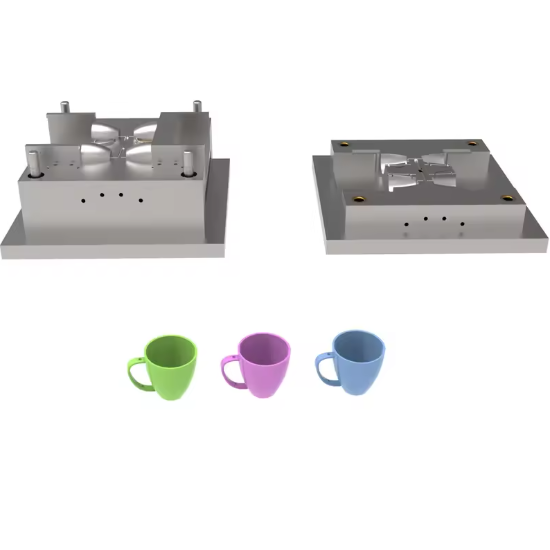
Tea cups, as common vessels in daily life, require careful selection of mold materials to ensure product quality, production efficiency, and service life. The injection molding process for tea cups demands precise control over material properties, as even minor defects in mold materials can lead to product imperfections, increased production costs, and reduced mold longevity. This guide systematically elaborates on the material characteristics, selection principles, and application points for tea cup molds, providing comprehensive reference for mold designers, manufacturers, and quality control personnel.
Basic Principles of Material Selection
Tea cup mold materials should possess the following basic characteristics: high hardness to ensure mold wear resistance, good polishing performance to meet product surface finish requirements, excellent thermal stability to adapt to temperature changes during injection molding, and sufficient toughness to prevent cracking. Additionally, materials should have good machinability and economic viability.
The hardness requirement for tea cup molds typically ranges from forty-eight to fifty-two Rockwell hardness, which provides adequate resistance to wear while maintaining sufficient toughness. Excessive hardness can lead to brittleness and premature failure, while insufficient hardness results in rapid wear and poor product quality.
Polishing performance is particularly critical for tea cup molds because the inner surface quality directly affects the appearance and usability of the final product. Materials with fine, uniform microstructure enable superior polishing results, achieving surface roughness values as low as zero point zero two micrometers.
Thermal stability ensures that the mold maintains its mechanical properties during repeated heating and cooling cycles. The mold must withstand temperatures ranging from ambient conditions to over two hundred degrees Celsius without significant dimensional changes or property degradation.
Economic considerations include initial material cost, processing cost, and expected service life. While high-performance materials may have higher initial costs, their extended service life and reduced maintenance requirements often result in lower total ownership costs.
Common Mold Steel Types
Pre-hardened mold steel is the most commonly used material type for tea cup molds. Its pre-hardening treatment reduces subsequent heat treatment processes and shortens production cycles. The hardness of such steels typically ranges between thirty and forty Rockwell hardness, meeting the usage requirements of most tea cup molds. Common pre-hardened steels contain chromium, molybdenum, and vanadium alloying elements, which contribute to improved hardenability and wear resistance. These materials exhibit good dimensional stability during machining and heat treatment, making them ideal for precision mold manufacturing.
For tea cup molds with high surface quality requirements, mirror mold steel can be selected. This type of steel has high purity and low inclusion content. After polishing, it can achieve mirror effects, making it particularly suitable for transparent tea cups or products with high gloss requirements. Mirror mold steels are typically produced through electroslag remelting or vacuum arc remelting processes, which significantly reduce non-metallic inclusions and improve steel cleanliness. The resulting material offers exceptional polishing characteristics, enabling surface finishes that replicate the original mold surface with remarkable fidelity.
Large tea cup molds should use steel with better hardenability to ensure uniform overall mold hardness, avoiding deformation or cracking caused by uneven quenching. High-hardenability steels contain increased amounts of alloying elements such as chromium, nickel, and molybdenum, which promote through-hardening of large sections. These materials maintain consistent hardness properties from the surface to the core, ensuring uniform performance throughout the mold volume.
Heat Treatment Process Points
Heat treatment of mold steel is a key link in ensuring mold performance. Quenching temperature must be strictly controlled according to the specific steel grade. Excessively high quenching temperatures will cause coarse grains and reduce material toughness, while excessively low temperatures will affect hardness achievement. Typical quenching temperatures for mold steels range from eight hundred fifty to one thousand fifty degrees Celsius, depending on the chemical composition and desired properties.
Tempering process is equally important. Reasonable tempering temperature and time can eliminate quenching stress and stabilize organizational structure. For tea cup molds, secondary or tertiary tempering is typically used to ensure dimensional stability and service life. The first tempering, performed at relatively low temperatures, primarily relieves quenching stresses. Subsequent tempers at higher temperatures transform retained austenite and further stabilize the microstructure.
Surface strengthening treatment can significantly improve mold wear resistance and fatigue resistance. Common surface treatment methods include nitriding and titanium plating, which can be selected according to specific usage needs. Nitriding introduces nitrogen into the steel surface, forming a hard, wear-resistant compound layer while maintaining core toughness. Titanium plating provides a thin, extremely hard coating that reduces friction and improves release characteristics.
Precise temperature control during heat treatment is essential, with typical variations limited to plus or minus five degrees Celsius. Heating rates must be controlled to prevent thermal shock, especially for large or complex mold components. Uniform heating ensures consistent transformation throughout the workpiece, minimizing residual stresses and distortion.
Mold Maintenance and Care
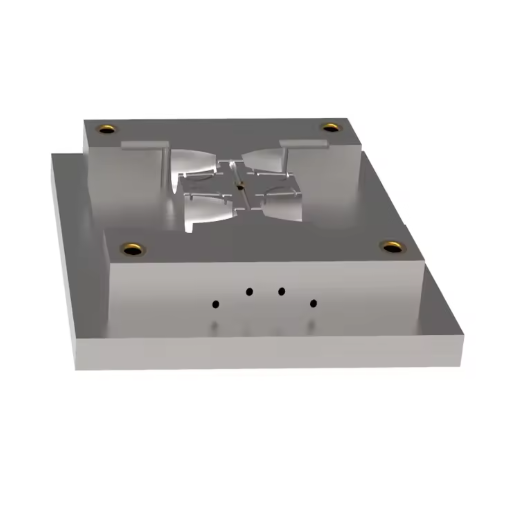
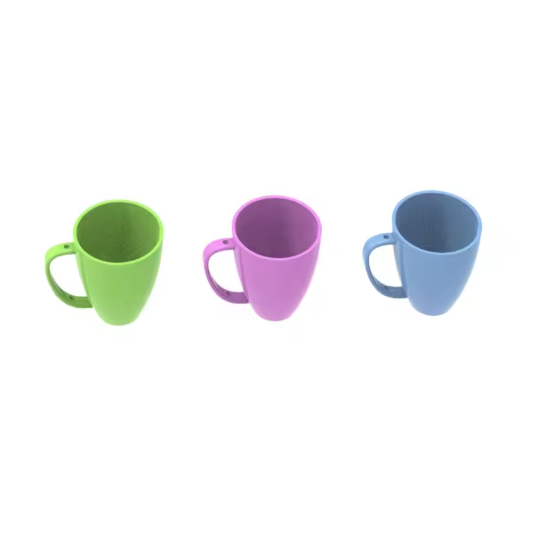
Maintenance and care during mold use directly affect its service life. Regularly check the mold cavity surface, promptly discover and repair minor defects, which can prevent defects from expanding and causing product scrapping. Inspection should include visual examination of polished surfaces, measurement of critical dimensions, and evaluation of wear patterns on high-stress areas.
During storage, attention should be paid to moisture and rust prevention. Apply anti-rust oil and place in a dry environment. Molds not used for long periods should undergo regular maintenance inspections to ensure standby readiness. Storage facilities should maintain humidity below sixty percent and temperature between fifteen and twenty-five degrees Celsius to prevent condensation and corrosion.
During use, control injection molding process parameters to avoid excessive injection pressure and temperature damaging the mold. Regularly clean residual materials on the mold surface to keep the cavity clean. Proper cleaning prevents abrasive particles from accumulating and accelerating wear. Use appropriate cleaning agents that do not attack the mold surface or cause stress corrosion cracking.
Mold cooling system maintenance is equally important. Regular inspection and cleaning of cooling channels ensure efficient heat transfer, preventing thermal stress and maintaining dimensional stability. Water treatment should prevent scaling and biological growth that can restrict flow and reduce cooling efficiency.
Lubrication of moving parts, including ejector pins and guide pins, should be performed according to manufacturer recommendations. Use lubricants compatible with the mold materials and operating temperatures to prevent contamination and ensure smooth operation.
Material Selection Recommendations
Ordinary household tea cup molds can use pre-hardened mold steel, balancing cost and performance requirements. These materials provide adequate performance for moderate production volumes and standard quality requirements. Typical applications include disposable tea cups, basic reusable cups, and low-cost promotional items.
For high-end tea cups or large-scale production scenarios, mirror mold steel is recommended to ensure product surface quality and mold life. Premium tea cups requiring exceptional surface finish, transparency, or aesthetic appeal benefit significantly from the superior polishing characteristics of mirror mold steels. High-volume production justifies the additional material cost through reduced maintenance downtime and extended mold service life.
For special material tea cups such as ceramic or composite material tea cups, corresponding high-performance mold steel should be selected according to material characteristics. These applications often involve higher processing temperatures, abrasive materials, or chemical exposure that demand enhanced material properties. Specialty mold steels with increased hot hardness, corrosion resistance, or wear resistance may be required.
Consideration should also be given to the specific tea cup design features. Complex geometries, deep draws, or thin-wall sections may require materials with higher toughness or different processing characteristics. Consulting with material suppliers and experienced mold manufacturers can provide valuable insights for optimizing material selection for specific applications.
Future Development Trends
The mold steel industry continues to evolve with advancing technology and changing market requirements. New developments include powder metallurgy steels with improved cleanliness and uniformity, surface modification techniques for enhanced performance, and smart materials with self-monitoring capabilities.
Environmental considerations are becoming increasingly important in mold steel selection and processing. Energy-efficient heat treatment processes, recyclable materials, and reduced environmental impact from surface treatments are driving innovation in the industry.
Through reasonable selection of mold materials, strict control of heat treatment processes, and strengthened daily maintenance and care, the service life and product quality of tea cup molds can be significantly improved, achieving maximum economic benefits. Continuous learning and adaptation to new materials and technologies will enable mold manufacturers to maintain competitive advantage in the rapidly evolving marketplace.
FAQ
Q1: What materials are used for Tea Cup Mold manufacturing?
A: Tea Cup Molds are commonly made from high-quality steel, aluminum, or FRP molds depending on production requirements.
Q2: What types of tea cups can be produced with these molds?
A: The molds are suitable for ceramic, plastic, silicone, or composite tea cups in various shapes and sizes.
Q3: Can Tea Cup Molds be customized?
A: Yes, Tea Cup Molds can be fully customized in shape, capacity, surface texture, and logo design.
Q4: Are the molds suitable for mass production?
A: Yes, Tea Cup Molds are designed for stable, repeatable, and high-volume production with consistent quality.
Q5: What is the typical lifespan of a Tea Cup Mold?
A: With proper maintenance, Tea Cup Molds can support tens of thousands of production cycles.
Q6: Can logos or patterns be integrated into the mold?
A: Yes, logos, brand names, and decorative patterns can be engraved directly into the mold.
>>You may also like
Standards & References
The following industry standards are referenced in this article: