
In today’s society, with the popularity of outdoor activities and the increasing awareness of eye protection, sunglasses have become an indispensable accessory in many people’s daily lives. Behind this, the design and manufacturing of sunglasses molds play a crucial role.
The Importance of Sunglasses Molds
The sunglasses mold is the foundation for producing high-quality sunglasses. An excellent mold ensures the precision, comfort, and durability of the lenses, directly affecting the consumer’s wearing experience. The quality of the mold not only relates to the product’s appearance and performance but also impacts production efficiency and cost control. Therefore, researching and optimizing sunglasses molds are key to enhancing product competitiveness.
Key Design Points of Sunglasses Molds
- Precision: The mold design must ensure extremely high precision to guarantee the optical performance and dimensions of the lenses meet standards. This includes strict control of key parameters such as curvature radius and thickness distribution.
- Material Selection: The mold material needs to possess good wear resistance, corrosion resistance, and stability to adapt to long-term production and various environmental conditions. Commonly used materials include high carbon steel, alloy steel, and special plastics.
- Cooling System: To improve production efficiency and product quality, molds are usually equipped with cooling systems to quickly reduce the temperature of the formed lenses, minimizing deformation and stress.
- Usability: The mold design should also consider ease of operation, such as easy installation, disassembly, and cleaning, to reduce labor intensity and maintenance costs for workers.
Manufacturing Process of Sunglasses Molds
- Design and Planning: Conduct CAD design based on the design requirements of the sunglasses and develop a detailed production plan.
- Material Preparation: Select appropriate materials and perform preprocessing steps such as cutting, forging, or casting.
- Precision Machining: Use high-precision equipment like CNC machines for rough and fine machining of the mold to ensure precise dimensions and shapes.
- Heat Treatment: Perform heat treatment on the mold to enhance its hardness and wear resistance.
- Surface Treatment: Conduct polishing, coating, or other surface treatments to improve the mold’s corrosion resistance and extend its service life.
- Assembly and Debugging: Assemble all parts into a complete mold and conduct debugging to ensure smooth operation.
- Quality Inspection: Through strict quality inspection procedures, ensure the mold meets all design and functional requirements.
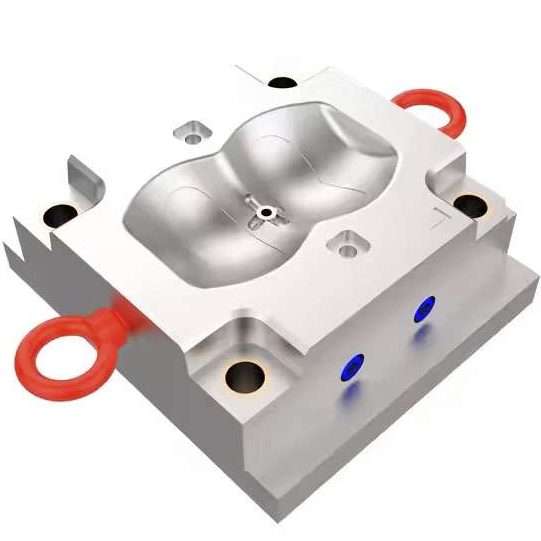

Technologies Used in Sunglasses Molds Manufacturing
Mold manufacturing involves a variety of technologies aimed at ensuring high precision, efficiency, and quality. Here are some common technologies used:
- CNC Machining: CNC (Computer Numerical Control) machines are controlled by computers to achieve high precision machining. They are suitable for creating complex shapes and high-precision parts of molds.
- EDM (Electrical Discharge Machining): EDM is used for hard materials and complex shapes in mold manufacturing. It removes material through electrical discharge, making it particularly useful for areas difficult to machine with traditional methods.
- Wire Cutting: Wire cutting is a special processing method that uses a fine metal wire as an electrode to cut materials through electrical discharge, suitable for high-precision contour processing of molds.
- Milling: Milling is a common mechanical processing method that removes material using a rotating cutter, suitable for processing planes, grooves, and complex shapes of molds.
- Turning: Turning is used for processing rotating parts by rotating the workpiece and using a fixed cutter for cutting, mainly for manufacturing cylindrical and conical mold components.
- Polishing: Polishing is used for fine finishing of the mold surface to remove surface irregularities and achieve a smooth surface, improving the mold’s surface quality.
- Heat Treatment: Heat treatment is used to change the internal structure of mold materials, improving their hardness and wear resistance. Common heat treatment methods include quenching, tempering, and nitriding.
- Surface Treatment: Surface treatment methods include chrome plating, nitriding, and oxidation, aimed at improving the mold’s wear resistance and corrosion resistance, extending its service life.
- Injection Molding: Injection molding is a method of injecting molten plastic into the mold cavity and cooling it to form, suitable for manufacturing various plastic mold products.
- Die Casting: Die casting involves injecting molten metal into the mold cavity under high pressure, suitable for manufacturing metal parts’ molds.
- Extrusion Molding: Extrusion molding pushes molten material through the mold to form continuous profiles, often used for manufacturing long and tubular products’ molds.
How to Inspect the Quality of Sunglasses Molds
Inspecting the quality of sunglasses molds is crucial for ensuring the production of high-quality sunglasses. Here are some common inspection methods and steps:
- Dimensional Inspection:
- Use precision measuring tools such as digital calipers, micrometers, and coordinate measuring machines (CMM) to measure various dimensions of the mold.
- Ensure that the mold dimensions meet the design specifications, with errors controlled within the allowable range.
- Appearance Inspection:
- Check the mold surface for scratches, dents, cracks, and other defects.
- Ensure that the mold surface is smooth, flawless, and uniformly treated.
- Hardness Inspection:
- Use a hardness tester to check the hardness of the mold material, ensuring it meets the required specifications.
- Common hardness testing methods include Rockwell hardness, Brinell hardness, and Vickers hardness tests.
- Wear Resistance Inspection:
- Test the wear resistance of the mold by simulating the wear conditions during production.
- Ensure the mold can maintain good working condition over long-term use without significant wear.
- Corrosion Resistance Inspection:
- Conduct corrosion tests, such as salt spray tests, to assess the corrosion resistance of the mold surface.
- Ensure the mold performs well in humid and corrosive environments.
- Assembly Inspection:
- Assemble the mold components to ensure the fitting precision and tightness of the parts.
- Check that the mold structure is solid and free from loosening and misalignment after assembly.
- Trial Molding Inspection:
- Perform trial production using the mold to test its actual working performance.
- Inspect the quality of the sunglasses produced during the trial to ensure they meet design requirements.
- Functional Inspection:
- Test the functionality of various parts of the Sunglasses Mold to ensure they operate normally.
- This includes checking the mold’s opening and closing, cooling system, and guiding system.
- Stress Analysis:
- Use stress analysis software or experiments to check the stress conditions of the mold during operation.
- Ensure the Sunglasses mold can operate stably under high-stress conditions without deformation or cracking.
- Comprehensive Performance Testing:
- Conduct comprehensive performance tests to evaluate the overall performance of the Sunglasses mold, including machining precision, production efficiency, and product quality.
- Make necessary adjustments and improvements based on the test results to ensure the Sunglasses mold is in optimal condition.
Can you customize the mold?
Our factory is dedicated to providing high-quality custom mold services to meet the diverse needs of our clients. Whether it’s complex industrial molds, precision electronic molds, or fashionable eyewear molds, we leverage advanced technology and extensive experience to tailor the perfect solution for you. Our team consists of professional designers and skilled technicians, ensuring that each mold meets the highest standards. By utilizing the latest manufacturing technologies and implementing strict quality control, we guarantee durable, efficient, and precise mold solutions. Choosing us means choosing a guarantee of quality and trust. Let’s embark on a new chapter of efficient production together!
>>You may also like
Standards & References
The following industry standards are referenced in this article: