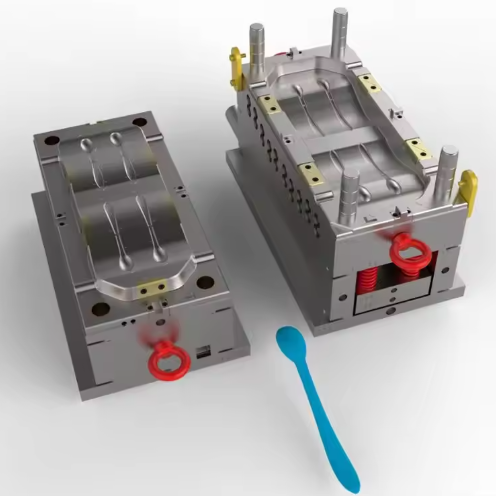
Material Selection for Spoon Mold Steel
Selecting the right steel for spoon molds is a critical decision that directly impacts production efficiency, product quality, and overall manufacturing costs. The ideal mold steel must balance wear resistance, corrosion resistance, and machinability while maintaining dimensional stability during high-volume production cycles.
Key Material Properties
Modern spoon manufacturing demands mold steels with specific characteristics to meet the challenges of food-grade production. The material must exhibit high hardness (typically 42-48 HRC for wear parts) to withstand repeated injection cycles without deformation. Corrosion resistance is equally important, especially when processing plastic materials that may contain additives or when molds require frequent cleaning with chemical agents.
Common Steel Grades
Several steel grades have emerged as industry standards for spoon mold applications:
- 718H (1.2738): A pre-hardened steel with excellent polishability and uniform hardness distribution, ideal for producing smooth, mirror-like spoon surfaces. Its 30-35 HRC hardness provides a good balance between durability and machinability.
- S136 (1.2083): A martensitic stainless steel offering superior corrosion resistance and exceptional polishability. This grade is particularly suitable for molds producing transparent or highly polished spoon designs where surface finish is critical.
- NAK80: A pre-hardened steel with excellent machinability and Mirror polishing performance, eliminating the need for post-heat treatment. Its uniform structure ensures consistent performance during high-volume production runs.
- H13 (1.2344): A hot work tool steel capable of withstanding elevated temperatures, making it suitable for processing high-temperature engineering plastics sometimes used in specialized spoon applications.
Material Selection Considerations
The choice of steel depends on several factors: production volume, plastic material type, required surface finish, and cost constraints. For high-volume production of standard spoons, 718H offers an optimal balance of performance and cost. When producing premium or specialty spoons requiring exceptional surface quality, S136’s corrosion resistance and polishability become invaluable. NAK80 excels in applications where rapid machining and immediate use are priorities, while H13 finds niche applications in specialized high-temperature molding processes.
Molding Process Parameters
The injection molding process for spoons involves precise control of multiple parameters to ensure consistent quality, dimensional accuracy, and production efficiency. Understanding and optimizing these parameters is essential for achieving defect-free spoon production.
Injection Molding Basics
Spoon manufacturing typically utilizes injection molding, where molten plastic is injected into a precision steel mold under high pressure. The process consists of several key stages: plasticizing, injection, packing, cooling, and ejection. Each stage requires careful parameter control to ensure proper filling, minimal stress, and efficient cycle times.
Critical Process Parameters
- Temperature Control: Barrel temperatures typically range from 180-240°C depending on the plastic material. Mold temperatures are maintained between 40-80°C to control cooling rates and minimize residual stresses. Precise temperature control prevents defects like flow marks, warpage, and sink marks.
- Injection Pressure and Speed: Injection pressures generally range from 600-1200 bar, with speeds adjusted to ensure proper mold filling without excessive shear stress. The relatively simple geometry of spoons allows for moderate injection speeds, reducing cycle times while maintaining quality.
- Cooling System Design: Efficient cooling is crucial for productivity and part quality. Optimized cooling channel layouts ensure uniform cooling rates, reducing cycle times to typically 20-40 seconds for standard spoons. Conformal cooling techniques, where cooling channels follow the contour of the spoon, can further improve cooling efficiency by 20-30%.
- Cycle Time Optimization: The total cycle time is determined by injection, packing, cooling, and ejection phases. For spoons, cooling time represents the largest portion of the cycle, often accounting for 50-70% of total time.
Advanced Molding Techniques
- Gas-Assisted Injection Molding: This technique injects nitrogen gas into the melt, creating hollow sections in thicker areas of the spoon. This reduces material usage by 10-15% while minimizing sink marks and warpage in handle areas.
- In-Mold Decoration: For premium spoon designs, in-mold labeling or decoration can be integrated, eliminating secondary operations and enhancing design flexibility.
- Microcellular Foam Molding: Using nitrogen or carbon dioxide to create microcellular structures reduces material usage and weight while maintaining mechanical properties, offering sustainability benefits.
Industry Standards and Compliance
Spoon molds must adhere to stringent industry standards to ensure product safety, quality consistency, and manufacturing efficiency. These standards cover material selection, mold design, production processes, and final product characteristics.
Food Contact Materials Regulations
Spoons, as food contact items, are subject to strict regulatory requirements regarding materials and production processes:
- FDA 21 CFR Part 177: Specifies the safe use of plastics in food contact applications, including limitations on extractable substances and migration levels.
- EU 10/2011: European regulation governing plastic materials and articles intended to come into contact with food, requiring compliance with specific migration limits and positive lists of authorized substances.
- GB 4806.7: Chinese national standard for food contact plastic materials and products, outlining safety requirements and testing methods.
Mold Manufacturing Standards
- ISO 9001: Quality management system standard applicable to mold manufacturing, ensuring consistent processes and product quality.
- TS 16949: Automotive industry quality management standard often adopted by high-volume mold manufacturers, focusing on process control and continuous improvement.
- JIS B 0405: Japanese industrial standard specifying surface roughness measurements, critical for ensuring proper release properties and surface finish.
Performance Requirements
- Dimensional Accuracy: Spoon molds must maintain tight tolerances, typically ±0.05mm for critical dimensions, to ensure consistent fit with packaging and proper functionality.
- Surface Finish: Mold surfaces typically require Ra 0.02-0.8 μm finishes, depending on the desired spoon appearance and plastic material used.
- Durability: Molds should maintain performance for 500,000 to 1,000,000 cycles for standard applications, with premium steels capable of exceeding 3,000,000 cycles under optimal conditions.
Testing and Validation
- Mold Flow Analysis: Computer simulations validate filling patterns, cooling efficiency, and potential defect areas before mold construction.
- First Article Inspection: Comprehensive dimensional verification of initial production parts ensures mold performance meets specifications.
- Life Cycle Testing: Accelerated testing under production conditions to validate mold durability and identify potential wear issues.
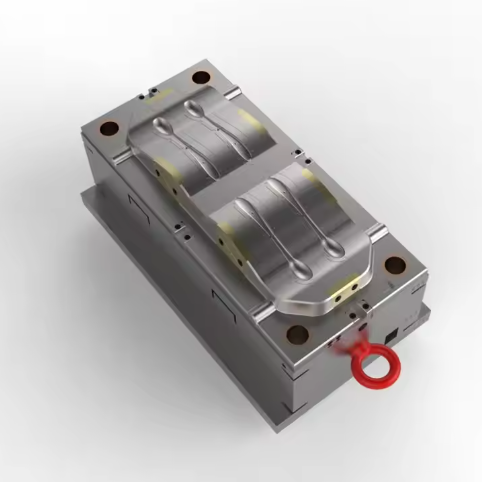

Surface Treatment Technologies
Surface treatment of spoon molds plays a crucial role in determining final product quality, mold release properties, and overall mold longevity. These treatments enhance surface finish, improve corrosion resistance, and optimize release characteristics.
Polishing and Texturing
- Mechanical Polishing: Progressive grit sequences from 400# to 8000# achieve mirror finishes (Ra < 0.02 μm) for high-gloss spoon surfaces. Automated polishing systems ensure consistency across multiple mold cavities.
- Chemical Polishing: Acid-based solutions produce uniform surface finishes with minimal mechanical stress, ideal for complex geometries and hard-to-reach areas.
- Laser Texturing: Precise control of surface patterns ranging from 5-200 μm Ra creates functional or decorative surface finishes on spoon surfaces, improving grip or enhancing aesthetic appeal.
Hardening Treatments
- Nitriding: Diffusion of nitrogen into the mold surface increases hardness (typically 65-70 HRC) while maintaining core toughness. This treatment improves wear resistance without significant dimensional changes.
- PVD Coating: Physical Vapor Deposition applies thin films (1-5 μm) of materials like TiN, CrN, or DLC, reducing friction and improving release properties. These coatings can extend mold life by 2-3 times in abrasive plastic applications.
- TD Treatment: Thermal Diffusion deposits vanadium or niobium carbides, creating extremely hard surfaces (up to 3200 HV) for high-wear applications.
Release Enhancement
- PTFE Coatings: Thin fluoropolymer coatings reduce surface energy, improving release properties for sticky materials like polypropylene.
- Silicone-Based Treatments: Semi-permanent release agents provide consistent release performance while minimizing transfer to the plastic part.
- Surface Alloying: Diffusion of elements like boron or chromium creates modified surface layers with improved chemical resistance and release characteristics.
Corrosion Protection
- Passivation: Chemical treatment of stainless steels enhances the natural oxide layer, improving corrosion resistance in humid production environments.
- Electroless Nickel Plating: Uniform nickel-phosphorus coatings provide corrosion protection and can be polished to high gloss finishes.
- Chrome Plating: Traditional hard chrome plating offers excellent wear and corrosion resistance but is increasingly replaced by more environmentally friendly alternatives.
Structural Design Considerations
Spoon mold design involves balancing functional requirements, manufacturing constraints, and cost considerations to produce high-quality, consistent parts efficiently.
Cavity Layout and Gating
- Multi-Cavity Design: Spoon molds typically feature 4-32 cavities depending on part size and production volume. Balanced cavity layout ensures uniform filling and cooling.
- Gating Systems: Edge gates or submarine gates are commonly used for spoons, positioned to minimize visible gate marks. Hot runner systems reduce material waste and cycle times for high-volume production.
- Vent Design: Proper venting (typically 0.02-0.05mm depth) prevents air traps and burn marks, particularly critical in thin-walled spoon bowls.
Part Design Optimization
- Draft Angles: 1-3° draft angles on vertical surfaces ensure easy ejection and prevent part damage.
- Wall Thickness: Uniform wall thickness (typically 1.5-3mm for spoons) minimizes warpage and sink marks. Gradual transitions between thick and thin sections reduce stress concentrations.
- Rib Design: Strategic rib placement in handle areas increases stiffness without excessive material usage. Rib thickness should be 60-80% of the adjacent wall thickness to prevent sink marks.
Mold Base and Component Design
- Standard Mold Bases: Utilization of standardized mold base systems reduces lead time and cost. Common sizes range from 200×250mm to 500×600mm for typical spoon mold applications.
- Guiding Systems: Precision guide pins and bushings ensure accurate alignment, maintaining part dimensional consistency.
- Ejection Systems: Pin ejection is standard for spoons, with ejector pin placement optimized to prevent part deformation. For thin-walled designs, sleeve ejection may be employed to distribute ejection force more evenly.
Cooling System Design
- Conventional Cooling: Grid-style cooling channels (8-12mm diameter) machined into mold plates provide basic temperature control.
- Conformal Cooling: 3D-printed cooling inserts follow the contour of the spoon, reducing cooling time by 20-40% compared to conventional systems.
- Beryllium Copper Inserts: High thermal conductivity copper alloys in critical cooling areas improve heat transfer efficiency.
Design for Manufacturability
- Simplified Geometry: Minimizing undercuts and complex features reduces mold complexity and cost.
- Tool Maintenance Access: Designing molds with easy access to wear components facilitates maintenance and extends service life.
- Material Selection: Matching mold material to expected production volume ensures optimal performance and cost-effectiveness.
The evolution of spoon mold design continues to be driven by material advancements, manufacturing technologies, and market demands for improved quality and sustainability. By integrating these structural design considerations with appropriate material selection and process parameters, manufacturers can produce high-quality spoons efficiently and cost-effectively.
FAQ for Spoon Mold
- What materials can be used with the spoon mold?
Spoon molds are typically made from food-safe silicone, plastic, or metal. Ensure the material is safe for your intended use. - How do I clean my spoon mold?
Clean the mold with warm water and mild soap. Avoid using harsh chemicals or abrasive scrubbers to prevent damage. - Can I use the spoon mold for baking?
Yes, most silicone and metal molds are heat-resistant, but check the mold’s specifications for maximum temperature limits. - Is the spoon mold reusable?
Yes, most spoon molds are designed to be reusable. Proper care will extend the lifespan of your mold. - Can I make multiple spoons at once with the mold?
Yes, many spoon molds are designed to produce several spoons in one go, making the process faster and more efficient. - Is the mold dishwasher safe?
Some molds are dishwasher safe, particularly silicone ones. Always check the manufacturer’s guidelines for proper care. - Can I use the mold for non-food purposes?
While spoon molds are designed for food, they can be used for arts and crafts, provided the material used is safe for such purposes.
>>You may also like
Standards & References
The following industry standards are referenced in this article: