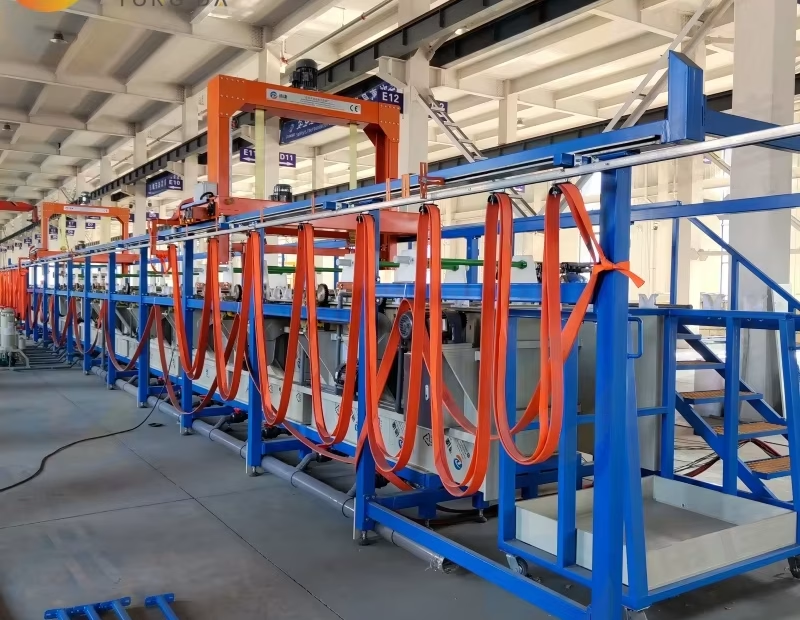
A mold maker in Dongguan showed us two identical SMC tool inserts that had run side by side in the same press for 80,000 cycles. Both were P20 tool steel, both had been hardened to 48-52 HRC, both were running the same SMC compound molding electrical enclosure bases. The only difference: one was hard chrome plated, the other was electroless nickel plated. The chrome-plated insert showed visible wear on the shear edge—a polished band about 4mm wide where the SMC flow had eroded the chrome down to the base steel. The nickel-plated insert showed no measurable wear at the same location. The chrome plating cost $800; the nickel plating cost $1,200. The mold was still running production, and the chrome-plated cavity was scheduled for re-plating at 100,000 cycles at a cost of $2,500 for stripping, re-polishing, and re-plating—plus a week of downtime. The nickel-plated cavity was projected to reach 200,000 cycles before needing service. The $400 savings on the plating spec cost the molder $2,500 and a week of lost production two years later. Surface treatment isn’t a commodity checkbox on an SMC tool build. It’s a performance specification that determines how many parts the mold makes before it stops making good parts, and the difference between the options is worth far more than the difference in the plating invoice.

Hard Chrome vs Electroless Nickel vs PVD: What’s Really Different?
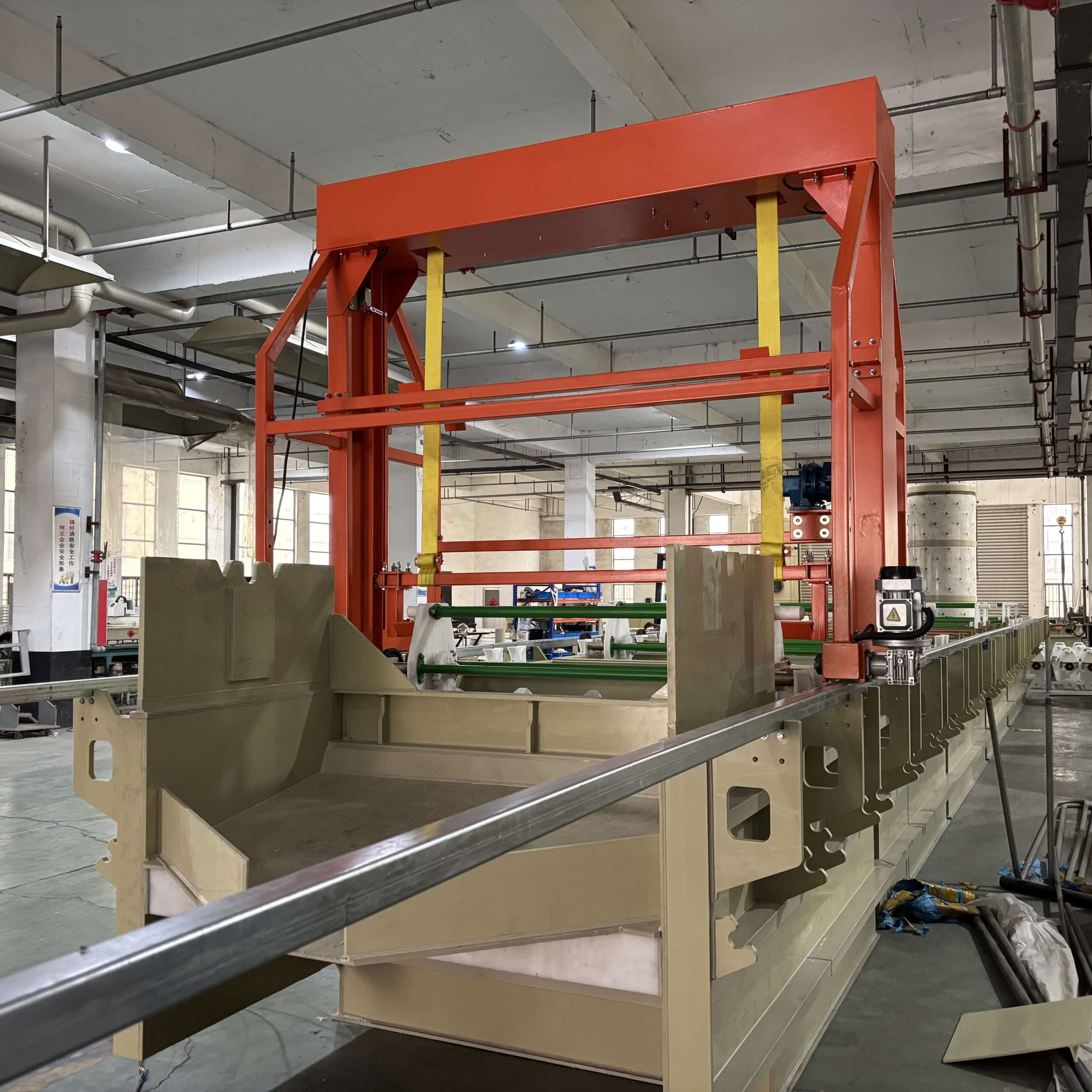
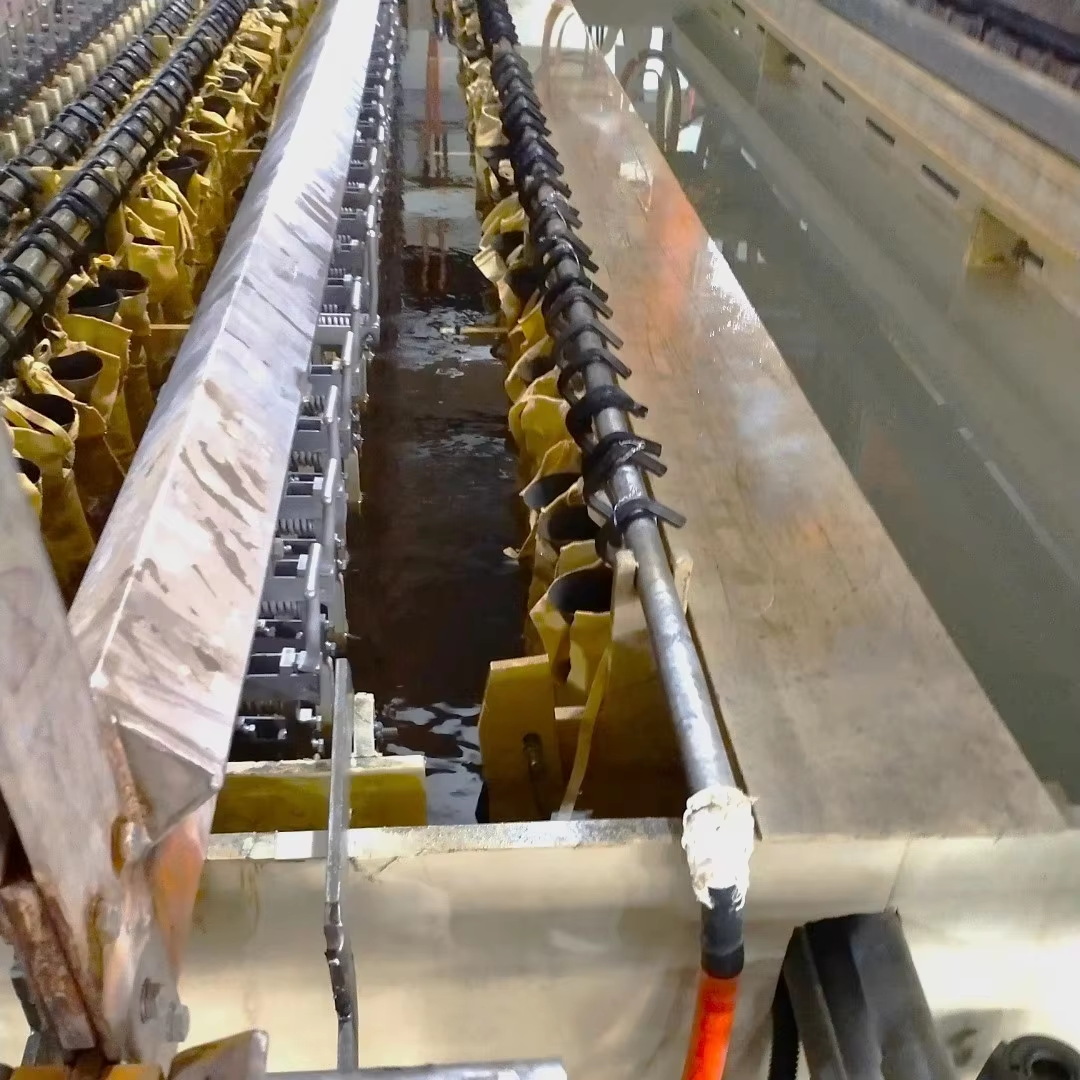
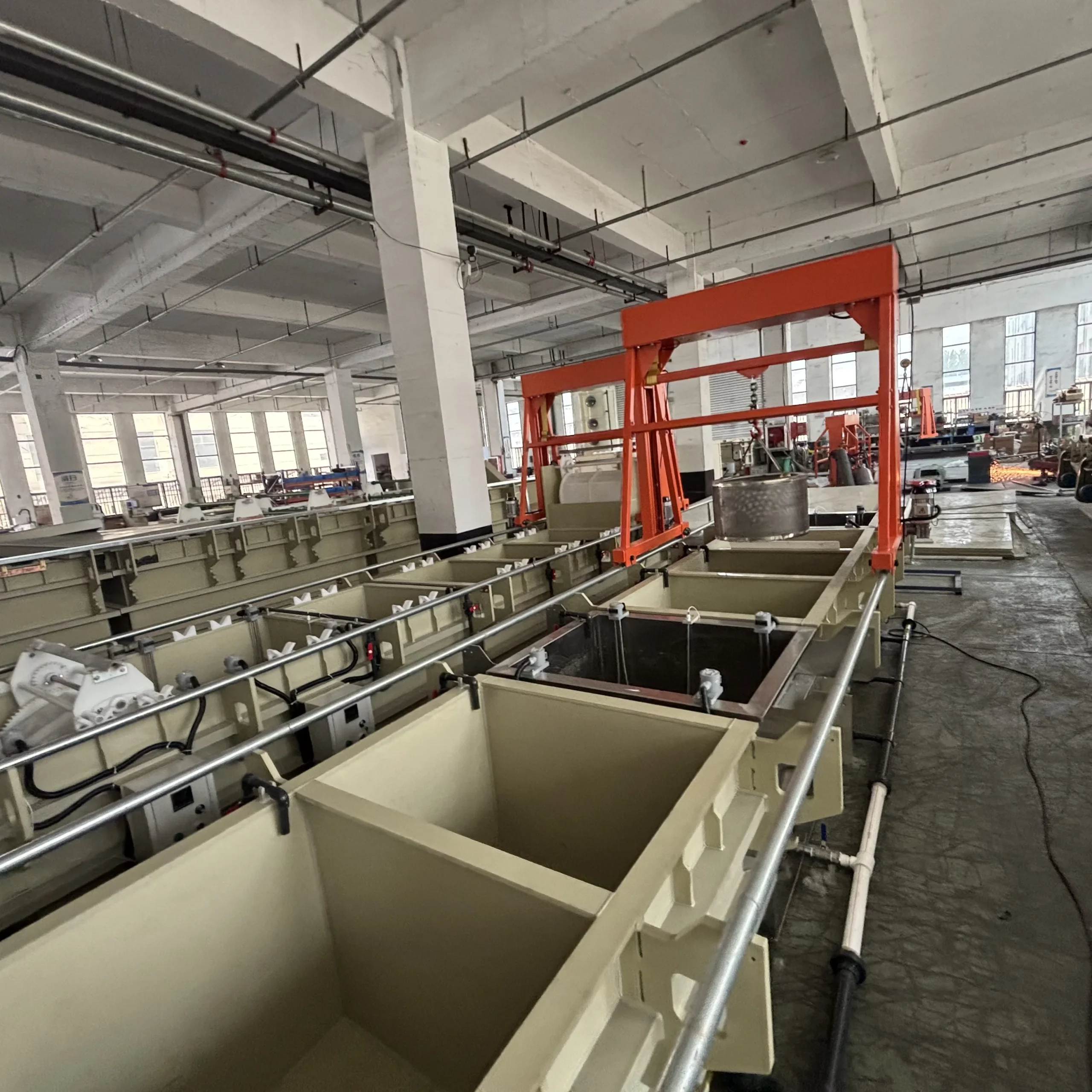
All three coating families deposit a thin, hard layer onto the SMC mold surface to improve wear resistance, corrosion resistance, and part release. But they deposit that layer through fundamentally different mechanisms, and those mechanisms determine the coating’s properties, its limitations, and where it makes economic sense. Hard chrome plating—industrial hard chrome, not decorative chrome—is an electroplating process. The mold insert or cavity is immersed in a chromic acid bath (CrO₃ at 200-300 g/L with a sulfate catalyst at a CrO₃:SO₄ ratio of 100:1), a DC current is applied at 30-60 A/dm², and metallic chromium is reduced from the hexavalent Cr⁶⁺ ions onto the steel surface. The deposition rate is 25-50 microns per hour, and the typical coating thickness for an SMC mold is 25-75 microns (0.001-0.003 inches). Hard chrome has a microhardness of 850-1,100 HV (68-72 HRC equivalent), and its surface is naturally micro-cracked—a network of fine cracks, 200-800 per linear centimeter, that form due to the tensile stress in the deposit as it builds up. These micro-cracks are not defects; they hold and distribute mold release agent across the cavity surface, which is one reason hard chrome has been the default SMC mold coating for fifty years. Electroless nickel plating—EN plating in the mold-making shorthand—is a chemical deposition process, not an electrochemical one. The mold is immersed in an aqueous solution of nickel sulfate (20-30 g/L Ni) and sodium hypophosphite (20-30 g/L) as the reducing agent, heated to 85-95°C, and the hypophosphite reduces the nickel ions to metallic nickel on the steel surface without any external current. Because there’s no electric field, the deposition is perfectly uniform regardless of the part geometry—deep ribs, sharp corners, and blind pockets plate to the same thickness as flat surfaces, which is the single biggest advantage of EN over chrome. The phosphorus from the hypophosphite co-deposits with the nickel at 4-12% by weight, and the phosphorus content determines the coating’s properties: low-phosphorus EN (4-6% P) has the highest as-plated hardness (600-700 HV), medium-phosphorus (6-9% P) is the general-purpose grade with the best balance of hardness and corrosion resistance, and high-phosphorus EN (10-12% P) is the most corrosion-resistant and is virtually non-magnetic. As-plated EN can be heat-treated at 400°C for one hour to precipitate Ni₃P intermetallic particles throughout the coating, raising the hardness to 900-1,100 HV—comparable to hard chrome. PVD—physical vapor deposition—is a vacuum coating process that bears no resemblance to either plating method. The mold insert is placed in a vacuum chamber pumped down to 10⁻⁴ to 10⁻⁶ torr. A solid metal target—titanium, chromium, or aluminum—is vaporized by an electric arc or magnetron sputtering, and the metal vapor reacts with a controlled gas (nitrogen for TiN and CrN coatings, nitrogen plus acetylene for TiCN, nitrogen plus oxygen for TiAlN) to form a thin ceramic layer on the mold surface. PVD coatings are far thinner than plated coatings—2-5 microns is typical for a mold coating, compared to 25-75 microns for chrome or EN. But PVD coatings are also far harder: TiN is 2,200-2,500 HV, CrN is 1,800-2,200 HV, and TiAlN is 3,000-3,500 HV. The PVD process operates at 200-500°C, which is below the tempering temperature of most tool steels (P20 tempers at 540-650°C, H13 at 540-600°C), so the coating can be applied to a finished, heat-treated mold insert without affecting the substrate hardness.
An Italian molder of SMC automotive body panels ran a three-way test on identical P20 inserts: one hard chrome (45 microns), one EN (50 microns, high-phosphorus, heat-treated to 950 HV), one PVD CrN (3 microns). At 150,000 cycles, the chrome insert needed re-plating. The EN insert was still running at 200,000 cycles with no measurable wear. The PVD CrN insert had worn through the coating at the shear edge after 90,000 cycles—not because the coating was inferior, but because the 3-micron thickness wasn’t enough for the abrasive wear rate in that specific mold location. The molder’s conclusion: PVD would have been the right choice if the coating had been 8-10 microns thick, but the deposition rate made that uneconomical for that size of insert.
Dimension 1: Wear Resistance and Hardness
SMC mold wear is primarily abrasive—the glass fibers in the flowing SMC compound, at 25-30% by weight, are harder than any tool steel (glass fibers have a Knoop hardness of about 500-600 HK, compared to 400-500 HK for hardened P20). The glass slides across the mold surface under 5-15 MPa of compression pressure, and every fiber is a microscopic cutting tool. The mold coating’s primary job is to be harder than the glass fibers so that the fibers wear down against the coating surface rather than the coating wearing down against the fibers. Hard chrome at 850-1,100 HV is about 60-80% harder than the glass fibers—enough of a hardness advantage to provide a wear life of 80,000-150,000 cycles on a typical SMC mold shear edge, after which the chrome has worn thin and the base steel begins to erode. The wear mechanism on chrome is gradual thinning, not spalling or delamination—chrome adheres to steel primarily through mechanical interlock at the microscopically roughened surface, and the adhesion is good (typically 50-70 MPa bond strength) as long as the pre-plate surface preparation—grinding, vapor blasting, or etching—is done correctly. Electroless nickel in the as-plated condition (600-700 HV) is actually softer than the glass fibers and would wear faster than chrome. But heat-treated EN at 900-1,100 HV matches chrome in hardness, and the wear mechanism is different: EN wears by gradual polishing rather than gradual thinning, because the nickel-phosphorus matrix is tougher than the micro-cracked chrome and doesn’t spall at the crack boundaries. This difference in wear mechanism is why EN often outlasts chrome by 50-100% in SMC mold service despite having essentially the same microhardness—the wear isn’t just about hardness, it’s about the coating’s ability to remain intact as a continuous barrier over the steel substrate. PVD coatings—TiN, CrN, TiAlN—operate in a different hardness regime entirely. At 2,000-3,500 HV, they are three to four times harder than the glass fibers and essentially do not wear by abrasion. The limiting wear mechanism for PVD on SMC molds is not abrasive thinning but localized delamination at surface defects—a pit, a scratch, or an inclusion in the substrate—where the thin coating loses adhesion and spalls off in flakes. The substrate surface finish for PVD must be polished to Ra 0.05 microns or better, and the cleaning before coating—multi-stage ultrasonic degreasing followed by ion etching in the vacuum chamber—must remove every trace of polishing compound, oil, and oxide. A fingerprint on the polished steel surface before PVD coating will leave a sodium and chloride residue that prevents coating adhesion at that spot, and the 3-micron coating will flake off in that area within the first few thousand cycles. This sensitivity to substrate preparation is the hidden cost of PVD: the pre-coating cleaning and handling requirements are an order of magnitude stricter than for plating.
| Property | Hard Chrome | Electroless Nickel (HT) | PVD CrN | PVD TiAlN |
|---|---|---|---|---|
| Microhardness (HV) | 850-1,100 | 900-1,100 | 1,800-2,200 | 3,000-3,500 |
| Typical thickness (μm) | 25-75 | 25-75 | 2-5 | 2-5 |
| Deposition temp (°C) | 50-65 | 85-95 | 200-400 | 400-500 |
| Throwing power | Poor (edge buildup) | Perfect (uniform) | Line-of-sight | Line-of-sight |
| SMC wear life (cycles) | 80-150K | 150-250K | 60-120K (thin) | 100-200K |
| Release performance | Excellent (microcracks hold release) | Good (smooth, less retention) | Very good | Excellent |
| Corrosion resistance | Good (cracks allow moisture path) | Excellent (pore-free) | Excellent | Excellent |
| Cost per sq dm (USD) | 8-15 | 12-20 | 25-50 | 35-60 |
Dimension 2: Cost and Availability
The plating cost for an SMC mold insert breaks down into three components: the surface preparation before plating, the plating process itself, and the post-plate finishing. Hard chrome is the cheapest per square decimeter ($8-15/dm²), but it requires the most post-plate finishing because chrome builds up on sharp edges and corners—a phenomenon called “dog-boning” where the current density concentrates at high points and deposits chrome two to three times faster than on flat surfaces. After chrome plating, the mold maker must grind or polish the edges back to dimension, which adds 2-4 hours of bench work for a typical SMC cavity insert. The total cost—plating plus post-plate finishing—for hard chrome on a 20 dm² insert is roughly $300-500, and the lead time at a production chrome plating shop is 3-7 days. Electroless nickel costs more per square decimeter ($12-20/dm²) but requires almost no post-plate finishing because the deposit is perfectly uniform—no dog-boning, no edge buildup. For the same 20 dm² insert, EN costs $350-550 including the heat treatment step, and the lead time is 5-10 days. The cost advantage of EN over chrome becomes clear at the first re-plating cycle: chrome must be stripped in an alkaline or reverse-current bath before re-plating, which adds $80-120 to the re-plating cost. EN can often be reactivated and re-plated directly over the existing nickel layer after a light acid etch if the old EN layer hasn’t worn through to the steel. PVD coating is the most expensive per square decimeter ($25-60/dm²) but the coating itself is applied at near-net thickness—no post-coating grinding or polishing is needed, and the coating doesn’t change the insert dimensions because it’s only 2-5 microns thick. The limitation is chamber size: a PVD chamber big enough for a 600×800mm SMC mold insert costs $500,000-1,500,000, and there are far fewer shops with large PVD chambers than there are chrome or nickel plating shops. For a mold insert larger than about 400×400mm, finding a PVD shop with available capacity can be a 4-8 week lead time proposition, which is often the deciding factor against PVD for large SMC tooling. The per-part amortized cost—the cost of the coating divided by the number of parts it produces before re-coating—favors EN for most SMC applications, chrome for the tightest budget constraints, and PVD only when the mold geometry is compact enough and the production volume is high enough to justify the premium.
Dimension 3: Application Process and Geometry Limitations
The process that deposits the coating also determines which mold features get coated, and how well. Hard chrome’s fundamental limitation is poor throwing power—the ability to plate into recesses. In a deep rib 100mm deep by 8mm wide, the chrome thickness at the bottom of the rib will be 30-50% of the thickness on the adjacent flat surface if a conformal anode is used, and essentially zero if the anode can’t be placed inside the rib. Conformal anodes—custom-shaped lead or platinized titanium anodes that follow the cavity contour—add $200-500 to the plating setup cost and are justified for production molds but rarely for prototype or short-run tooling. Without conformal anodes, hard chrome leaves deep cavities under-plated, and the wear life at the bottom of ribs and bosses will be a fraction of the wear life on the flat surfaces—which is exactly where abrasive SMC flow is most concentrated as the material is forced into those features. Electroless nickel has no throwing power problem because there’s no electric field—it plates everywhere the solution touches, to exactly the same thickness. A 50-micron EN specification will produce 50 microns at the bottom of a deep rib, 50 microns on the flat surface, and 50 microns on the back side of the insert if the solution can circulate there. This is the technical reason why EN has become the preferred coating for SMC molds with complex geometry—multi-level cavities, deep ribs, undercuts with sliding cores—and why chrome has retreated to simpler open-shut tooling where the cavity geometry is relatively flat and shallow. PVD has the opposite problem from chrome: it’s line-of-sight. The metal vapor travels in straight lines from the target to the substrate, and any surface that is shadowed from the target—the side wall of a deep rib facing away from the target, the bottom of a blind hole, the inside surface of a tunnel gate—receives little or no coating. PVD chamber designs address this with multiple targets arranged around the chamber and with substrate rotation (planetary rotation systems that rotate the part around two axes simultaneously), but even with multi-axis rotation, features with aspect ratios deeper than about 3:1 (depth to width) will be under-coated. For complex SMC tooling with ribs deeper than 30-40mm, PVD is generally not suitable as the primary surface treatment unless the coating is applied before the ribs are machined—which means coating the raw steel block, then machining the cavity through the coating, which defeats the purpose.
Dimension 4: Corrosion Resistance and Storage Life
SMC compounds outgas during cure—styrene monomer, moisture, and acidic byproducts from the peroxide decomposition. These gases condense on the mold surface as the mold opens. Between production runs, if the mold is stored without proper protection, the condensed residue absorbs atmospheric moisture and creates a mildly acidic electrolyte on the mold surface—pH 3-5 is typical for the condensate from a general-purpose polyester SMC. This is the corrosion mechanism that pits unprotected steel molds during weekend shutdowns. Hard chrome’s micro-crack network provides a pathway for this electrolyte to reach the base steel through capillary action. The cracks are only 0.1-0.5 microns wide, but they go all the way through the chrome layer to the steel substrate. In high-humidity storage conditions (above 70% RH), rust can form at the base of the cracks within 48-72 hours and propagate laterally under the chrome, lifting it in small flakes. The traditional fix is to spray the mold with a rust-preventive oil (LPS-3, WD-40, or a dedicated mold storage spray) before any shutdown longer than overnight—which adds a cleaning step before restarting production to remove the oil residue from the cavity. Electroless nickel is pore-free—the deposit has no cracks, no porosity, and no direct path for electrolyte to reach the steel. High-phosphorus EN (10-12% P) passes 1,000 hours of neutral salt spray testing (ASTM B117) with no rust on the substrate. This corrosion resistance is the primary reason why EN is specified for SMC molds that run in high-humidity locations—Southeast Asia, the Gulf Coast, any un-air-conditioned press shop in summer—and for molds that may sit idle for weeks between production campaigns. PVD coatings are also pore-free and provide excellent corrosion protection as long as the coating is intact, but the thinness of PVD means that any pinhole, scratch, or handling mark that penetrates the coating creates a corrosion cell where the steel substrate is the anode and the large-area PVD coating is the cathode—a galvanic couple that accelerates pitting at the defect site. PVD-coated inserts should be handled with clean gloves, stored in VCI (volatile corrosion inhibitor) paper or in a humidity-controlled cabinet, and never stacked metal-to-metal.
Decision Matrix: When to Choose Which
For a new SMC production mold with a projected run of 100,000-200,000 cycles, the surface treatment decision tree is fairly clear. If the cavity geometry is relatively simple—shallow draw, no deep ribs, parting line is the primary wear surface—hard chrome is the default and is hard to beat on cost. If the cavity has deep ribs, multiple levels, undercuts, or sliding cores—electroless nickel, high-phosphorus with post-plate heat treatment, is the right choice and the additional $100-200 per insert will be paid back many times over in extended re-plating intervals. If the production volume exceeds 200,000 cycles and the part is flat or shallow with no features deeper than 25mm—PVD TiAlN or CrN at 3-5 microns thickness, applied by a shop that specializes in tool coatings and can provide references for SMC mold applications (not just cutting tool coatings, which is a different application with different requirements). If the mold sits idle for extended periods between production campaigns—electroless nickel for the corrosion protection alone, regardless of geometry. The one combination to avoid is hard chrome on a mold with deep ribs and no conformal anodes—you’ll get full chrome thickness on the flat surfaces and essentially bare steel at the bottom of the ribs, and the tool will wear out from the inside of the cavity outward, which is the most expensive kind of mold failure because it can’t be detected by visual inspection of the parting line and only shows up when the parts start sticking in the cavity or showing surface defects in the rib areas.