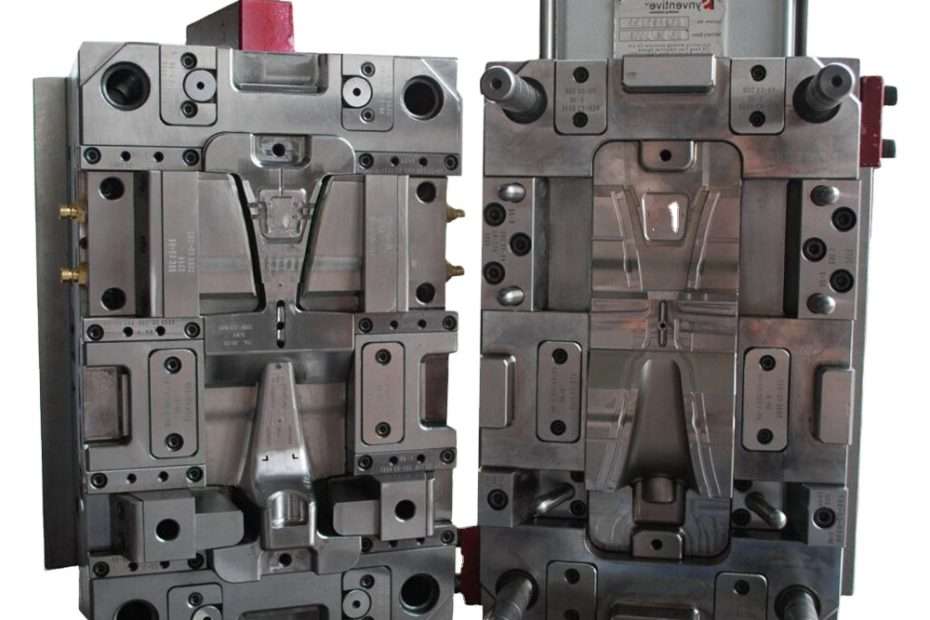
A buyer sends an RFQ for an SMC compression mold to three mold shops and receives quotes of $28,000, $41,000, and $67,000 — for what appears to be the same mold. The natural reaction is to take the low bid. Twenty thousand cycles later, the $28,000 mold requires its first shear edge replacement ($6,000) and the cavity surface needs re-polishing ($3,000) — costs that the $67,000 mold, built with H13 nitrided steel and replaceable inserts, would not have incurred until 60,000+ cycles. Understanding where the money goes in an SMC mold — and why two molds that look identical on a drawing can differ in price by a factor of three — is the difference between making a smart procurement decision and buying an expensive lesson. Here is the line-by-line breakdown.
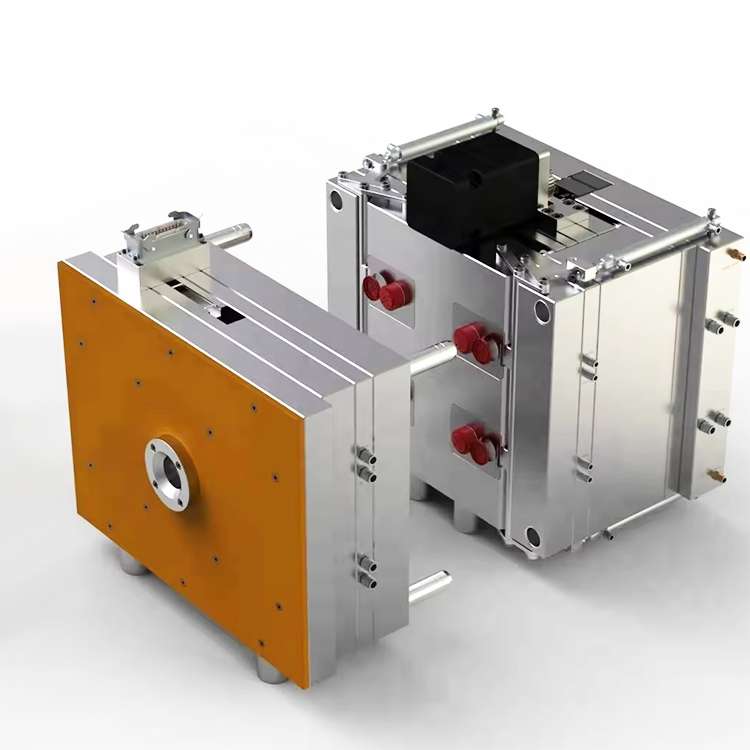
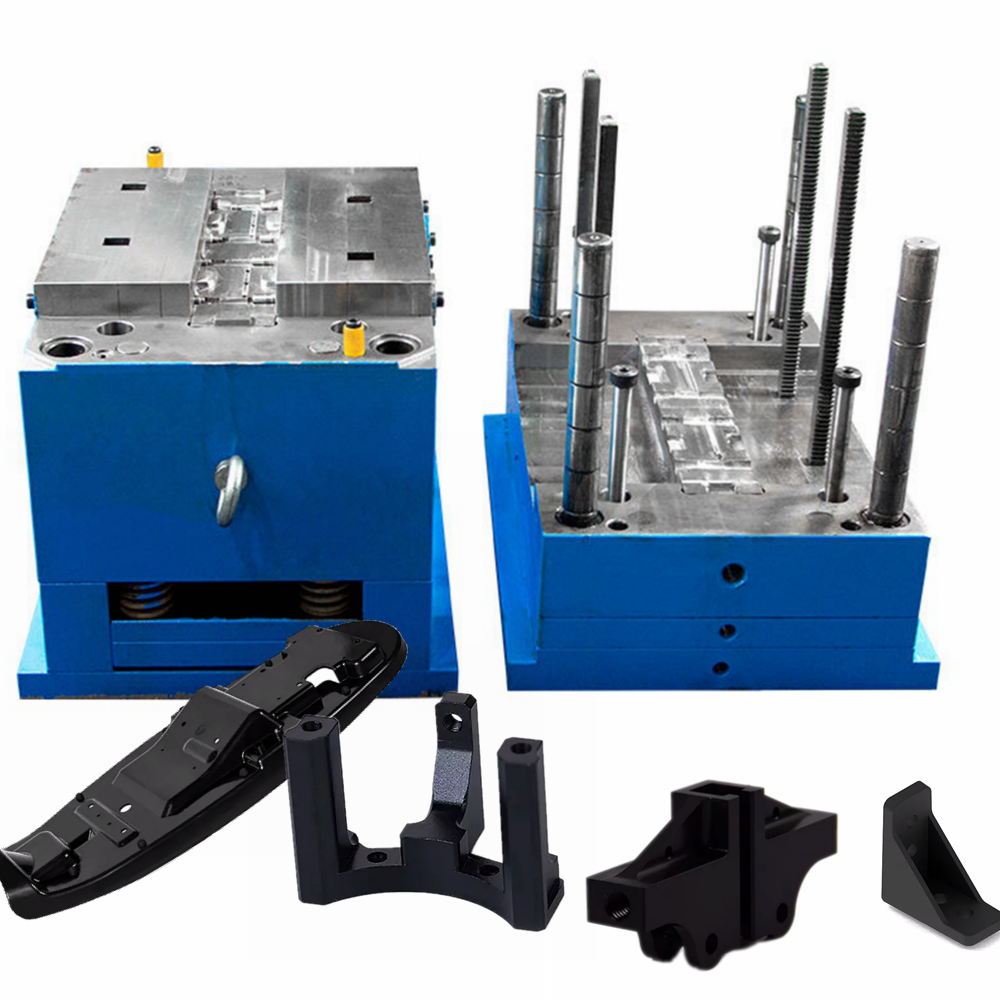
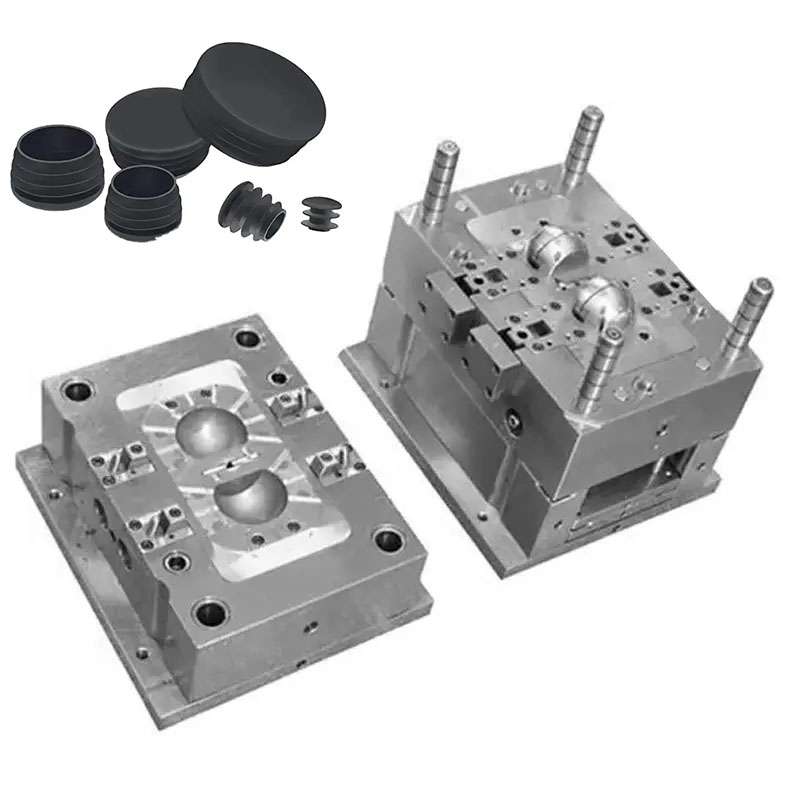
The Total Cost Range: What to Expect
An SMC compression mold for a part the size of a dinner plate (300×300mm projected area) with moderate complexity (no side actions, no Class A surface) costs $15,000-30,000 in P20 steel from a Chinese mold shop. The same mold from a European or North American mold shop costs $35,000-60,000 — the difference primarily reflecting labor rates, not steel quality. As part size and complexity increase: a truck exterior body panel mold (1,500×1,000mm, Class A surface, heated, with vacuum assist) costs $80,000-150,000 in H13 from a qualified automotive mold supplier. A complex mold with multiple side actions (hydraulic or mechanical slides for undercuts), multi-cavity (2-4 cavities in one mold base), or extreme surface finish requirements (SPI A-1 mirror polish over the entire cavity) can exceed $200,000. The mold cost is amortized over the production volume: at 50,000 parts, a $50,000 mold adds $1.00 per part; at 200,000 parts, it adds $0.25. For low-volume production (under 10,000 parts), mold cost dominates the piece price. For high-volume production (over 100,000 parts), material and cycle time dominate, and investing in a higher-quality mold that runs faster and requires less maintenance delivers a lower total cost per part despite the higher initial investment.
Where the Money Goes: Line-by-Line Breakdown
The largest cost component is steel and rough machining (25-35% of total mold cost). A mold base for a typical SMC tool — two mold plates 400×500×80mm — requires approximately 250 kg of steel. In P20, this costs $3-5/lb, or approximately $1,800-3,000 for the raw steel blocks. In H13, it is $8-12/lb, or $4,500-7,000. But the steel cost is only part of the picture. Rough machining — removing the bulk of the steel to create the approximate cavity shape — is done on a CNC mill with large carbide tooling. For a moderately complex cavity, this takes 20-40 hours of machine time at $60-100/hour, adding $1,500-4,000. Heat treating (25-30% for H13; not required for pre-hardened P20) costs $1,500-3,000 and adds the risk of distortion. Finish machining and EDM (20-25%) is the most skilled and time-consuming operation. The cavity and core are machined to final dimensions using small-diameter carbide ball end mills with stepovers of 0.1-0.3mm for semi-finishing and 0.05-0.1mm for finishing. Deep ribs and sharp corners that cannot be reached by a rotating tool are machined by electrical discharge machining (EDM) — a graphite or copper electrode is sunk into the steel, eroding the cavity shape. Finish machining plus EDM for a complex cavity takes 40-80 hours at $80-120/hour, adding $4,000-10,000.
Polishing (10-15%) is manual labor. A skilled polisher using progressively finer diamond paste (starting at 30 micron and working down to 1 micron for SPI A-2 or 0.5 micron for A-1 mirror finish) spends 20-40 hours on a cavity of moderate complexity. At $40-60/hour, this adds $1,000-2,500. A Class A automotive surface (SPI A-1 over the entire cavity with zero visible scratches under fluorescent inspection lighting) can take 80-120 hours and cost $4,000-8,000 for polishing alone. Assembly, spotting, and tryout (10-15%). After the individual mold components are machined and polished, they are assembled — shear edge inserts are fitted, ejector pins are installed and ground flush, heater cartridges and thermocouples are wired, and the mold is mounted in a tryout press. The spotting process — applying a thin layer of bluing compound to one mold half, closing the mold, and checking the contact pattern — reveals high spots that must be hand-scraped or re-machined for proper fit. Tryout involves molding sample parts with production SMC material, measuring critical dimensions, and adjusting the mold (adding or removing steel, adjusting shear edge clearances, modifying vent grooves) until the parts meet specification. Tryout typically requires 1-3 days of press time ($500-1,500 per day) plus mold maker labor. The remaining 5-10% covers design engineering (3D CAD modeling, mold flow simulation, detail drawings), project management, and profit margin.
Why Quotes Vary by a Factor of Three
When three mold shops quote different prices for the same part, the differences are almost always in the details that the buyer has not specified. Steel grade: did the low quote assume P20 while the high quote assumed H13 nitrided with D2 shear edge inserts? That difference alone is $8,000-15,000. Replaceable inserts: did the low quote assume integral shear edges (machined directly into the cavity and core, not replaceable) while the high quote includes replaceable D2 inserts on all shear edges? Integral shear edges save $3,000-6,000 at build but cost $6,000-12,000 for the first repair. Surface finish: does the low quote include polishing to SPI B-2 (matte, sufficient for structural parts) while the high quote includes SPI A-1 (mirror finish)? That is a $3,000-8,000 difference. Tryout scope: does the low quote include one day of tryout with the mold shop’s generic SMC, while the high quote includes three days with the customer’s production material, dimensional inspection on a CMM, and a first-article inspection report? That is a $2,000-5,000 difference. Warranty: does the low quote provide no warranty beyond delivery, while the high quote warrants the mold for 50,000 cycles against manufacturing defects? The warranty has real value if the mold fails prematurely. The buyer who specifies none of these details in the RFQ will receive quotes that appear to be for the same mold but are actually for three different molds — and taking the low bid means accepting all of the unspecified low-cost defaults.
| Cost Component | P20 Prototype Mold (300×300mm) | H13 Production Mold (300×300mm) | H13 Class A Production Mold (1,000×800mm) |
|---|---|---|---|
| Steel Material | $1,800-3,000 | $4,500-7,000 | $12,000-20,000 |
| Rough Machining | $1,500-3,000 | $2,000-4,000 | $6,000-12,000 |
| Heat Treating | N/A (pre-hardened) | $1,500-3,000 | $2,500-5,000 |
| Finish Machining + EDM | $4,000-8,000 | $6,000-12,000 | $20,000-40,000 |
| Polishing | $1,000-2,000 (SPI B-2) | $2,000-4,000 (SPI A-2) | $8,000-15,000 (SPI A-1) |
| Assembly + Tryout | $2,000-4,000 | $3,000-6,000 | $8,000-18,000 |
| Total Range | $15,000-30,000 | $25,000-50,000 | $80,000-150,000 |