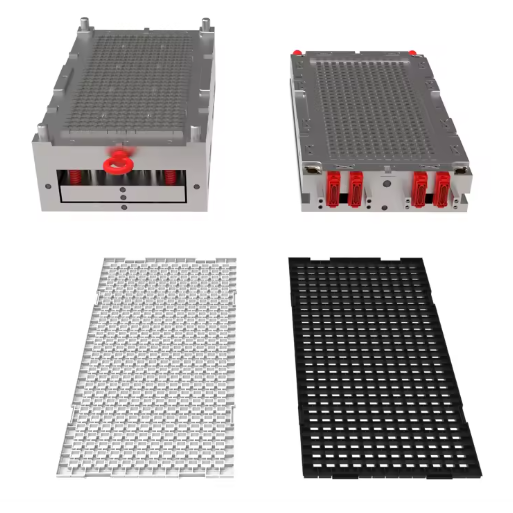
Seedling tray molds serves as the cornerstone of modern agricultural propagation systems, enabling mass production of uniform seedling containers with precise specifications. These specialized tools must balance durability, precision, and cost-effectiveness to meet the demanding requirements of commercial horticulture. A well-engineered seedling tray mold directly impacts crop establishment success by ensuring consistent cell dimensions, optimal root development space, and uniform water distribution.
The agricultural sector’s shift toward controlled environment agriculture has elevated the importance of high-quality seedling tray mold design. Modern seedling tray mold must accommodate various cell configurations, from single-cell plugs to multi-cavity trays, while maintaining strict dimensional tolerances. This precision ensures seedlings receive uniform light, water, and nutrient access during their critical early growth stages.
Material Selection for Seedling Tray Mold Construction
Selecting appropriate materials represents the foundation of seedling tray mold performance. The ideal seedling tray mold material must exhibit high wear resistance, excellent thermal conductivity, and dimensional stability under repeated heating and cooling cycles. Industry standards typically favor pre-hardened tool steels such as P20 and 718H for general-purpose seedling tray mold applications, offering a balance between cost and durability.
For high-volume production scenarios, premium materials like S136 or NAK80 provide superior polish retention and corrosion resistance, extending seedling tray mold lifespan beyond 1 million cycles. These advanced alloys minimize maintenance requirements while ensuring consistent part quality. Material selection directly influences seedling tray mold longevity, with proper heat treatment processes like nitriding further enhancing surface hardness to 42-48 HRC for critical wear components.
Precision Molding Parameters for Optimal Seedling Tray Production
Achieving consistent seedling tray quality requires meticulous control of injection molding parameters specific to seedling tray mold operations. The molding process begins with material drying to reduce moisture content below 0.02%, preventing surface defects in the final product. Optimal melt temperatures range from 180-220°C for PP materials, with injection pressures typically set between 600-800 bar to ensure complete cavity filling.
Cooling system design represents a critical aspect of seedling tray mold engineering. Properly positioned cooling channels maintain uniform temperature distribution, reducing cycle times to 25-40 seconds while minimizing part warpage. The seedling tray mold’s gating system should be strategically located to avoid visible weld lines on critical surfaces, with hot runner systems preferred for multi-cavity seedling tray mold configurations to ensure balanced filling.
Agricultural Standards and Seedling Tray Mold Compliance
Seedling tray mold design must adhere to established agricultural standards governing container dimensions, drainage, and material safety. International standards specify cell volume ranges from 20-150 cm³ depending on crop type, directly influencing seedling tray mold cavity geometry. Drainage hole specifications require precise placement and diameter control within the seedling tray mold to prevent waterlogging while maintaining adequate moisture retention.
Material safety standards mandate that seedling tray mold produce containers free from harmful substances, with food-grade certifications required for edible crop applications. The seedling tray mold must accommodate these requirements through proper material selection and surface finishing. Additionally, stackability features incorporated into seedling tray mold design optimize storage and transportation efficiency, reducing logistics costs for agricultural producers.
Advanced Surface Treatment Techniques for Seedling Tray Mold
Surface treatment plays a pivotal role in seedling tray mold performance and product quality. Diamond polishing achieves mirror finishes (Ra 0.02-0.05 μm) on seedling tray mold cavities, ensuring easy release and preventing root adhesion. Specialized texturing processes can be applied to seedling tray mold surfaces to promote optimal root development by guiding root growth patterns.
Corrosion resistance treatments are essential for seedling tray molds longevity, particularly when processing materials containing agricultural additives. Plasma nitriding creates a hard, wear-resistant surface layer while maintaining the seedling tray mold’s dimensional stability. For specialized applications, PVD coatings can further enhance release properties and reduce maintenance requirements, extending the effective working life of the seedling tray mold.
Structural Design Innovations in Modern Seedling Tray Mold
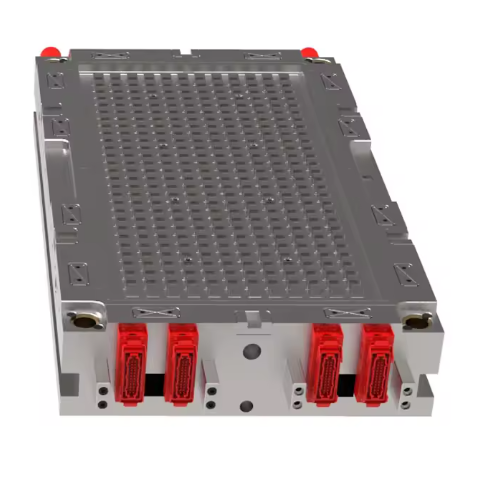
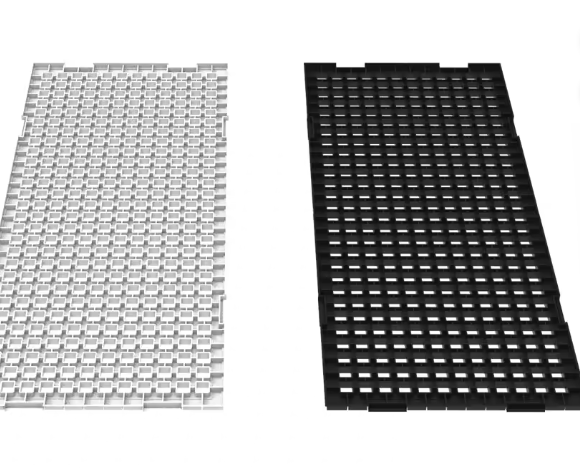
Contemporary seedling tray molds design incorporates several innovative features to enhance performance and functionality. Collapsible cavity designs allow for production of stackable trays with minimal storage footprint, while integrated venting systems prevent air entrapment during molding. The seedling tray mold’s parting line configuration must be precisely engineered to eliminate flash while maintaining the structural integrity of thin-walled sections.
Advanced seedling tray molds may include interchangeable inserts to accommodate different cell configurations, maximizing flexibility for producers growing multiple crop varieties. Ejection systems require careful design to prevent damage to delicate tray features, with sequential ejection often employed for complex geometries. The seedling tray mold’s overall structure must balance rigidity with thermal efficiency, incorporating beryllium copper inserts in critical areas to improve cooling uniformity.
Future Trends in Seedling Tray Mold Technology
The seedling tray molds industry continues to evolve with advancements in materials and manufacturing technologies. Additive manufacturing is emerging as a viable method for producing complex seedling tray mold components, enabling conformal cooling channels that reduce cycle times by up to 30%. Simulation software allows for virtual testing of seedling tray mold designs, optimizing flow dynamics and identifying potential defects before physical production.
Sustainability considerations are driving the development of biodegradable material-compatible seedling tray molds designs. These specialized seedling tray mold configurations accommodate materials like PLA and starch-based polymers, supporting the agricultural sector’s shift toward environmentally responsible practices. As precision agriculture continues to advance, seedling tray mold will play an increasingly important role in enabling uniform crop establishment and maximizing resource efficiency.
Conclusion: The Critical Role of Seedling Tray Mold in Modern Agriculture
The seedling tray molds represents a convergence of agricultural science and precision engineering, directly impacting crop productivity and sustainability. By selecting appropriate materials, optimizing molding parameters, and incorporating innovative design features, modern seedling tray mold enables the consistent production of high-quality propagation containers. As the agricultural industry faces increasing pressure to produce more with less, the seedling tray mold will remain an essential tool in ensuring efficient, uniform crop establishment and maximizing resource utilization.
Investment in advanced seedling tray mold technology yields dividends through improved seedling quality, reduced material waste, and enhanced production efficiency. By adhering to agricultural standards and embracing emerging manufacturing techniques, seedling tray mold manufacturers can continue to support the evolving needs of modern horticulture and contribute to global food security initiatives.