
Safety helmets are crucial equipment for protecting individuals in various hazardous environments. They are widely used in construction sites, transportation, sports, and other fields. The quality and design of safety helmet molds directly affect the performance and effectiveness of safety helmets.
Types of Safety Helmet Molds
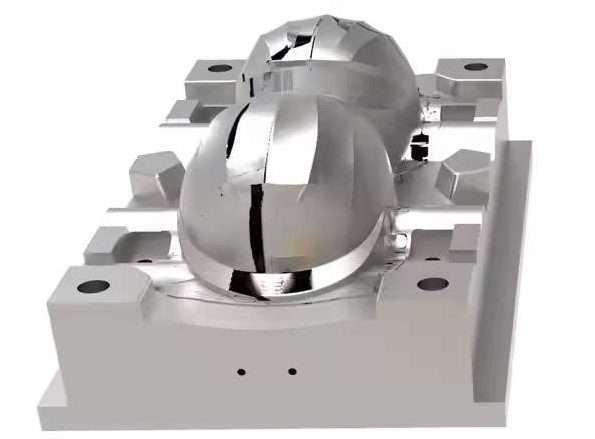
Injection Molds: Injection molds are one of the most commonly used molds for producing safety helmets. They involve injecting thermoplastic materials into mold cavities using an injection molding machine, cooling and forming them into safety helmets. Injection molds offer high production efficiency and low costs, making them suitable for large-scale production.
Die-Casting Molds: Die-casting molds are primarily used for producing metal safety helmets, suitable for areas requiring high strength. They involve injecting molten metal into mold cavities and cooling them to form the helmet. Die-casting molds can produce high-strength, high-precision safety helmets but are relatively expensive and suitable for small-batch production.
Thermoforming Molds: Thermoforming molds involve heating plastic sheets and forming them onto the mold surface under vacuum conditions. This process is mainly used for producing plastic safety helmets, offering low production costs and simple processes, suitable for small to medium-scale production.
Design Principles of Safety Helmet Molds
Structural Design: The structural design of safety helmet molds needs to consider various factors, such as the helmet’s shape, size, and strength. The safety Helmet molds structure should ensure uniform material distribution during production, avoiding defects. Additionally, the mold’s parting line, cooling system, and other features need careful design to improve production efficiency and product quality.
Material Selection: Material selection for safety helmet molds is crucial. Common mold materials include tool steel, stainless steel, etc. These materials offer good strength and wear resistance, ensuring the mold’s lifespan and stability. Furthermore, mold materials should have good thermal conductivity to improve production efficiency and product quality.
Mold Processing: The processing precision of safety helmet molds directly affects product quality. High-precision mold processing ensures the helmet’s dimensional accuracy and surface finish, enhancing its performance. Mold processing usually involves high-precision equipment such as CNC machines and EDM to ensure processing quality.
Production Processes of Safety Helmet Molds
Injection Molding Process: The injection molding process is the most commonly used method for producing plastic safety helmets. First, thermoplastic materials are heated to a molten state and injected into mold cavities using an injection molding machine, cooling and solidifying them into finished products. During production, controlling injection temperature, injection pressure, cooling time, and other parameters is crucial to ensure product quality.
Die-Casting Process: The die-casting process is primarily used for producing metal safety helmets. Molten metal is injected into mold cavities using a die-casting machine, cooling and solidifying them into finished products. The die-casting process offers high production efficiency and product precision but requires high equipment and process standards.
Thermoforming Process: The thermoforming process is suitable for producing plastic safety helmets. First, plastic sheets are heated to a softened state and vacuum-formed onto mold surfaces, cooling and solidifying them into finished products. The thermoforming process offers simplicity and low costs but relatively low production efficiency, suitable for small to medium-scale production.
Impact of Safety Helmet Molds on Safety
Structural Strength: The design and material selection of safety helmet molds directly affect the helmet’s structural strength. High-strength helmets effectively absorb and disperse external impact forces, protecting the user’s head. Therefore, mold design and material selection should fully consider the structural strength requirements of helmets.
Dimensional Accuracy: The dimensional accuracy of safety helmets directly affects their comfort and protective performance. High-precision mold processing ensures the helmet’s dimensional accuracy, enhancing its performance. During mold processing, strict control over processing precision is necessary to ensure product quality.
Surface Quality: The surface quality of safety helmets directly affects their aesthetics and performance. The surface finish and precision of molds directly impact the helmet’s surface quality. Therefore, high-precision equipment and processes should be used during mold processing to ensure product surface quality.
Material Performance: The material performance of safety helmet molds directly affects their protective effectiveness. Mold materials should have good wear resistance, strength, and thermal conductivity to ensure uniform material distribution and cooling during production. Additionally, helmet material selection should consider protective performance and comfort to meet different usage scenarios’ requirements.
Manufacturing Process of Safety Helmet Molds
Design Phase: Conduct needs analysis, conceptual design, and detailed design to determine the helmet’s shape, size, and material selection.
Mold Manufacturing Preparation: Select suitable mold materials and develop detailed process planning.
Mold Processing:
- Rough Processing: Process the safety helmet molds material into the basic shape and size.
- Precision Processing: Further improve the mold’s dimensional accuracy and surface finish.
- Heat Treatment: Enhance the mold’s hardness and wear resistance.
- Surface Treatment: Improve the mold’s surface quality and corrosion resistance.
Mold Assembly and Debugging: Assemble safety helmet molds components, perform debugging and trial production, ensuring mold performance and production efficiency.
Production and Quality Control: Enter formal production, enforce strict quality control to ensure products meet design requirements and quality standards.
Mold Maintenance and Upkeep: Perform daily maintenance, periodic inspections, and preventative maintenance to extend the mold’s service life.
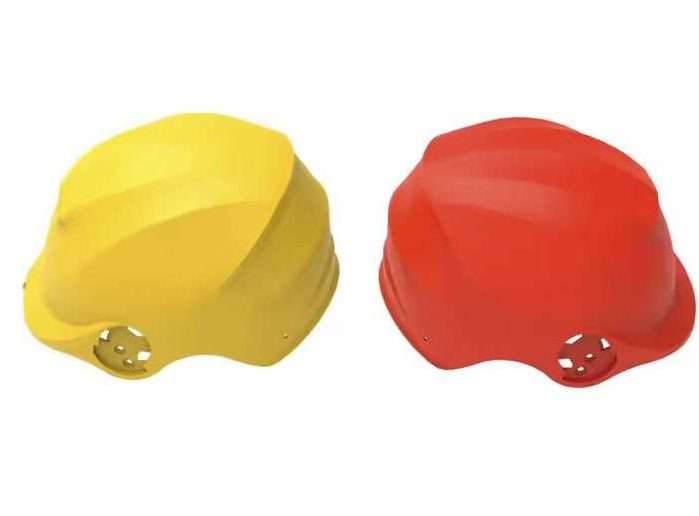
What is an in mold helmet?
An in-mold helmet is a type of helmet manufactured using in-mold technology. This technology has several key features during the helmet manufacturing process. Firstly, in-mold technology achieves a single-piece construction, where the outer shell and inner liner of the helmet are formed simultaneously, fusing together during manufacturing to create a single unit without separate parts. This enhances the helmet’s strength and safety. Secondly, in-mold helmets are generally lighter than those produced by traditional methods, as excess material is eliminated, making them more comfortable to wear.
Additionally, in-mold technology ensures a tight fit between the outer shell and inner liner, allowing the helmet to better disperse impact forces and thus improve its protective performance. This technology also allows for complex aesthetic designs to be directly integrated during the forming process, enabling the helmet’s colors and patterns to be completed during production, making it both highly functional and visually appealing. In-mold technology is widely used in the manufacturing of helmets for cycling, skiing, and skateboarding, ensuring that athletes receive effective protection during their activities.
What is the difference between hard shell and in mold helmets?
The primary difference between hard shell and in-mold helmets lies in their construction and materials used, which impact their performance and applications.
Hard Shell Helmets
- Construction: Hard shell helmets are built with a thick, rigid outer shell made from materials like ABS (Acrylonitrile Butadiene Styrene) plastic. This hard shell is then fused with an inner foam liner, usually made of EPS (Expanded Polystyrene) foam, which provides cushioning.
- Durability: These helmets are known for their high durability and resistance to impact. The robust outer shell can withstand multiple minor impacts without significant damage, making them suitable for activities with higher risk of falls or collisions.
- Weight: Hard shell helmets are typically heavier due to the thicker outer shell. This added weight can make them less comfortable for extended wear.
- Usage: They are commonly used in activities such as skateboarding, rollerblading, and some forms of cycling, particularly in urban environments where minor bumps and scrapes are more frequent.
In-Mold Helmets
- Construction: In-mold helmets are made by fusing the outer shell and inner foam liner in a single molding process. The outer shell is typically made from thin polycarbonate plastic, and the foam liner is made from EPS foam.
- Lightweight: The in-mold process results in a lighter helmet compared to hard shell helmets. This lightweight nature makes them more comfortable for long-duration wear and high-intensity activities.
- Impact Absorption: In-mold helmets are designed to provide excellent impact absorption by distributing the force of an impact across a larger area. This makes them highly effective in protecting against serious injuries from significant impacts.
- Aesthetics: The in-mold process allows for more intricate designs and smoother finishes, often resulting in a more aesthetically pleasing helmet.
- Usage: These helmets are popular in activities like road cycling, mountain biking, and skiing, where lightweight construction and high impact absorption are essential.
In summary, hard shell helmets are more durable and suitable for activities with frequent minor impacts, while in-mold helmets are lighter, more comfortable, and designed for superior impact absorption in activities with higher impact risks.