
Amid the booming fast-moving consumer goods industry, plastic water cups, as daily necessities, continue to see growing market demand. Plastic cup molds play a vital role in the production process of plastic water cups.According to data from global market research firm Statista, the global plastic water cup market reached $42 billion in 2023 and is projected to grow at a 5.8% CAGR over the next five years. As the core equipment for plastic cup production, advancements in mold technology directly impact product iteration speed, production costs, and environmental efficiency. This article delves into the design principles, manufacturing processes, and industry trends of plastic cup molds.
The Birth and Development of Plastic Cup Molds
The emergence of plastic cup molds coincided with the development of plastic processing technology. In the early 20th century, plastic began to be widely used as an emerging material. However, due to limitations in processing technology, the production efficiency of plastic products was low, and the quality was inconsistent. It wasn’t until the advent of injection molding technology that the production of plastic products underwent revolutionary changes. Injection molding is a process in which molten plastic is injected into the mold cavity and then cooled and solidified to form the final product. The plastic cup mold, as a core component of injection molding, was thus born.
Early plastic cup molds had relatively simple structures and limited functions. As people’s demands for the quality and functionality of plastic cups increased, mold manufacturing technology also continued to advance. From single-cavity molds to multi-cavity molds, and from manual manufacturing to numerical control (NC) machining, the precision and complexity of plastic cup molds have been greatly enhanced. Today, advanced plastic cup molds can not only produce cups with exquisite appearance and precise dimensions but also integrate multiple functions, such as insulation, leak-proofing, and foldability.
The Structure and Design of Plastic Cup Molds
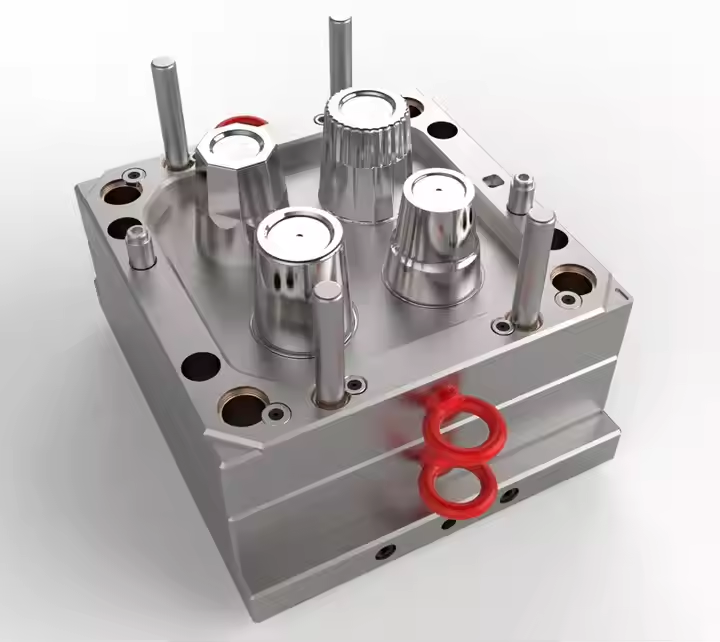
Plastic cup molds are mainly composed of the following parts: mold frame, cavity, core, gating system, cooling system, and ejection mechanism.
- Mold Frame: This is the foundation of the mold, used to support and fix other components. The strength and stability of the mold frame directly affect the service life and production efficiency of the mold.
- Cavity and Core: These are the core parts of the mold, and their shapes and dimensions determine the exterior and internal structure of the plastic cup. When designing the cavity and core, factors such as the product’s appearance, functionality, and wall thickness must be considered to ensure that the molded cup meets quality requirements.
- Gating System: The gating system is responsible for evenly directing the molten plastic into the cavity. It includes the main runner, sub-runner, and gate. A well-designed gating system can reduce heat and pressure loss during plastic flow, improving product quality.
- Cooling System: An essential part of plastic cup molds, the cooling system removes heat from the mold after the plastic has been injected and begins to cool and solidify. This is typically achieved through circulating cooling water or oil, which speeds up the cooling process, shortens the molding cycle, and increases production efficiency.
- Ejection Mechanism: The ejection mechanism pushes the molded plastic cup out of the mold. It usually consists of ejector pins, an ejector plate, and reset springs. The design of the ejection mechanism must ensure that the product can be removed smoothly without damage.
When designing plastic cup molds, other factors such as machining processes, material selection, and service life must also be considered. For example, mold materials are typically high-strength, heat-resistant, and wear-resistant steels to ensure long-term stability in high-temperature, high-pressure injection molding environments. Additionally, mold design should also consider the convenience of maintenance and repair to quickly address any issues that arise.
The Importance of Plastic Cup Molds in Production
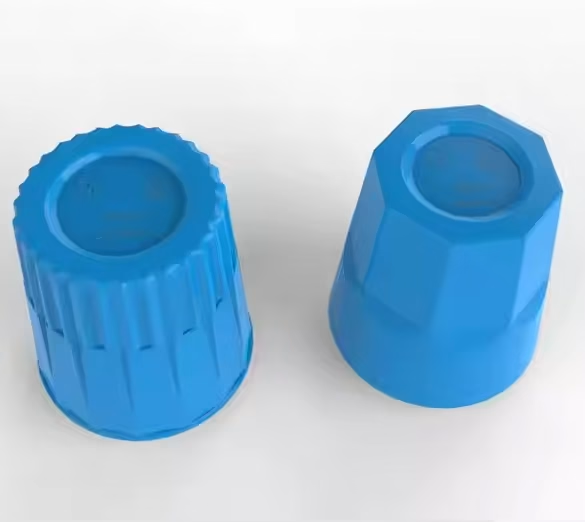
Plastic cup molds are indispensable key components in the production process of plastic cups. They not only determine the appearance and dimensional accuracy of plastic cups but also directly affect product quality and production efficiency.
- Ensuring Product Quality: High-quality plastic cup molds can ensure that the molded cups have a smooth surface, no defects, precise dimensions, and uniform wall thickness. These factors are crucial for the cup’s sealability, insulation, and service life. For example, if the mold cavity surface is rough, the molded cup may have scratches or indentations, affecting its appearance and quality. If the mold cavity dimensions are inaccurate, the cup’s sealing ring may not fit tightly, leading to leakage.
- Improving Production Efficiency: Advanced plastic cup molds can achieve rapid injection molding and cooling solidification, significantly reducing production cycles. Moreover, multi-cavity mold designs can produce multiple cups simultaneously, further increasing production efficiency. For example, an injection molding machine using a multi-cavity mold can produce dozens of plastic cups in just a few minutes, whereas a traditional single-cavity mold would take much longer.
- Reducing Production Costs: Although high-quality plastic cup molds have higher manufacturing costs, in the long run, they can improve production efficiency and reduce defect rates, thereby lowering the unit production cost. Additionally, the service life of the mold directly affects production costs. If the mold has a short service life, it needs to be replaced frequently, increasing production costs.
Conclusion
From traditional manufacturing to intelligent creation, the evolution of plastic water cup molds mirrors industrial progress. Driven by technological leaps and environmental imperatives, this seemingly conventional field is revitalizing consumer goods manufacturing. Embracing material innovation, digital transformation, and sustainability will be key to securing future market leadership.