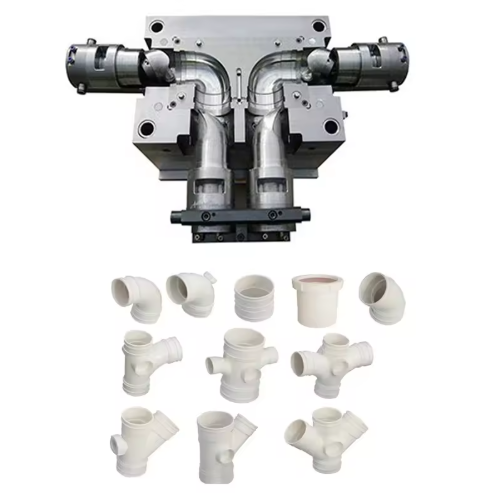
The plastic pipe fitting mold plays a critical role in the manufacturing of fluid conveyance systems, requiring precise material selection and engineering to ensure dimensional accuracy, corrosion resistance, and long-term durability. Modern plastic pipe fitting molds must accommodate various thermoplastic materials (PVC, PE, PP, PVDF) while maintaining tight tolerances (±0.1mm) and surface finishes (Ra ≤ 0.8μm). This comprehensive guide explores material selection criteria, design considerations, manufacturing processes, and quality control standards specific to plastic pipe fitting mold applications, providing engineers with technical insights for optimizing mold performance and production efficiency.
Material Selection for Plastic Pipe Fitting Molds
Pre-hardened Steel P20 (3Cr2Mo)
P20 stands as the economical workhorse for plastic pipe fitting molds in medium-volume production scenarios (100,000-300,000 cycles). This pre-hardened steel (28-32 HRC) offers excellent machinability and cost-effectiveness, making it ideal for non-corrosive plastic applications such as PP and PE pipe fittings. Key properties include:
- Tensile strength: 950-1100 N/mm²
- Impact toughness: 25 J/cm² (charpy)
- Polishing capability: Up to #4000 grit (Ra 0.2μm)
- Cost advantage: 30-50% lower than 718H
P20 performs best in molds for simple pipe fitting geometries like elbows and tees, where high surface finish requirements are not critical. The material’s moderate hardness balances wear resistance with machining efficiency, allowing for complex cooling channel geometries essential for uniform pipe wall thickness.
Enhanced Pre-hardened Steel 718H (3Cr2NiMo)
As an upgraded version of P20, 718H addresses the limitations of standard pre-hardened steels for plastic pipe fitting molds requiring higher precision. With a nickel-enriched composition and vacuum melting process, this material (33-38 HRC) delivers:
- Superior hardness uniformity (±2 HRC across section)
- Enhanced polishability: Up to #8000 grit (Ra 0.05μm)
- Improved dimensional stability: ±0.02mm/m after machining
- Extended service life: 500,000+ cycles for PP/PE fittings
718H excels in multi-cavity molds for precision pipe fittings such as threaded connectors and reducing bushes, where consistent wall thickness (±0.05mm) is critical for pressure rating compliance. The material’s improved hardenability ensures uniform properties even in large mold blocks up to 300mm thickness.
Corrosion-Resistant Stainless Steel S136 (4Cr13)
For plastic pipe fitting molds processing corrosive materials (PVC, CPVC), S136 stainless steel provides essential corrosion resistance through its high chromium content (13.6%). After heat treatment (48-52 HRC), this material offers:
- Salt spray resistance: 500 hours (ASTM B117)
-Mirror polishing capability: SPI A-1 finish (Ra 0.025μm) - Maintenance-free operation: No chromium plating required
- Service temperature range: -40°C to 180°C
S136 is indispensable for molds producing chemical drainage fittings and industrial waste pipes, where exposure to chlorides and acids would rapidly degrade conventional steels. The material’s low thermal conductivity (16 W/(m·K)) necessitates specialized cooling system design but rewards with extended maintenance intervals (typically 100,000 cycles between cleanings).
Heat-Resistant Steel H13 (4Cr5MoSiV1)
For high-temperature thermoplastic pipe fittings (PVDF, PEX), H13 hot work steel delivers exceptional thermal fatigue resistance. After quenching and tempering (48-52 HRC), it maintains properties at operating temperatures up to 600°C:
- Thermal conductivity: 26 W/(m·K)
- Hot hardness: 45 HRC at 500°C
- Impact toughness: 35 J/cm² (at room temperature)
- Wear resistance: 20% higher than S136 in abrasive environments
H13 finds application in molds for high-pressure industrial pipe fittings, where melt temperatures exceed 280°C and cycle times extend beyond 60 seconds. The material’s resistance to heat checking ensures dimensional stability in multi-cavity molds for complex geometries like manifold fittings and flanged connectors.
Design Considerations for Plastic Pipe Fitting Molds
Dimensional Accuracy Requirements
Plastic pipe fitting molds must maintain tight tolerances to ensure leak-free connections:
- Diameter tolerance: ±0.1mm (ISO 1167-3)
- Wall thickness variation: ≤5% across fitting
- Thread precision: Conforms to ISO 228 (BSP) or ANSI B1.20.1 standards
- Flatness: ≤0.05mm/m for flange sealing surfaces
Achieving these requirements demands precision machining (±0.005mm) and careful consideration of mold shrinkage rates (typically 1.5-3.0% for thermoplastics). The plastic pipe fitting mold design must incorporate uniform cooling to minimize warpage in asymmetric fittings like reducing tees and offset elbows.
Gating and Runner Systems
Optimal gating design is critical for pipe fitting quality and production efficiency:
- Gate type: Fan gates for flat surfaces, submarine gates for threaded areas
- Gate size: 0.8-1.5mm diameter (depending on fitting size)
- Runner configuration: Balanced tree design for multi-cavity molds
- Pressure drop: ≤15% from sprue to gate
For large-diameter fittings (>100mm), sequential valve gating ensures uniform filling and minimizes weld lines that could compromise pressure integrity. The plastic pipe fitting mold’s hot runner system should maintain melt temperature within ±2°C to prevent material degradation, particularly critical for PVC processing (thermal stability window: 180-200°C).
Cooling System Optimization
Efficient thermal management in plastic pipe fitting molds reduces cycle time and ensures dimensional consistency:
- Channel diameter: 8-10mm standard (12mm for large fittings)
- Layout pattern: Conformal to fitting geometry
- Water velocity: 1.5-3.0m/s (turbulent flow)
- Temperature control: ±1°C using proportional-integral controllers
For complex pipe fitting geometries, 3D-printed conformal cooling inserts reduce cycle time by 25-35% compared to conventional straight channels. The cooling system should maintain mold temperature variation below 5°C across all cavities to ensure uniform shrinkage in multi-cavity plastic pipe fitting molds producing mixed fitting types.
Manufacturing Processes for Plastic Pipe Fitting Molds
Precision Machining
The production of plastic pipe fitting molds demands advanced machining techniques to achieve the required precision:
- CNC milling: 5-axis machining for complex fitting geometries
- EDM wire cutting: ±0.002mm accuracy for critical dimensions
- Surface grinding: Flatness within 0.005mm/m
- Micro-drilling: Cooling channels as small as 4mm diameter
The machining sequence must account for the different hardness characteristics of mold materials. For 718H, roughing operations should be performed at 35-40 HRC before stress relieving, while finish machining occurs at final hardness to minimize distortion.
Surface Treatment
Surface enhancement processes extend plastic pipe fitting mold life and performance:
- Nitriding: 0.1-0.3mm case depth (800-1000 HV) for P20/718H
- Chromium plating: 0.01-0.03mm layer for PVC molds (600-800 HV)
- PVD coating: TiN (2000 HV) for abrasive glass-filled materials
- Electropolishing: Ra 0.025μm finish for optical clarity in transparent fittings
For PVC pipe fitting molds, electrolytic nickel plating (5-10μm) provides a cost-effective alternative to stainless steel, offering corrosion resistance while maintaining machiningability. The plating must be applied after all machining operations to avoid damage to the protective layer.
Assembly and Validation
The final assembly of plastic pipe fitting molds requires meticulous attention to detail:
- Guide pillar parallelism: ≤0.01mm over full stroke
- Plate flatness: ≤0.02mm/m across parting surfaces
- Hot runner alignment: Concentricity within 0.02mm
- Leak testing: 0.8MPa pressure test for cooling channels
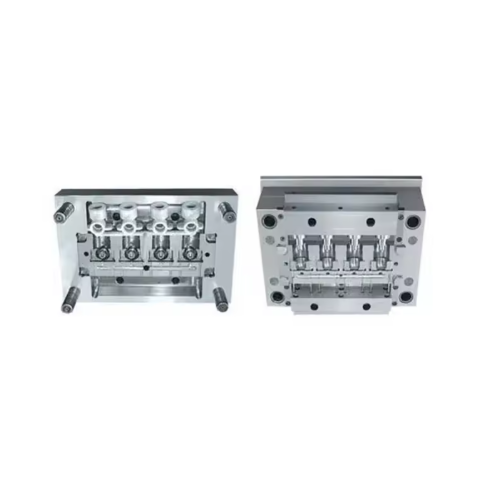
Critical validation procedures include mold flow analysis to optimize gate locations and pressure distribution, ensuring that the plastic pipe fitting mold produces fittings with consistent wall thickness and minimal internal stress.
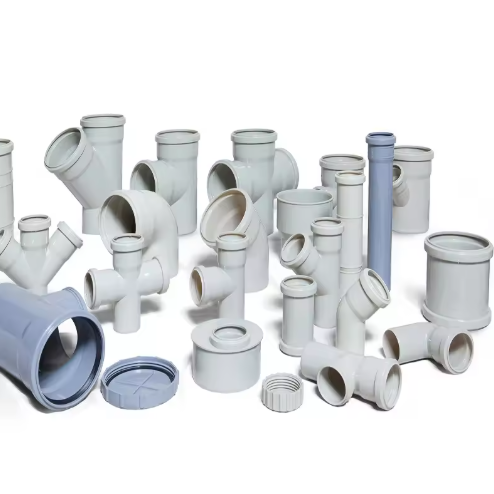
Process Parameters for Plastic Pipe Fitting Molds
Polyvinyl Chloride (PVC) Processing
PVC pipe fitting molding requires precise temperature control to prevent degradation:
- Barrel temperatures: 160-190°C (zone profiling)
- Mold temperature: 40-60°C (oil heating)
- Injection pressure: 90-130 MPa
- Cooling time: 20-40 seconds (depending on wall thickness)
The plastic pipe fitting mold must incorporate efficient venting (0.03mm depth) to evacuate corrosive HCl gases generated during PVC processing. Regular maintenance intervals (every 50,000 cycles) are necessary to remove chloride deposits that can cause surface pitting.
Polyethylene (PE) Processing
For PE pipe fittings, the plastic pipe fitting mold parameters focus on minimizing orientation:
- Melt temperature: 180-220°C
- Mold temperature: 30-50°C (water cooling)
- Injection speed: 50-80 mm/s
- Holding pressure: 60-70% of injection pressure
PE’s high melt elasticity requires larger runners and gates in the plastic pipe fitting mold to avoid excessive shear stress. The material’s low viscosity allows for faster filling of complex fitting geometries like multi-port manifolds.
Polypropylene (PP) Processing
PP pipe fitting molding balances productivity with dimensional stability:
- Screw speed: 60-100 rpm
- Back pressure: 5-10 MPa
- Mold temperature: 40-60°C
- Cycle time: 30-60 seconds (1″ diameter fittings)
The plastic pipe fitting mold for PP applications benefits from higher mold temperatures to improve part crystallinity, enhancing pressure resistance in plumbing fittings. The material’s lower density (0.90-0.91g/cm³) reduces clamping force requirements compared to PVC.
Quality Control and Standards Compliance
Dimensional Inspection
Plastic pipe fitting mold production requires rigorous metrology:
- CMM measurements: 3D scanning with 0.005mm accuracy
- Optical comparators: For thread profile verification
- Pressure testing: 1.5× working pressure for 1 hour (ISO 1167-1)
- Dimensional report: Per ISO 10209 standards
Statistical process control (SPC) charts monitor critical dimensions in production, with control limits set at ±3σ of the plastic pipe fitting mold’s capability (typically Cpk ≥ 1.33 for pressure-rated fittings).
Material Certification
Traceability is essential for plastic pipe fitting mold materials:
- Mill test reports: Chemical composition and mechanical properties
- Heat treatment records: Hardness values and process parameters
- Ultrasonic testing: 100% inspection for internal defects
- Corrosion testing: Salt spray results for stainless steel components
The plastic pipe fitting mold manufacturer should maintain material certification records for the lifetime of the tool (typically 5-10 years), essential for automotive and aerospace applications requiring full traceability.
Performance Validation
Final validation of plastic pipe fitting molds includes:
- First-article inspection: Complete dimensional layout
- Process capability study: 30-piece run with Cpk analysis
- Pressure cycling: 10,000 cycles at rated pressure
- Environmental testing: Thermal cycling from -40°C to 80°C
The validation protocol ensures the plastic pipe fitting mold meets industry-specific standards such as ASTM D2466 (PVC fittings), ASTM F2389 (PE fittings), or ISO 15493 (plastic piping systems for water supply).
Maintenance and Troubleshooting
Preventive Maintenance Schedule
Proactive maintenance extends plastic pipe fitting mold life:
- Daily: Clean parting surfaces and check for flash
- Weekly: Inspect cooling channels for blockages
- Monthly: Verify temperature control accuracy
- Quarterly: Measure critical dimensions and surface finish
- Annually: Complete disassembly and component inspection
For PVC plastic pipe fitting molds, monthly ultrasonic cleaning of cooling channels removes corrosive deposits that can cause localized hot spots and dimensional variation in the molded fittings.
Common Defects and Solutions
Typical plastic pipe fitting mold issues include:
- Flash: Caused by worn guide pins or insufficient clamp force
- Shrinkage voids: Indicates inadequate packing pressure or cooling
- Burn marks: Require improved venting in the plastic pipe fitting mold
- Warpage: Signals uneven cooling or excessive residual stress
Troubleshooting these defects often involves a systematic approach combining mold inspection, process parameter analysis, and material testing. For example, weld line weakness in a tee fitting might require repositioning gates in the plastic pipe fitting mold or increasing melt temperature.
Industry-Specific Applications
Plumbing and Sanitary Fittings
Residential plumbing applications demand cost-effective plastic pipe fitting mold solutions:
- Material selection: P20 or 718H depending on volume
- Surface finish: Ra 0.8μm (matte) for non-visible applications
- Cavity count: 4-8 cavities for standard fittings
- Cycle time target: <45 seconds for 1″ diameter elbows
The plastic pipe fitting mold for plumbing fittings must accommodate color changes, requiring quick purging capabilities and minimal dead spots in the melt flow path.
Industrial Chemical Distribution
For aggressive media transport, plastic pipe fitting mold requires specialized materials:
- Material selection: S136 or plated P20
- Pressure rating: Up to 10 bar (PN10) for industrial use
- Temperature resistance: -40°C to 95°C for PVDF fittings
- Quality documentation: Full material traceability required
These plastic pipe fitting molds often incorporate metal inserts for threaded connections, requiring precise alignment and temperature control to prevent differential shrinkage.
Agricultural Irrigation Systems
Large-diameter irrigation fittings present unique plastic pipe fitting mold challenges:
- Mold size: Up to 1500mm × 1000mm for 6″ diameter fittings
- Material: 718H for durability in outdoor environments
- Cooling: Conformal channels to manage thick walls
- Ejection: Multiple cylinders for uniform脱模
The plastic pipe fitting mold for agricultural applications must withstand UV exposure and temperature extremes, requiring mold materials with good weathering resistance.
Emerging Technologies and Future Trends
Additive Manufacturing
3D printing is transforming plastic pipe fitting mold production:
- Binder jetting: For complex conformal cooling inserts
- SLM technology: Direct metal printing of mold cores
- Lead time reduction: Up to 50% for prototype tooling
- Design freedom: Optimized cooling channels impossible with conventional machining
While not yet suitable for high-volume production, additive manufacturing offers significant potential for bridge tooling and custom plastic pipe fitting mold geometries.
Smart Mold Technology
Industry 4.0 integration enhances plastic pipe fitting mold performance:
- In-mold sensors: Monitor temperature, pressure, and cavity filling
- Predictive maintenance: Vibration analysis detects wear
- Process optimization: Real-time adjustments based on sensor data
- Digital twin: Virtual replication for process simulation
These technologies enable the plastic pipe fitting mold to adapt to material variations and environmental changes, maintaining consistent quality throughout production runs.
Sustainable Manufacturing
Eco-friendly practices are reshaping plastic pipe fitting mold design:
- Lightweighting: Topology optimization reduces material usage
- Recycled content: Up to 30% regrind incorporation
- Energy efficiency: Insulated molds reduce energy consumption
- Longevity design: Modular construction for component replacement
Sustainable plastic pipe fitting mold practices not only reduce environmental impact but also improve total cost of ownership through material and energy savings.
Conclusion
The design and manufacture of plastic pipe fitting molds require a comprehensive understanding of material science, thermodynamics, and precision engineering. By selecting appropriate materials (P20 for economy, 718H for precision, S136 for corrosion resistance), optimizing cooling system design, and implementing rigorous quality control, manufacturers can produce molds capable of meeting the demanding performance requirements of modern pipe fitting systems.