
Pallets, as fundamental carriers in global material handling and storage, rely for their stable and efficient production on a specific type of industrial equipment: pallet molds. Pallet molds represent a specialized set of production systems designed for plastic pallets. Their structure, materials, and operational characteristics directly determine the precision, strength, and production efficiency of the final pallet products. Without the support of these core tooling systems, the large-scale, standardized manufacturing of plastic pallets in modern industry becomes impractical.
Material Characteristics: The Foundational Core of Performance
The selection of the mold base material is the fundamental element determining its service life and operational reliability. Within the plastic pallet industry, steel remains the absolute dominant material. Different steel grades exhibit vastly different physical properties after processing:
- Pre-hardened Plastic Molding Steels (e.g., P20/718): After smelting, they achieve their working hardness (typically in the range of HRC 28-42) directly through heat treatment. They possess excellent machinability and a balanced combination of wear resistance and toughness. These steels dominate in molds for medium/small-sized pallets or those with moderate complexity.
- High-Hardness Hot Work Tool Steels (e.g., H13 Type): These steels demonstrate exceptional resistance to softening at elevated temperatures, resistance to thermal fatigue cracking, and high wear characteristics under high-temperature operating conditions. Achieving higher hardness requires quenching followed by multiple high-temperature tempering processes, stabilizing the final hardness typically between HRC 45-52. These materials are often used for producing large pallets, those with complex inserts, those subjected to high clamping pressures, or demanding thermal cycling environments.
- Special Surface Treatment Processes: These processes form high-hardness compound layers (e.g., TiN, TiAlN, DLC) on specific steel substrates using techniques like nitriding, PVD, or CVD. They provide superior surface wear resistance, corrosion resistance, and low friction coefficients while retaining the high toughness of the substrate material.
Material selection is based on the pallet product design, targeted production volume, injection molding machine clamping force, and cost control strategy. Precision plastic pallet production, in particular, requires preventing excessive deformation or surface damage under long-term, high-cycle pressure impacts.
Manufacturing Process of pallet molds
The creation of a qualified pallet molds integrates design, high-precision machining, and specialized post-processing:
- Digital Design: Mold structure design relies on engineering software systems centered around CAD. The design phase must comprehensively simulate the injection molding process (Moldflow Analysis) to ensure the flow, filling, cooling, and ultimate shrinkage of molten plastic within the cavity is effectively controlled. Analysis of force deformation on the mold clamping mechanism is another critical point, impacting dimensional accuracy, service life, and equipment operational safety.
- Precision Machining: The key stage of transforming design drawings into physical parts. Core process stages include CNC machining centers for the meticulous sculpting of core and cavity parting surfaces (final surface roughness Ra ≤0.8µm), deep-hole drilling equipment for creating high-precision cooling channels (hole diameter tolerance within ±0.05mm), precision EDM for forming complex ribs and corners inaccessible to milling, and wire EDM to ensure exact dimensions for key inserts (accuracy achievable within ±0.005mm).
- Heat Treatment & Surface Enhancement: To achieve specified performance, mold bases or critical components undergo specific heat treatment sequences (quenching + tempering, surface nitriding, etc.) before or after machining, dictated by material properties and design requirements. Post-heat treatment, high-precision grinding corrects distortion and achieves the final geometric specifications.
- Precision Assembly & Fitting: All critical components are meticulously aligned and assembled, ensuring smooth operation and robust control of guiding mechanisms (guide pins, bushings).
- Dynamic Verification & Debugging: The mold must undergo continuous run testing on actual injection molding equipment. Based on samples produced during the trial, process parameters (temperature distribution, pressure profiles, cooling efficiency, ejection timing, etc.) are fine-tuned to resolve common defects like localized shrinkage variation, warpage, weld lines, or short shots, until stable production of pallets conforming to the drawing specifications is achieved.
Pallet molds manufacturing is inherently a systematic engineering practice integrating knowledge from materials science, mechanics, thermodynamics, and fluid dynamics.
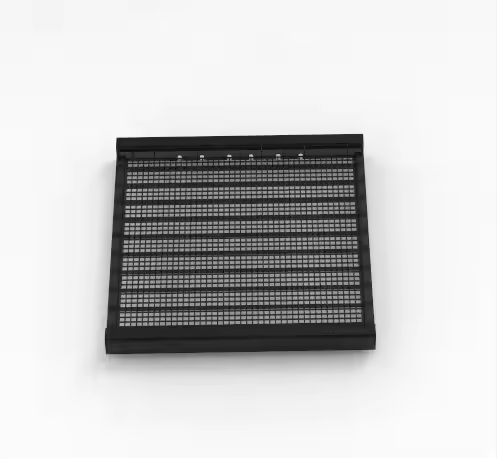
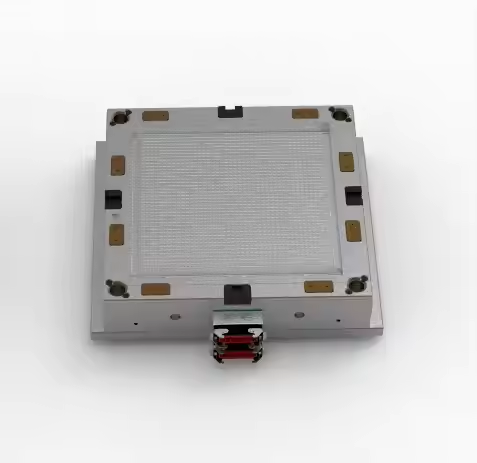
Quality & Precision: Determinants of Production Stability
Core quality monitoring metrics for molds revolve around geometric dimensional tolerances, product physical function, and mold operational longevity:
- Geometric Dimensional Inspection: Both critical mold components and final pallet products require precise inspection using Coordinate Measuring Machines (CMM). This ensures all preset dimensions (including positional tolerances, flatness, rib and wall thickness, etc.) fall within the range defined by the drawings (common tolerance ranges are ±0.05mm to ±0.2mm).
- Functional Testing: Finished pallets must undergo physical performance tests including static stacking tests (e.g., EN 1554), flexural load tests (ISO 8611), drop impact tests, and, when necessary, chemical resistance tests.
- Operational Longevity Testing: Continuous production testing tracks and records mold operational data (cycle count, scrap rate trends, wear measurements on critical moving parts, cooling efficiency changes, etc.) to quantitatively assess its practical durability. A well-designed and manufactured plastic pallet mold can reliably produce over 500,000 cycles.
Continuous monitoring of abnormalities in production parts is vital for early detection of subtle mold wear or potential design weaknesses.
Specific Applications of pallet molds
Core products manufactured by plastic pallet molds – standardized pallets – primarily include:
- Nine-Leg Grid Pallet Molds: Feature a bottom support structure with multiple “nine-leg” points combined with a grid-like load surface. This structure is material-efficient, lightweight, facilitates manual pallet jack use and cargo bottom ventilation, and is a common choice for lightweight goods handling.
- Longitudinal Rib Flat Pallet Molds: Characterized by continuous longitudinal ribs (forming an “H” or “川” shape) on the underside and a completely flat load surface. They offer uniform load distribution, high overall strength, and are well-suited for heavy-duty automated handling equipment (e.g., high-lift forklifts).
- Double-Sided Flat Pallet Molds: Feature flat load surfaces on both top and bottom, allowing stacking from either side. Internal rib layout requires special reinforcement for dual-sided rigidity, resulting in relatively higher weight, but they are ideal for cargo requiring highly stable stacking.
Mold structures must match product design needs; for example, complex slider and ejection mechanisms are often needed for grid pallet molds.
Technology Evolution
Pallet molds manufacturing technology is evolving towards greater efficiency and intelligence:
- In-Mold Condition Monitoring: Embedding pressure and temperature sensors at critical locations within the mold enables real-time data streams on core zone physical states. Analyzing these high-frequency data streams allows for dynamic optimization of process parameters (e.g., time-based packing pressure compensation), significantly improving product consistency and reducing scrap rates.
- Cooling Efficiency Enhancement: Conformal Cooling technology, leveraging additive manufacturing (AM), builds intricate three-dimensional cooling channels directly within the mold core and cavity, conforming precisely to the part geometry. Compared to traditional drilled channels, this system drastically reduces cooling cycle times, lowers energy consumption, and minimizes part-internal stresses and warpage risks.
- Digital Twin Verification: Capabilities for optimizing mold design using CAE software are continuously strengthening. By combining mold structure analysis with injection molding process simulation, design solutions can undergo comprehensive digital verification, optimization, and potential flaw identification before physical production begins.
- Additive Manufacturing Integration: Technologies like Selective Laser Melting (SLM) can produce complex mold components impossible with conventional methods (e.g., topology-optimized internal structures, free-form cooling channels, integrated conformal heating systems) and offer novel metal matrix composite solutions.
Technological progress drives molds toward higher overall efficiency, finer state sensing, and improved control integration.
Operating Procedures & Failure Prevention
To ensure the safe use of pallet molds and maximize their economic lifespan, standardized operating procedures and preventive maintenance protocols are essential:
- Pre-Operation Checks: Before startup, repeatedly confirm the mold is correctly positioned and secured, cooling lines are unobstructed, ejection systems move freely without obstruction, and all moving parts are adequately lubricated. Thoroughly clean the mold plates and work area of all debris or foreign objects.
- Standardized Operation: Strictly adhere to the operating manual’s limits for clamping tonnage, injection pressure limits, mold opening stroke, and ejection stroke. Avoid using sharp metal tools directly on the cavity or core surfaces.
- Systematic Maintenance Protocol:
- Routine Cleaning: Clean venting slots and sliding tracks at least once per shift. For prolonged storage, professional rust prevention is mandatory (application of vapor corrosion inhibitors, dry storage).
- Lubrication Management: Lubricate all sliding and rotating parts (guide pins, bushings, ejector plates, slider mechanisms) thoroughly according to prescribed schedules and specified lubricant types.
- Critical Component Inspection: Periodically check the fit and wear of locating rings, guide pins, etc., using dial indicators. Promptly replace components showing wear exceeding allowable limits.
During actual operation, be vigilant for these common production anomalies potentially linked to mold condition:
- Part Sticking / Excessive Deformation During Ejection: Investigate ejector pin layout design, proper stroke execution, lubrication failure, poor mold polish (rough surface causes sticking), or uneven cooling causing shrinkage-related jamming.
- Part Surface Splay (Silver Streaks) / Burn Marks: Verify the design adequacy (location, depth usually 0.015–0.03mm) and clearance of venting slots/edges; check for blocked vents; identify any localized areas of excessive friction causing heat buildup.
- Prominent Parting Lines / Severe Flash: Check if parting surface precision meets standards, whether clamping force is set too low or unevenly distributed, and if mold rigidity has degraded over time due to prolonged use.
Systematic daily maintenance and precise parameter control form the foundation for ensuring long-term, stable mold operation.
conclusion
Within the silent rhythm of repetitive opening and closing, plastic pallet molds maintain product quality benchmarks through their stringent geometric accuracy and structural integrity. Each precise application of clamping force advances industrial efficiency. They are not merely shapers of container form; they are the foundational core guaranteeing the stability of essential logistics equipment throughout the supply chain. From steel selection to intelligent control integration, the ongoing refinement of technology continuously optimizes this system – thereby perpetually elevating the manufacturing standards of standardized logistics carriers.
FAQ
Why is vacuum heat treatment essential for pallet molds?
1020°C quenching + 580°C double tempering ensures ±1HRC hardness uniformity, oxide layer <0.01mm.
What advantages does 3D printed conformal cooling offer pallet molds?
Reduces mold ΔT from ±8°C to ±2°C, cuts cooling time 40%, decreases warpage 60%.
How to prevent flash defects in pallet molds?
Parting line fit ≤0.03mm, increase clamping force 10%, reduce melt temp 5-8°C.
What measures reduce sink marks in pallet molds?
Rib thickness ≤60% main wall, increase packing pressure 15%, mold ΔT≤3°C.