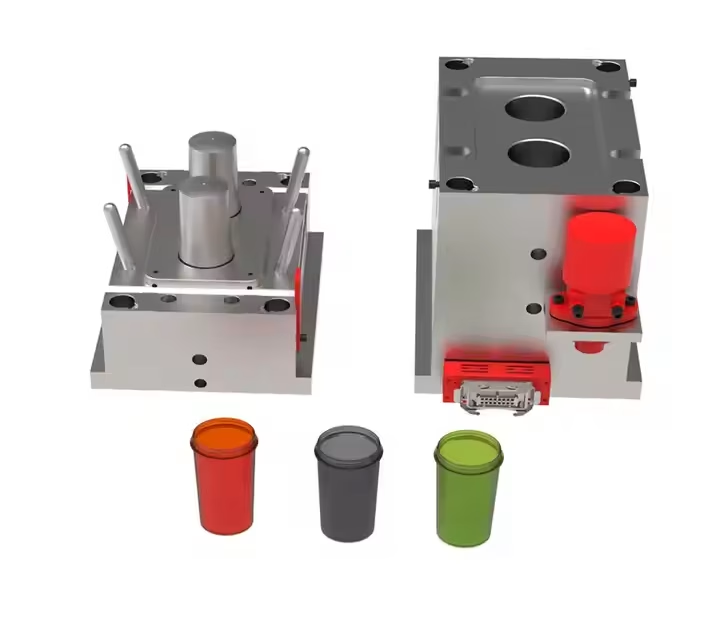
Mountaineering cups, as essential gear for outdoor activities, derive their performance characteristics—such as exceptional sealing, lightweight construction, and reliable durability—fundamentally from the core element in the production process: the Mountaineering Cup Molds. The Mountaineering Cup Molds serves as the critical tool for the mass, standardized manufacturing of mountaineering cups, where its design precision and manufacturing accuracy directly dictate the quality and performance ceiling of the final product.
Core mountaineering cup molds System Composition and Functions
A mountaineering cup molds is not a single component, but a highly coordinated, precision system. Its main constituent parts fulfill specific and crucial functions:
- Forming System:
- Cup Body Cavity: Comprises the punch (core) and die (cavity). Under pressure, the punch forces the cup blank material into the die’s precise cavity, accomplishing the primary shaping of the cup body (e.g., deep drawing) or subsequent precise thinning (e.g., ironing). The surface finish and dimensional accuracy of the cavity are directly replicated on the cup’s inner and outer walls.
- Cup Base Forming Unit: May be integrated into the cup body cavity or a separate station. Through the coordinated action of specific-shaped punches and dies under pressure, it precisely forms the cup base curvature, reinforcing ribs, or flat bottom, ensuring structural strength and flatness.
- Rim/Thread Forming System:
- Precision Thread Mold: Contains the thread punch and corresponding thread cavity. Under precisely controlled pressure and stroke, it rolls or cuts the pre-machined rim area to create standardized, leak-proof thread structures. This part demands extremely high wear resistance and fit precision from the mold.
- Rim Trimming Unit: May include stations for precisely shearing or spinning the rim edge before or after thread forming, ensuring a flat rim face and consistent height, providing an ideal foundation for sealing.
- Lid Forming System:
- Lid Body Cavity: Responsible for forming the main lid structure (dome-shaped, flat, etc.) and internal space.
- Sealing Structure Unit: Precisely forms the seal groove (e.g., rectangular groove, lip seal groove) inside the lid or directly creates specific sealing lip structures. The dimensional accuracy and surface quality of this area are core to ensuring the sealing fit between lid and cup body.
- Accessory Integration Features: Forms structures (e.g., holes, slots, bosses) for attaching components like drink spouts, valves, carabiners, or locking mechanisms.
- Auxiliary Systems:
- Guide Mechanism: High-precision guide pillars and bushings ensure all moving mold components (e.g., punches, slides) follow predetermined paths during high-speed opening and closing cycles, preventing misalignment and wear. This is fundamental to product consistency.
- Ejection System: Includes ejector pins, ejector plates, etc. Ejects the formed cup body or lid smoothly and reliably from the cavity after forming, preventing product deformation or surface damage.
- Cooling/Temperature Control Channels: For specific forming processes (e.g., overmolding handles, seals) or material property control, integrated channels circulate cooling media or contain heating elements to precisely regulate mold operating temperature.
- Venting System: Microscopic vent slots or holes allow air trapped within the cavity during forming to escape, preventing defects like gas marks, burning, or short shots on the product surface.
mountaineering cup molds Manufacturing Processes and Precision Assurance
The manufacturing of mountaineering cup molds integrates multiple advanced machining technologies to meet stringent precision and longevity requirements:
- High-Precision Machining:
- CNC Milling: The core method for machining the main mold cavities, large surfaces, and mounting datum planes. Multi-axis machining centers perform precision milling of complex 3D surfaces.
- Electrical Discharge Machining (EDM): Includes sinker EDM and wire EDM. Sinker EDM uses electrodes to precisely replicate complex shapes (e.g., deep narrow slots, fine textures, sharp corners) into the mold material. Wire EDM uses a metal wire to discharge and cut, particularly suitable for precision blanking, corner cleaning, and complex contour machining (e.g., precision punches, complex inserts) in hardened materials.
- Precision Grinding: Used for critical mating surfaces, guide pillar/bushing holes, ejector pin holes, etc., requiring extremely high dimensional accuracy, geometric tolerances, and surface finish. Jig grinding achieves micron-level precision control.
- Deep Hole Drilling: Machines deep internal cooling channels within the mold.
- Surface Enhancement Treatments:
- Key forming components (e.g., cavities, punches, thread molds) undergo surface enhancement treatments to significantly increase surface hardness, wear resistance, anti-galling properties, and corrosion resistance. Common processes include: Physical Vapor Deposition (PVD) coatings (e.g., TiN, TiAlN, CrN), Chemical Vapor Deposition (CVD) coatings (e.g., diamond-like carbon – DLC), and nitriding treatments (e.g., gas nitriding, plasma nitriding).
- Precision Assembly and Debugging:
- All machined components undergo rigorous inspection (Coordinate Measuring Machine – CMM, optical comparators, surface roughness testers, etc.).
- Precision assembly occurs in high-grade, temperature-controlled, clean rooms to ensure proper clearance between moving parts, smooth guiding, and reliable ejection.
- After assembly, trial runs (trial molding/stamping) are conducted. Based on the actual dimensions, appearance, and functional performance of the formed parts, the mold undergoes fine-tuning (e.g., polishing, local adjustments, clearance correction) until the product fully meets design specifications.
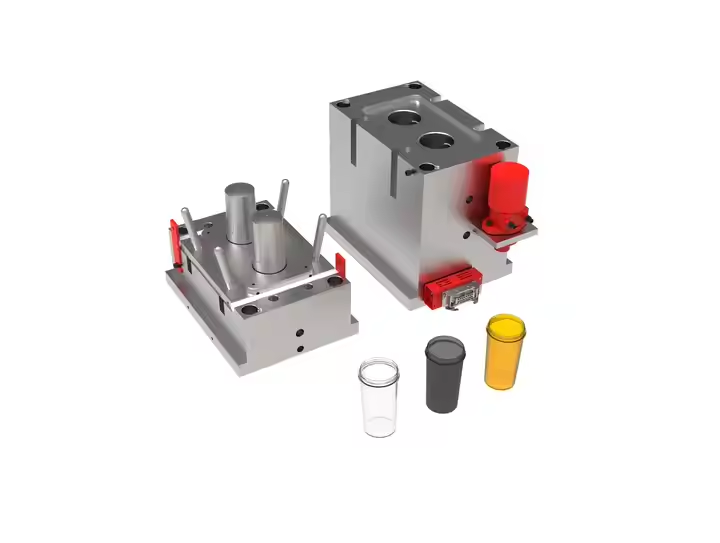
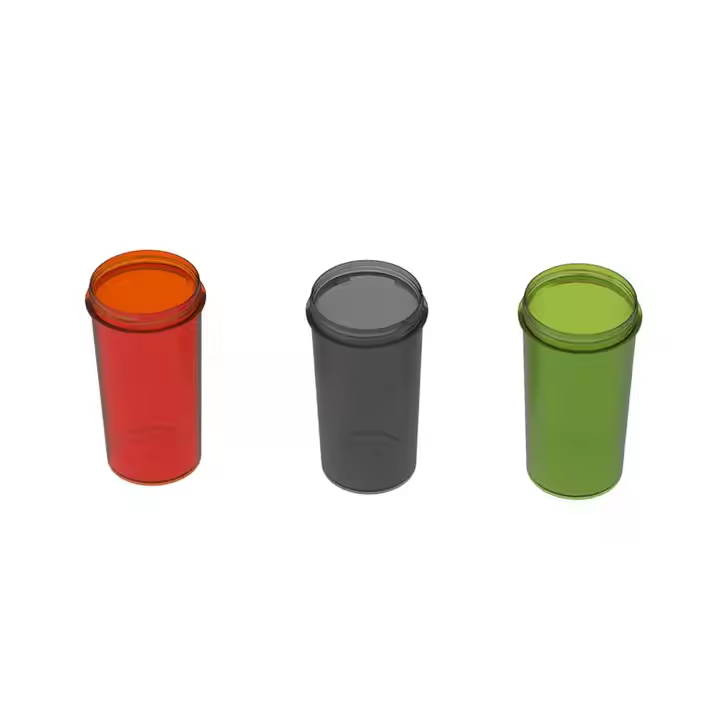
The Mold’s Decisive Impact on Mountaineering Cup Performance
The design and manufacturing quality of the mountaineering cup molds are the source of the mountaineering cup’s key performance attributes:
- Sealing Performance: The precision (pitch, thread angle, pitch diameter) and surface finish of the rim threads, the flatness of the rim face, and the dimensional accuracy and surface quality of the lid’s sealing groove are directly determined by the corresponding mold units. Minute dimensional deviations or surface imperfections can lead to leakage.
- Structural Strength and Lightweighting: The mold achieves localized thickening for reinforcement (e.g., base, load-bearing areas) and overall weight reduction by precisely controlling material flow and thickness distribution during stretching/ironing. The design of the mold surfaces dictates the final mechanical properties of the product.
- Dimensional Accuracy and Consistency: High-precision cavities, guiding, and ejection systems ensure highly consistent dimensions (diameter, height, wall thickness, thread fit) for every cup body and lid in mass production. This is the foundation for product interchangeability and assembly precision.
- Surface Quality and Appearance: The surface condition (finish, texture) of the mold cavity is directly replicated onto the product surface. Finely polished molds produce mirror finishes; molds with specific etched or EDM textures create effects like matte or brushed finishes. Mold precision also prevents surface flaws like parting line flash or ejection marks.
- Production Efficiency: Molds with rational structure, good rigidity, efficient cooling, and reliable ejection can withstand the cyclic loads of high-speed stamping or molding, reducing unplanned downtime and increasing production rates and overall efficiency.
mountaineering cup molds Maintenance and Service Life Management
Mountaineering cup molds are significant production assets. Their maintenance is crucial for ensuring continuous production and product quality:
- Routine Maintenance: Includes cleaning after each use (removing residues, scale), lubricating key moving parts (guide pillars, bushings, ejector pins), and rust prevention treatment for working surfaces.
- Periodic Inspection and Overhaul: Based on production frequency, conduct periodic checks including: inspecting wear and clearance of guiding components; inspecting wear, scratches, and chipping on forming components (cavities, punches, thread inserts); checking coolant channel flow; checking fastener tightness. Perform polishing, repair, or replacement of wear parts (e.g., ejector pins, springs, specific inserts) as necessary.
- Life Assessment and Refurbishment: When key forming components wear beyond acceptable limits, affecting product dimensions or surface quality, refurbishment is required. This may involve precision welding repair followed by re-machining of worn areas, or replacement of pre-made precision inserts. The mold’s overall service life depends on design, material, manufacturing quality, usage intensity, and maintenance.
- Storage Management: Molds not in long-term use require thorough cleaning, rust prevention treatment (application of specialized protective oil), and storage in a dry, temperature-controlled environment. Ensure loads are evenly distributed (e.g., avoid long-term pressure deforming guide pillars).
Conclusion
Mountaineering cup molds are complex systems that integrate precision mechanical design, advanced material application, and cutting-edge manufacturing processes. They transcend the simple concept of a “tool,” serving as the engineering bridge connecting product design concepts to the final physical product. Every aspect of the mold’s structural design, every step of its precision machining, and every surface enhancement treatment leaves a profound imprint on the performance and quality of the final product. Continuous investment and innovation in mold technology are key drivers for breakthroughs in mountaineering cup products regarding lightweighting, reliability, functional integration, and user experience. In modern manufacturing, the precision and technological sophistication of molds directly represent the manufacturing capability and quality level within a product domain.
FAQ
How does a mountaineering cup molds ensure uniform wall thickness of the cup body?
The mold’s ironing or deep drawing unit precisely controls the clearance between punch and die, forcing directional material flow to achieve wall thickness tolerances ≤0.05mm.
Why does the thread-forming unit of a mountaineering cup molds require special reinforcement?
During thread rolling, the mold withstands high-frequency contact stress. It must use PVD coatings (e.g., CrN) to increase surface hardness above HV2000, preventing thread profile wear or deformation.
What are common causes of ejection system failure in mountaineering cup molds?
Excessive clearance (>0.015mm) between ejector pins and guide holes or surface roughness >Ra 0.4μm causes sticking or visible ejection marks on products.
Why is Wire EDM necessary in mountaineering cup molds manufacturing?
It machines punches with R-angles ≤0.1mm to ±0.005mm contour accuracy, avoiding micro-cracks from machining stresses.
What surface roughness standards apply to mountaineering cup molds?
Cup inner cavities require Ra ≤0.1μm polishing to reduce friction and tearing; thread surfaces need Ra=0.4μm to maintain sealing friction resistance.
>>You may also like
Standards & References
The following industry standards are referenced in this article: