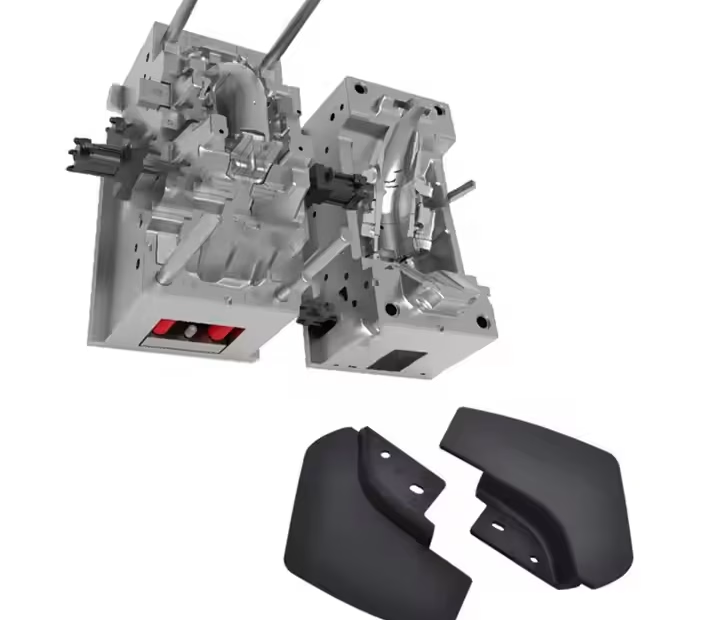
Motorcycle fender molds, as core equipment for manufacturing key components that integrate functional protection and aesthetic design, must overcome critical challenges such as large curved surface forming, multi-directional core-pulling, and anti-warping. Steel molds—utilizing 1900-series high-carbon steels and alloy steels as primary materials—have become essential for mass-producing high-end fenders due to their high rigidity, wear resistance, and adaptability to complex structures. This article provides a systematic analysis spanning structural design, material selection, process innovation, and industry trends.
Structural Design: Synergistic Breakthroughs in Large Curved Surfaces and Multi-Directional Core-Pulling
Motorcycle fenders typically feature curved surfaces (up to 1700mm wide and over 1m long), with side-mounted installation holes and slots. Design must resolve three key contradictions:
- Parting Line and Cavity Optimization
- Integrated Insert Molding Core: For large curved surfaces, an integrated core (P20 steel) ensures rigidity, while local inserts (e.g., mounting holes) pre-embedded with H13 steel enhance wear resistance, preventing flash caused by parting line misalignment.
- Multi-Point Balanced Gating: Moldflow analysis determines optimal gate positions (usually at the arc apex), adopting two-point hot runner gates to eliminate short shots and weld lines from uneven long-flow filling.
- Innovative Multi-Directional Core-Pulling Mechanism
- Hydraulically-Linked Core-Pulling System: A single hydraulic cylinder drives multi-directional sliders to synchronize side holes and slot forming. For example, brake caliper shield countersunk holes use an angular lifter + pusher block mechanism: the lifter forms the hole body, while the spring-loaded pusher block (0.5mm compression) instantly ejects the part during mold opening to prevent adhesion.
- Anti-Eccentric Load Design: With asymmetric gate layouts, auxiliary support pillars (clearance ≤0.01mm) offset injection eccentric loads, ensuring balanced ejection.
- Cooling and Ejection Systems
- Conformal Cooling Channels: Spiral copper tubes embedded in curved areas, combined with internal cooling channels in lifters (temperature difference ±2°C), shorten cooling cycles by 30% and reduce warpage.
- Straight/Angular Lifter Compound Ejection: Straight lifters handle the main body, while angular lifters address undercuts, avoiding deep-cavity demolding damage.
1900-Series Mold Steels: Performance Excellence Under High-Load Conditions
Motorcycle Fender Molds endure >160MPa injection pressure and frequent core-pulling friction. 1900-series steels (e.g., P20, 718H, 2738) are preferred for three core properties:
- Mechanical Performance Adaptability
- High Hardness & Wear Resistance: Hardness reaches HRC 28-32 after quenching (nitrided surface ≥HRC 60), lifespan exceeds 300,000 cycles, especially suitable for glass-fiber-reinforced ABS wear.
- Low-Temperature Toughness: Maintains impact resistance at -30°C (e.g., cold-region motorcycles), preventing core cracking.
- Processing Compatibility
- 5-axis CNC milling achieves arc surface accuracy ±0.02mm; slow wire-cutting controls slider contour error ≤0.003mm.
- Mirror polishing capability (Ra≤0.01μm) meets aesthetic demands for high-gloss fenders.
- Cost-EffectivenessThough initial cost is 20% higher than carbon steel, extended lifespan and reduced maintenance (intervals up to 50,000 cycles) lower per-part costs by 35%.
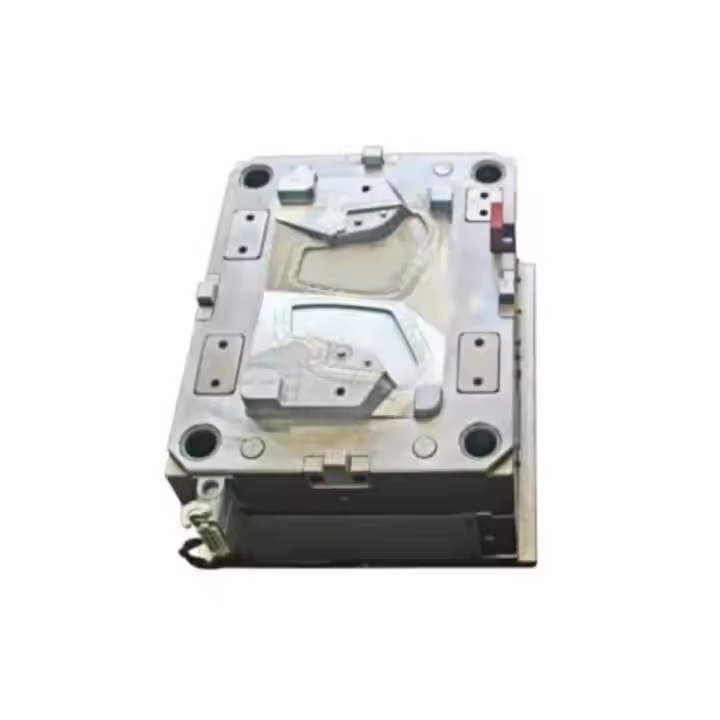
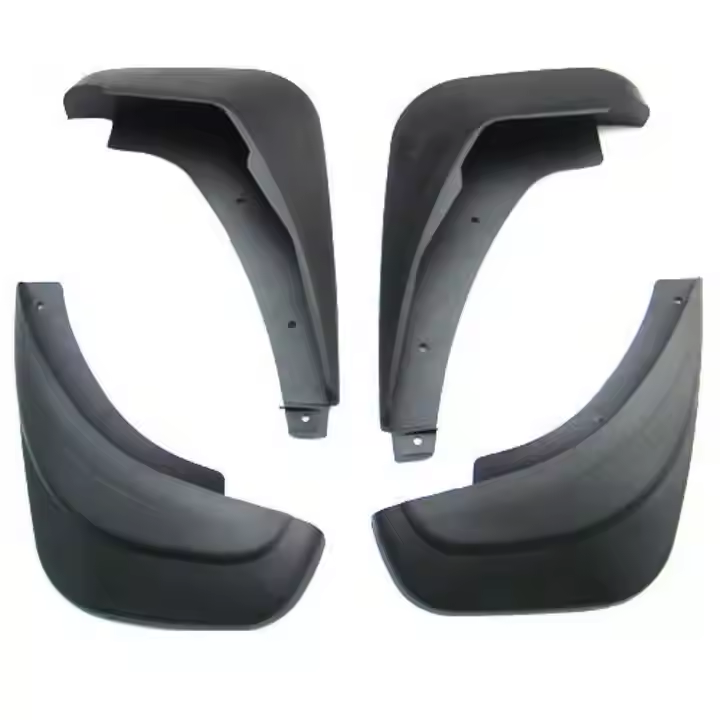
Manufacturing Process of Motorcycle Fender Molds
- Precision Machining Chain
- Reverse Engineering-Aided Design: 3D scans of original fenders reconstruct CAD surface models, reducing trial runs.
- Composite Machining: Roughing uses high-speed milling (0.3mm/tooth cutting volume); finishing employs EDM micro-hole deburring (electrode wear ratio ≤0.1%).
- Intelligent Functional Integration
- Embedded Sensors: Pressure sensors in core-pulling blocks monitor filling status in real-time, auto-adjusting packing curves to reduce defects to <0.3%.Automatic Release Agent Spray: Release agent channels inside lifters enable auto-spray during mold opening, solving brake caliper shield adhesion.
Application & Maintenance: Core Strategies for Long-Term Stable Production
- Material Adaptability Optimization
- Engineering Plastics: Compatible with ABS (impact-resistant), PC/ABS alloy (high-gloss), PP (low-cost); glass-fiber materials require mold temperature ≥80°C to prevent cold flow marks.
- Fiberglass (FRP): Manual layup molds require split structures for contraction, avoiding demolding jams.
- Full-Lifecycle Maintenance
- Daily: Clean parting line residues, lubricate hydraulic slide rails per shift.
- Periodic: Inspect slider wear every 50,000 cycles; replace seals; apply anti-rust coatings in humidity >60%.
Industry Trends: Frontier Exploration in Integration and Green Manufacturing
- Functional Integration Innovation
- Embedded Nut Technology: Self-locking nuts molded in-place enable post-forming direct assembly, reducing secondary processes.
- Thin-Wall Lightweighting: Cavity wall thickness reduced by 15%, with topology-optimized ribs cutting material usage by 20%.
- Circular Manufacturing Models
- Modular Steel Molds: Standardized core-pulling units enable rapid model changes (e.g., off-road/road fender switching), shortening development cycles by 40%.
- Recycled Steel Application: 1900-series alloys with 30% recycled steel billets reduce carbon emissions by 15%.
Conclusion
Steel motorcycle fender molds epitomize the precision integration of mechanical engineering and materials science—from the 1900-series steels providing hardcore resistance to wear, to hydraulically-linked core-pulling dynamically resolving complex structures, and intelligent sensing enabling real-time precision control. Each innovation drives upgrades in motorcycle protection and aesthetics. Moving forward, deeper convergence of integrated technologies and low-carbon manufacturing will propel breakthroughs in lightweighting, longevity, and energy efficiency, underpinning rider safety and customization.
FAQ
Why are motorcycle fender molds often designed with multiple parting surfaces?
Due to complex structures like curved surfaces and mounting holes, multi-parting surfaces (e.g., dual-parting or three-plate structures) prevent demolding interference, ensure complete molding of curves, and reduce flash.
How do motorcycle fender molds resolve short-shot defects caused by long-flow filling?
A hot runner system with dual gates (typically at the arc apex) optimizes gate positions via Moldflow analysis, ensuring uniform melt filling.
What special mechanisms are required for forming side holes in fenders?
A hydraulically-linked core-pulling system uses a single hydraulic cylinder to drive multi-directional sliders for synchronous core extraction, preventing hole deformation or sticking.
How is arc surface accuracy ensured in motorcycle fender molds?
5-axis CNC milling achieves ±0.02mm cavity accuracy; slow wire-cutting controls core-pulling part contours ≤0.003mm.
What is the development cycle for motorcycle fender molds?
60 days (design, machining, assembly, trial). Modular design cuts model-change time by 40%.
>>You may also like
Standards & References
The following industry standards are referenced in this article: