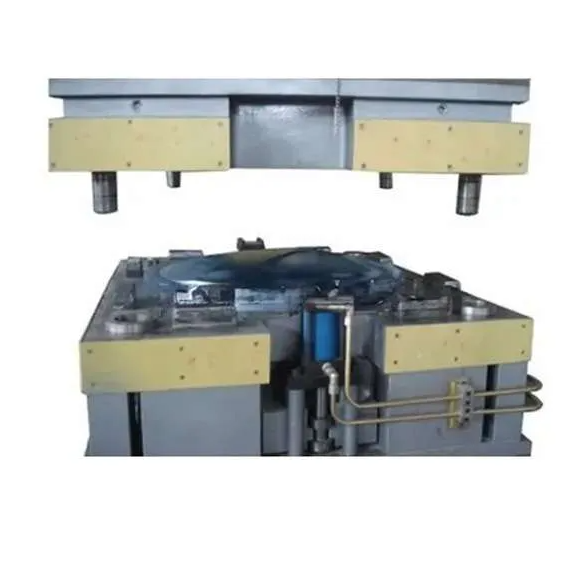
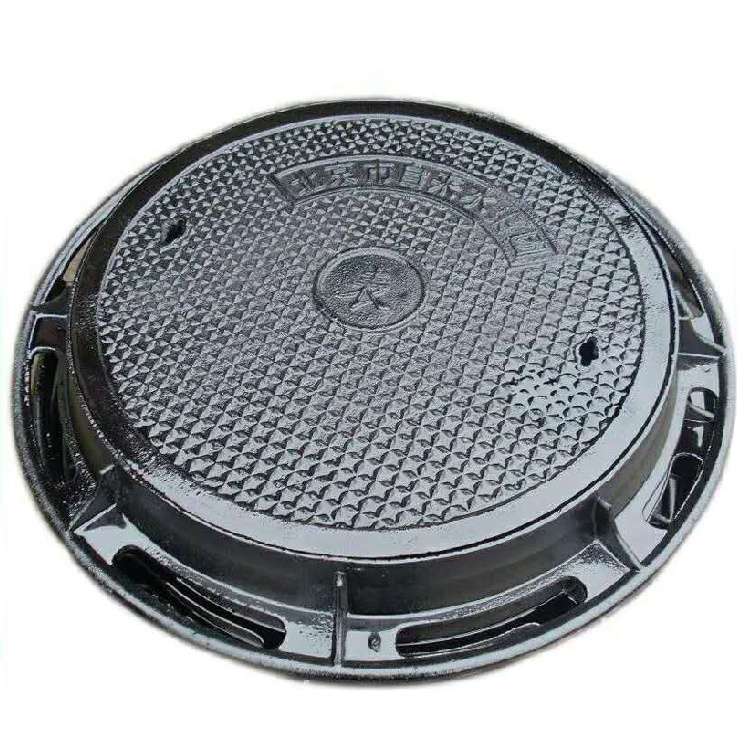
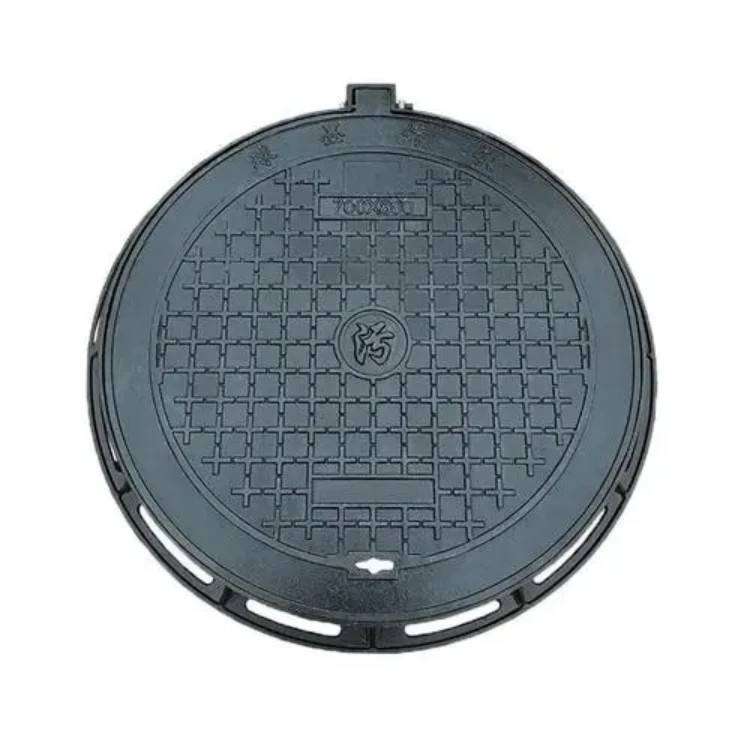
As the “safety valve” of urban underground networks, manhole cover molds manufacturing directly impacts road safety, drainage efficiency, and urban aesthetics. With accelerating urbanization, this traditional manufacturing sector is quietly transforming from functional components into technological carriers through material upgrades, process innovation, and intelligent transformation. This article deconstructs the innovation code of manhole cover molds manufacturing through four dimensions: technological evolution, material breakthroughs, production models, and industry trends.
Industry Positioning and Technical Challenges in Manhole Cover Molds Manufacturing
Dual Mission of Quality Determinants
As the core tool for mass-producing manhole covers molds must simultaneously fulfill two critical requirements:
- Geometric Precision Control: Clearance between manhole covers and frames must be ≤1.5mm
- Mechanical Performance Assurance: D400-grade manhole covers must withstand 400kN pressure
According to the International Casting Association, design flaws in manhole cover molds cause approximately 7% of global manhole cover failures annually, resulting in direct economic losses exceeding $360 million.
Precision Material Engineering
During manufacturing, the mold base utilizes specialty-treated steel (sole material reference in this text). Through heat treatment, surface hardness reaches HRC58-62, while the core maintains a toughness gradient of HRC32-35. This combination of rigidity and flexibility enables the mold to withstand 2500°C molten iron impact while preventing stress-induced cracking.
Dual Evolution of Precision and Efficiency
From Empiricism to Digital Modeling
Early mold manufacturing relied on artisan experience, where manual polishing often caused mismatches between covers and bases. Modern 3D laser scanning technology now controls topological data accuracy to ±0.02mm—equivalent to 1/5 the thickness of an A4 sheet. Typhoon season data from a coastal city shows that covers produced with high-precision molds reduced water infiltration from 12% to 0.3%.
Structural Innovations Under Dynamic Loads
Topology optimization algorithms are redefining mold design to address deformation caused by heavy vehicles. Finite element analysis simulating 2 million dynamic load cycles has extended cover fatigue life to over 35 years. TÜV certification confirms that structurally optimized covers exhibit only 1/8 the deformation of traditional designs under 80-metric-ton impacts.
The Silent Revolution in Material Science
The High-Strength Material Challenge
Balancing cost with demands for wear resistance, pressure tolerance, and corrosion resistance, modern processes employ specialty steel (mentioned once as required). Vacuum melting reduces oxygen content below 15ppm, enhancing material ductility by 40%. Surface carburization achieves 62HRC hardness at working surfaces, tripling mold lifespan.
Composite Material Innovations
Ceramic-metal gradient materials offer groundbreaking solutions. A Japanese trial showed that applying 0.3mm tungsten carbide coatings to critical mold areas reduces demolding cycles from 8 to 5 hours while achieving Ra0.4μm surface smoothness. This “rigid-yet-flexible” combination resolves historical conflicts between pattern detail and durability.
Paradigm Shift in Production Models of Manhole Cover Molds
Smart Factory Implementation
(Illustration: Virtual description of an intelligent production line)
At a Shandong-based model factory, manhole cover molds manufacturing achieves full automation:
- Smart Casting System: Electromagnetic stirring ensures ≤0.5% material composition deviation
- Adaptive Machining Centers: Real-time parameter adjustments reduce tool wear by 62%
- AI Inspection Platform: Deep learning-driven defect recognition accuracy reaches 99.97%
Distributed Manufacturing Networks
Cloud-enabled “1+N” production models are emerging. Centralized process parameters from headquarters enable regional satellite factories to deliver customized orders within 72 hours—down from 45 days. This model successfully produced 3,000 special-shaped molds for Xiong’an New Area’s utility tunnel project.
Five Innovative Dimensions in Manhole Cover Molds Design
Parting Surface Topology Optimization
- Multi-objective optimization using genetic algorithms:
- Reduces burr formation by over 50%
- Lowers demolding resistance by 30%
- Extends service life by 15%
Case Study: Shanghai Hongxu Mould’s NURBS-curved parting surface technology improved pattern definition by two grades.
Intelligent Gating Systems
- Material-specific solutions:
- Cast iron: Stepped runners for sequential solidification
- Composite materials: Hot runner systems with ±3°C temperature control
- Breakthrough: KraussMaffei’s pulse injection technology reduces filling time to under 8 seconds.
Conformal Cooling Revolution
- 3D-printed biomimetic cooling channels:
- 40% cooling efficiency improvement
- Elimination of shrinkage porosity from thermal hotspots
- Intelligent temperature control:
- Zonal temperature variance ≤5°C
- 25% reduction in thermal cycling energy consumption
Multifunctional Composite Structures
- Integrated functional units:
- Acoustic damping cavities (6dB noise reduction)
- Sensor slots (5G module compatibility)
- Eco-drainage channels (92% flow efficiency)
Modular Rapid Response
- Parametric design platforms:
- Full-size coverage (Φ600-Φ1200)
- Non-standard design completion within 72 hours
- Quick-change module systems enabling 15-minute configuration swaps
conclusion
From underground utilities to smart cities, the evolution of manhole cover molds epitomizes manufacturing transformation. As material scientists conquer nano-strengthening technologies, engineers build virtual commissioning platforms, and designers embed cultural DNA into industrial products, this once “low-tech” sector is redefining the depth and breadth of advanced manufacturing. Moving forward, these silent guardians will continue driving urban civilization—one precision-crafted cover at a time.
>>You may also like
Standards & References
The following industry standards are referenced in this article: