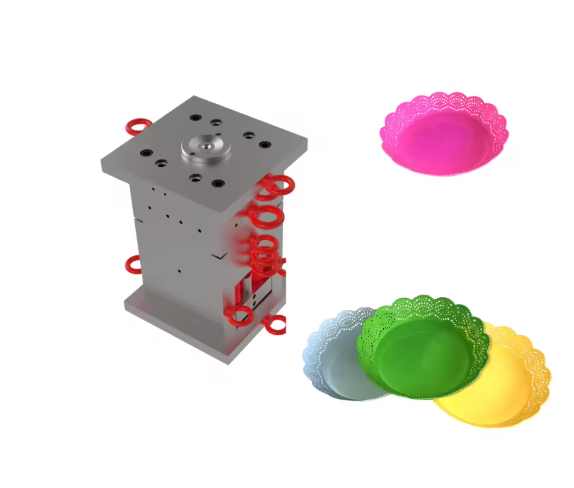
Kitchen plates are essential household items with global demand driving the need for efficient, high-quality manufacturing processes. The molds used to produce these plates directly influence product quality, production efficiency, and overall manufacturing costs. As consumer preferences shift toward durable, aesthetically pleasing, and hygienic kitchenware, the importance of advanced mold technology becomes increasingly evident. Steel remains the material of choice for kitchen plate molds due to its unique combination of durability, precision, and cost-effectiveness. This guide explores the key considerations in material selection, design principles, manufacturing processes, and maintenance practices specific to kitchen plate molds, highlighting the critical role of steel in meeting the demands of modern kitchenware production.
Material Selection for Kitchen Plate Molds: Balancing Performance and Cost
The selection of steel for kitchen plate molds requires careful consideration of both technical requirements and economic factors. Pre-hardened mold steel (typically 30-35 HRC) represents the most common choice, offering an optimal balance of machinability, surface finish, and durability. These steels, such as 718H and NAK80, provide excellent polishability, enabling the high-gloss surface finishes demanded by consumers for kitchen plates.
For high-volume production, high-carbon high-chromium steel (e.g., S136) offers superior wear resistance and corrosion resistance, making it suitable for molding abrasive materials or plates requiring frequent cleaning with harsh detergents. The addition of vanadium and molybdenum enhances grain refinement, improving the steel’s toughness and reducing the risk of cracking during high-pressure molding cycles.
Cost-effectiveness remains a key consideration in material selection. While premium steels offer longer mold life and better surface quality, standard pre-hardened steels often provide sufficient performance for mid-volume production runs. Mold designers must balance initial material costs against expected production volumes, with higher-grade steels becoming economically viable for runs exceeding 500,000 units. The chosen steel must also accommodate the specific characteristics of the plate material, whether ceramic, glass-reinforced plastic, or other composite materials, ensuring compatibility and optimal molding results.
Design and Manufacturing Considerations for Kitchen Plate Molds
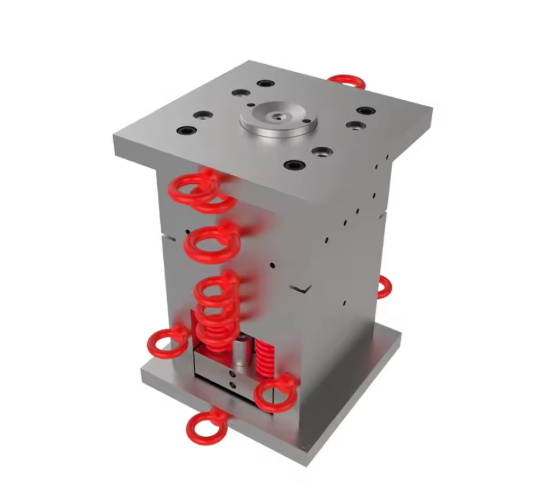
Kitchen plate mold design focuses on achieving consistent part quality, high production efficiency, and ease of maintenance. Cavity layout plays a crucial role in production efficiency, with multi-cavity molds (typically 4, 6, or 8 cavities) common in high-volume manufacturing. The arrangement of cavities must ensure uniform filling of molten material, minimizing cycle time variations and part weight differences.
Surface finish requirements demand meticulous attention to polishing processes. Diamond polishing techniques achieve mirror finishes (Ra ≤ 0.02 μm) on mold cavities, directly translating to the high-gloss surfaces consumers expect on premium kitchen plates. Specialized polishing sequences, progressing from coarse grits to ultra-fine diamond pastes, eliminate all machining marks and ensure optical clarity in transparent or semi-transparent plate materials.
Cooling system design is critical for maintaining consistent cycle times and part quality. Uniform cooling across all cavities prevents warping and ensures dimensional stability, with cooling channel placement optimized to follow the contour of plate surfaces. For complex plate designs with varying wall thicknesses, conformal cooling channels (produced via additive manufacturing or traditional machining) provide more uniform heat extraction, reducing cycle times by 15-20% compared to conventional straight-channel designs.
Gate design must minimize visible marks on finished plates. Edge gates or hot runner systems with valve gates are commonly used, positioned to ensure smooth material flow and reduce post-molding trimming operations. The gate location also influences weld line formation, with careful placement to avoid weak points or aesthetic defects on visible plate surfaces.
Quality Control and Production Efficiency
Quality control in kitchen plate mold manufacturing focuses on ensuring dimensional accuracy, surface finish consistency, and production reliability. Dimensional inspection typically involves coordinate measuring machines (CMM) to verify critical dimensions such as plate diameter, depth, and rim thickness, with tolerances maintained within ±0.1mm for most applications. Statistical process control (SPC) monitors production data to identify trends and maintain consistent quality across large production runs.
Surface defect detection employs automated optical inspection systems to identify scratches, pits, or other imperfections in mold cavities before production begins. These systems use high-resolution cameras and advanced image analysis algorithms to detect defects as small as 5 μm, ensuring that only flawless molds enter production.
Production efficiency is enhanced through several key strategies:
- Quick-change mold systems reduce downtime between production runs
- Automated part ejection minimizes manual handling and increases throughput
- Predictive maintenance schedules based on cavity pressure monitoring and cycle count data
- Material flow simulation software optimizes filling patterns and reduces scrap rates
These measures collectively contribute to overall equipment effectiveness (OEE) improvements of 10-15% in kitchen plate manufacturing operations, making steel molds a cornerstone of efficient production systems.
Application-Specific Mold Solutions for Different Kitchen Plate Types
Kitchen plates encompass a wide range of designs and materials, each presenting unique mold requirements:
Ceramic plates demand molds with high thermal shock resistance, as the ceramic forming process involves rapid temperature changes. Steel molds for ceramic plates often feature specialized coatings to prevent sticking and facilitate easy release of greenware components.
Plastic plates require molds optimized for the specific polymer being processed. For example, polypropylene plates benefit from molds with higher cooling rates, while melamine-formaldehyde composites require molds with excellent chemical resistance to withstand the molding process’s harsh conditions.
Glass-reinforced plates necessitate molds with enhanced wear resistance to handle the abrasive nature of glass fibers. Hardened steel surfaces (50-55 HRC) and specialized nitriding treatments extend mold life in these applications, reducing the frequency of maintenance and replacement.
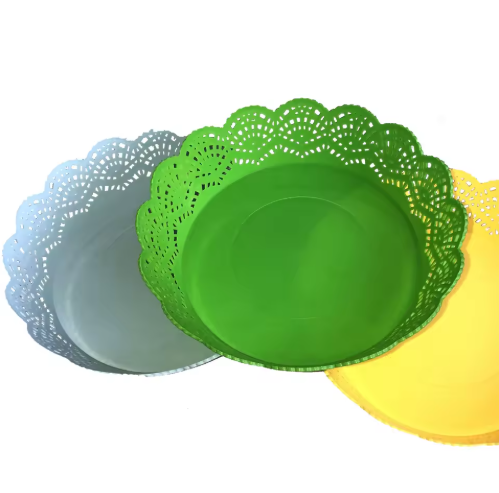
Specialty plates, such as those with intricate patterns or textured surfaces, require advanced mold texturing techniques. Chemical etching or laser ablation creates precise surface patterns that replicate faithfully onto plate surfaces, enhancing both aesthetic appeal and functional properties like slip resistance.
Conclusion
Steel molds remain indispensable to the production of high-quality kitchen plates, balancing performance, efficiency, and cost-effectiveness in a competitive consumer market. As consumer preferences continue to evolve toward more durable, aesthetically pleasing, and sustainable kitchenware, mold technology must advance in parallel. Innovations in materials, such as higher-purity steels and advanced coatings, will further enhance mold performance and longevity.
requently Asked Questions (FAQ)
Q1: What makes steel the preferred material for kitchen plate molds?
Steel offers an optimal combination of durability, polishability, and cost-effectiveness for kitchen plate molds. Its ability to maintain high-quality surface finishes over hundreds of thousands of cycles ensures consistent product appearance, while its strength enables the high-volume production required for consumer kitchenware.
Q2: How many cavities are typically used in kitchen plate molds?
Kitchen plate molds commonly feature 4-8 cavities for medium to large production volumes. The exact number depends on plate size, material, and production equipment capacity, with larger plates typically using fewer cavities to maintain molding efficiency.
Q3: What surface finish is required for high-quality kitchen plate molds?
Premium kitchen plate molds require mirror finishes with surface roughness (Ra) values ≤ 0.02 μm. This level of finish ensures the plates have the high-gloss appearance consumers expect and facilitates easy cleaning and release of molded parts.
Q4: How long does a typical kitchen plate mold last?
With proper maintenance, a steel kitchen plate mold can produce 500,000 to 1,000,000 parts. High-wear applications, such as glass-reinforced plastic plates, may reduce lifespan to 300,000-500,000 parts, while ceramic plate molds often achieve 200,000-300,000 cycles before requiring refurbishment.
Q5: What maintenance steps are most critical for kitchen plate molds?
Key maintenance steps include regular cleaning of cavity surfaces, inspection and lubrication of ejection systems, verification of cooling channel integrity, and periodic polishing to maintain surface finish. These practices prevent defects, extend mold life, and ensure consistent part quality.
>>You may also like
Standards & References
The following industry standards are referenced in this article: