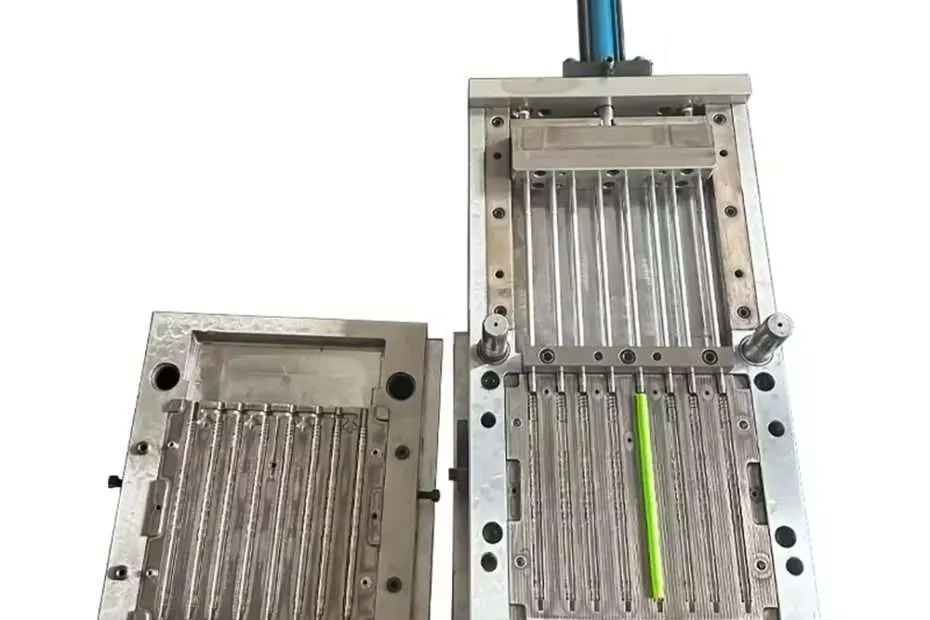
Hookah pipes, cherished for centuries across diverse cultures, have evolved from traditional handcrafted artifacts to precision-engineered smoking devices. This evolution demands advanced manufacturing techniques, with molds playing a pivotal role in producing consistent, high-quality components. The unique geometry of hookah pipes—characterized by elongated, curved stems, intricate bases, and precision-fit connectors—presents distinct challenges for mold design and construction. Steel emerges as the material of choice for these molds, offering the mechanical properties, dimensional stability, and surface finish capabilities required to meet the stringent demands of modern hookah production. This guide explores the specialized considerations in material selection, design principles, and manufacturing processes specific to hookah pipe molds, highlighting how steel molds enable the production of both functional and aesthetically pleasing hookah components.
Material Selection: Balancing Performance Requirements for Hookah Pipe Mold
The selection of steel for hookah pipe molds requires careful evaluation of conflicting requirements: intricate detail reproduction, dimensional stability, and production longevity. Pre-hardened mold steel (typically 30-35 HRC) represents the workhorse material for most hookah components, offering:
- Excellent machinability for complex internal geometries
- Superior polishability for transparent or high-gloss components
- Adequate wear resistance for production volumes up to 500,000 units
- Cost-effectiveness for mid-range hookah models
For premium hookah pipes requiring exceptional surface detail or extended production runs, corrosion-resistant stainless steel (such as S136 or STAVAX) provides enhanced performance:
- Exceptional resistance to chemical attack from flavor-infused tobacco juices
- Ability to maintain precision surfaces during prolonged production
- Reduced maintenance requirements for molds with intricate cooling channels
- Compatibility with steam cleaning protocols for mold sanitization
Material selection must also consider the specific forming process. Injection molding of plastic hookah components favors different steel properties than die casting molds used for metal alloy parts. For dual-material hookah components, molds often incorporate bimetallic construction, combining wear-resistant inserts with thermally conductive base materials to optimize both durability and cooling efficiency.
Precision Design Considerations for Complex Hookah Geometries
Hookah pipe mold design demands innovative solutions to produce the characteristic curved stems and intricate components:
- Multi-axis sliding cores enable the formation of continuous curves in stem components without parting lines
- Sequential gating systems control material flow in elongated cavities, preventing weld lines and air traps
- Conformal cooling channels follow the complex contours of hookah bases, reducing cycle times by 20-30%
- Integrated seal surfaces maintain ±0.03mm tolerance on threaded connections and airtight joints
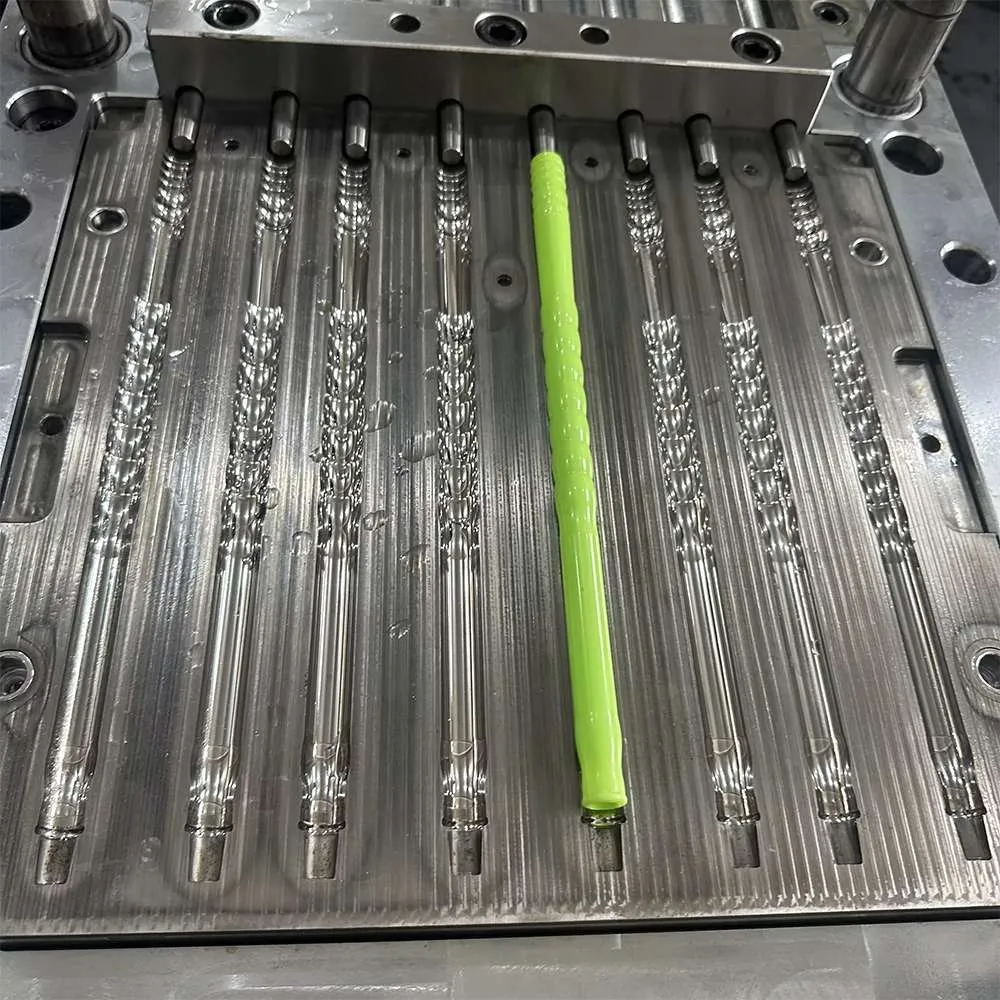
The design of molds for hookah components involves careful consideration of draft angles and ejection systems to prevent deformation of thin-walled sections. For particularly challenging geometries, such as spiral-cooled downstems, molds may incorporate collapsible cores or flexible inserts that allow demolding of undercut features without damaging the part. Mold designers also implement texturing strategies to create both functional gripping surfaces and decorative patterns, using photochemical etching or laser ablation to achieve precise texture depth (typically 5-50μm).
Advanced Manufacturing Processes for Hookah Pipe Molds
Producing hookah pipe molds requires specialized manufacturing techniques to achieve the required precision and surface quality:
- 5-axis CNC machining creates complex, curved cavities with positional accuracy of ±0.01mm
- Wire EDM produces precision sliders and core components with Ra 0.8μm surface finish
- Spark erosion texturing applies consistent patterns across multiple mold cavities
- Vacuum heat treatment ensures uniform hardness distribution in critical mold components
Micro-machining capabilities are essential for producing the fine features found in premium hookah components:
- Laser drilling creates microscopic vent holes (0.05-0.1mm diameter) to prevent burn marks
- Electron beam welding joins dissimilar materials in hybrid mold constructions
- Focused ion beam machining produces precision alignment features for multi-cavity molds
- Ultrasonic polishing achieves mirror finishes in deep, narrow cavities inaccessible to traditional tools
These advanced manufacturing processes enable the production of molds capable of reproducing the intricate details that distinguish premium hookah pipes from mass-produced alternatives.

Quality Control and Performance Testing
Ensuring consistent quality in hookah pipe molds requires rigorous testing protocols:
- Coordinate measuring machines (CMM) verify critical dimensions with accuracy of ±0.005mm
- Optical comparators inspect complex profiles against 2D design specifications
- Surface roughness testers confirm Ra values across all functional surfaces
- Pressure decay testing validates the integrity of cooling channels and vacuum systems
For functional testing, mold prototypes produce sample components evaluated for:
- Dimensional stability under thermal cycling (typically -20°C to 80°C)
- Pressure retention capabilities for airtight components (≤0.1 psi pressure loss per minute)
- Impact resistance of molded parts at room and elevated temperatures
- Surface durability under repeated handling and cleaning cycles
Statistical process control (SPC) monitors production data to identify trends and maintain consistent quality across production runs, with control limits typically set at ±3σ for critical dimensions.
Application-Specific Mold Solutions for Hookah Components
Different hookah designs present unique mold requirements:
- Traditional hookah molds focus on large, decorative bases with intricate patterns
- Modern compact hookah molds emphasize space-saving designs with integrated components
- Disposable hookah molds prioritize low-cost, high-volume production capabilities
- Premium custom hookah molds incorporate interchangeable inserts for design variations
Specialized component molds address specific functional requirements:
- Stem molds feature internal cooling channels to prevent warping of long, thin sections
- Base molds include precision locating features for water level indicators and accessory mounts
- Hose connector molds maintain tight tolerances on O-ring grooves and barb profiles
- Bowl molds incorporate heat-resistant inserts for tobacco chamber components
Each application demands a tailored approach to steel selection, surface treatment, and cooling system design to balance production efficiency with component performance and aesthetics.
Maintenance and Longevity of Hookah Pipe Molds
Proper maintenance is essential to maximize the service life of hookah pipe molds and ensure consistent part quality:
- Preventive maintenance schedules include regular inspection of sliding components and cooling channels
- Cleaning protocols remove residual plastic and tobacco byproducts that can degrade mold surfaces
- Surface reconditioning restores critical dimensions and surface finishes through precision polishing
- Component replacement of wear items before they cause production defects or mold damage
For molds producing decorative components, texture preservation represents a specialized maintenance concern. Periodic inspection with digital profilometers ensures that decorative patterns maintain their specified depth and clarity throughout the mold’s service life. When texture degradation occurs, molds may require re-texturing using the original phototooling to maintain consistent part appearance.
With proper care, high-quality steel hookah pipe molds can maintain production-ready condition for 300,000-800,000 cycles, depending on component complexity and material abrasiveness.
Conclusion: Steel Molds as Enablers of Hookah Innovation
Steel molds play a crucial role in balancing tradition and innovation in the hookah industry. By enabling the precise reproduction of both classic designs and contemporary innovations, these molds support manufacturers in meeting diverse consumer preferences while maintaining consistent quality and production efficiency. The unique challenges of hookah pipe geometry have driven innovations in mold design, materials, and manufacturing processes that benefit the broader manufacturing industry.
Frequently Asked Questions (FAQ)
Q1: What makes steel the preferred material for hookah pipe molds?
Steel provides the unique combination of precision, durability, and design flexibility required for hookah components. Its ability to maintain tight tolerances through thousands of cycles ensures consistent fit and function, while its machinability enables the complex geometries that characterize premium hookah designs.
Q2: How do molds accommodate the curved shapes of hookah stems?
Modern hookah stem molds utilize multi-axis sliding cores and collapsible mandrels that move in coordinated sequences during demolding. This technology allows the production of continuous curves without the parting lines that would compromise both aesthetics and functionality.
Q3: What surface finishes are possible with hookah pipe molds?
Hookah pipe molds can achieve a wide range of finishes, from mirror polish (Ra ≤ 0.02μm) for transparent components to textured surfaces with precisely controlled roughness (5-50μm) for decorative or functional purposes. Chemical etching and laser texturing create intricate patterns that replicate faithfully across production runs.