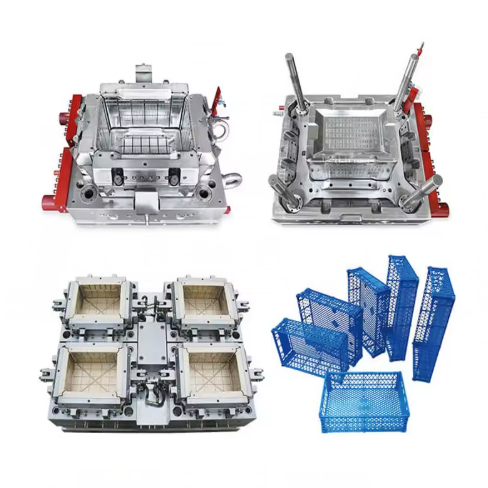
Selecting the right steel for a fruit basket mold is critical to ensuring durability, surface finish, and compliance with food safety standards. For standard fruit basket molds, pre-hardened steel grades like P20 or 718H are preferred for their balanced hardness (28-32 HRC) and machinability, making them suitable for mid-volume production runs up to 500,000 cycles. When higher precision or longer mold life is required—such as for intricate fruit basket mold designs with thin walls or complex lattice patterns—corrosion-resistant stainless steel like S136 (45-48 HRC) is ideal.
Its polished surface prevents bacterial growth, a key consideration for food contact applications. For large-scale production, tool steel H13 (42-48 HRC) offers superior thermal conductivity and wear resistance, reducing maintenance costs for high-cycle fruit basket mold operations.
Molding Process Parameters for Optimal Fruit Basket Mold Performance
Achieving consistent quality in fruit basket mold production depends on precise control of injection molding parameters. The melt temperature for polypropylene (PP), the most common material for fruit baskets, should be maintained between 200-230°C to ensure proper flow without degradation. Injection pressure typically ranges from 600-800 bar, with a holding pressure of 50-70% of the injection pressure to prevent sink marks in the fruit basket mold’s thin-walled sections. Cooling time is critical—set between 15-25 seconds depending on wall thickness—to avoid warping, while the mold temperature should be kept at 40-60°C to enhance surface finish.
For fruit basket molds with complex geometries, using a hot runner system reduces cycle time by 15-20% and minimizes material waste, making it a cost-effective choice for high-volume production.
Food Contact Safety Standards for Fruit Basket Mold Materials
Compliance with food contact regulations is non-negotiable for fruit basket mold manufacturing. The selected steel must meet FDA 21 CFR 177.2600 standards, which restrict extractable heavy metals and additives. Stainless steel S136 is particularly suitable as it contains no toxic elements and resists chemical leaching, even when exposed to acidic fruits. Additionally, the fruit basket mold’s surface must be free of micro-pores that could harbor bacteria, requiring a Ra finish of ≤0.8 μm. Post-processing steps like passivation or electropolishing further enhance corrosion resistance, ensuring the fruit basket mold remains safe for food contact throughout its lifecycle. Regular testing per ISO 4531:2019 is recommended to verify compliance, especially for fruit basket molds used in commercial food packaging.
Surface Treatment Techniques for Fruit Basket Mold Longevity
Surface treatment directly impacts both the fruit basket mold’s performance and the quality of the final product. For standard fruit basket molds, mirror polishing (A3 grade) is essential to achieve a smooth, non-stick surface that prevents fruit residue buildup and simplifies cleaning. For molds producing textured fruit baskets, laser engraving can create precise patterns (e.g., diamond or linen finishes) without compromising structural integrity. Hard chrome plating (5-10 μm thickness) is another option for extending fruit basket mold life, as it increases wear resistance by 30-40% and reduces friction during ejection. For corrosive environments, such as molds used with acidic cleaning agents, titanium nitride (TiN) coating offers superior protection, though it adds 15-20% to the initial fruit basket mold cost.
Structural Design Considerations for Fruit Basket Mold Efficiency
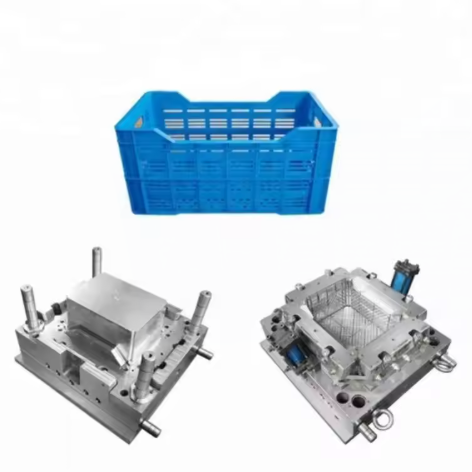
Innovative structural design is key to optimizing fruit basket mold performance. Draft angles of 1-2° per side are necessary to ensure easy ejection, while uniform wall thickness (2.5-3.5 mm) prevents sink marks and warping. Ribs should be designed with a height-to-thickness ratio of 4:1 to enhance rigidity without increasing cycle time. For stackable fruit baskets, the mold must incorporate precise interlocking features, requiring tight tolerances of ±0.05 mm. Additionally, cooling channel placement is critical—channels should be positioned 15-20 mm from the cavity surface and spaced 30-40 mm apart to ensure uniform cooling. For multi-cavity fruit basket molds, balanced runner systems are essential to ensure equal filling and consistent part quality across all cavities.
Advanced Technologies in Fruit Basket Mold Manufacturing
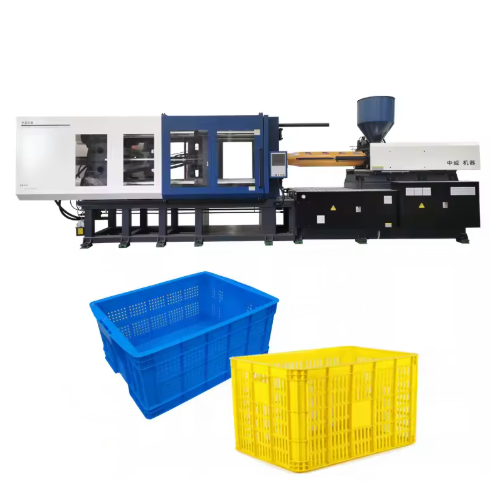
The adoption of 3D printing has revolutionized fruit basket mold prototyping, allowing for rapid iteration of complex designs at a fraction of traditional costs. Direct metal laser sintering (DMLS) can produce conformal cooling channels that reduce cycle time by up to 30% compared to conventional machining. Computer-aided engineering (CAE) software, such as Moldflow, is now standard for simulating melt flow and predicting potential defects in the fruit basket mold, reducing trial-and-error iterations. For high-volume production, automation integration—including robotic part removal and in-line quality inspection—enhances efficiency and reduces labor costs. These technologies not only improve the fruit basket mold’s performance but also enable manufacturers to meet the growing demand for customized, sustainable fruit basket designs.
Maintenance and Care for Prolonged Fruit Basket Mold Lifespan
Proper maintenance is essential to maximizing the lifespan of a fruit basket mold. Daily cleaning with food-grade mold release agents prevents material buildup, while weekly inspections should check for signs of wear, such as scratches or corrosion. Regular lubrication of guide pins and ejector systems reduces friction and prevents premature failure. For stainless steel fruit basket molds, passivation should be performed every 50,000 cycles to maintain corrosion resistance. When not in use, the fruit basket mold should be stored in a climate-controlled environment with rust inhibitors. By following these practices, manufacturers can extend the fruit basket mold’s service life to 1-2 million cycles, significantly lowering long-term production costs.
Future Trends in Fruit Basket Mold Innovation
The fruit basket mold industry is poised for innovation, driven by sustainability and automation trends. Biodegradable materials like PLA are increasingly being used, requiring mold designs that accommodate lower processing temperatures (170-190°C) and faster cooling rates. Smart molds equipped with sensors to monitor temperature, pressure, and wear in real-time are emerging, enabling predictive maintenance and reducing downtime. Additionally, the shift toward circular economy principles is promoting the development of modular fruit basket molds that can be reconfigured for different designs, reducing waste and production costs. As consumer demand for eco-friendly and customizable fruit baskets grows, manufacturers will need to invest in flexible, sustainable fruit basket mold solutions to stay competitive.
In conclusion, the successful design and manufacturing of a fruit basket mold require a holistic approach, integrating material science, process engineering, and regulatory compliance. By selecting the right steel, optimizing process parameters, and embracing advanced technologies, manufacturers can produce high-quality fruit basket molds that meet the demands of modern food packaging while ensuring safety and efficiency. As the industry evolves, continuous innovation in materials and design will be key to unlocking new possibilities for the fruit basket mold market.