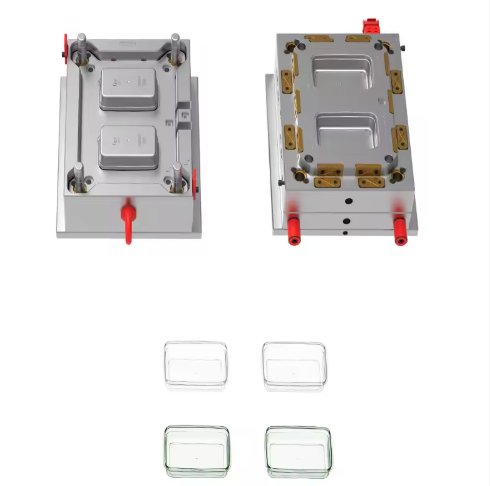
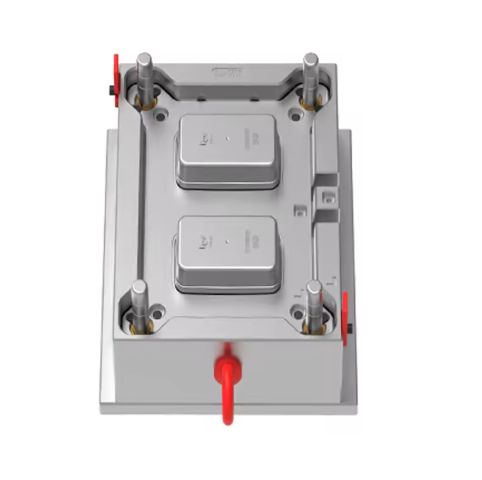
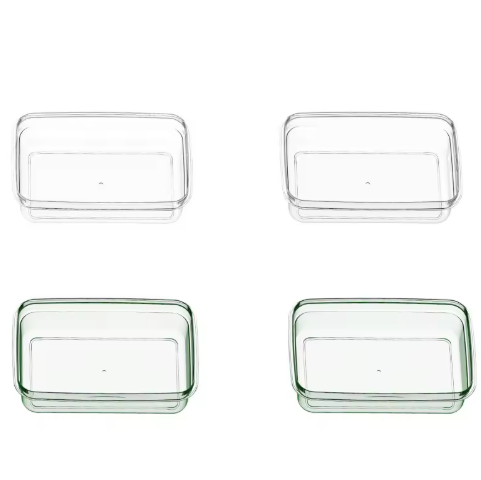
Food container molds require exceptional precision, material compatibility, and surface quality to ensure food safety and production efficiency. This guide provides comprehensive technical insights for mold steel selection, design considerations, manufacturing processes, and quality control standards specific to food contact applications.
Material Selection and Performance Parameters
Stainless Steel S136
Application Scenario: General food contact surfaces requiring high polishability
Performance Parameters:
- Hardness: 48-52 HRC after heat treatment
- Surface Finish:Can reach Ra 0.025 μm (A1 mirror polish)
- Corrosion Resistance: Passes FDA 21 CFR 177.2600 and EU 1935/2004
- Mold Life: 500,000+ cycles for PP/PE processing
Advantages:
- Excellent mirror polishing capability for easy cleaning and reduced bacterial adhesion
- Superior resistance to food acids and oils compared to conventional steels
- Low maintenance requirements in high-volume production environments
Pre-hardened Steel 718H
Application Scenario: Structural components and non-critical surfaces
Performance Parameters:
- Hardness: 32-36 HRC (pre-hardened)
- Dimensional Stability: ±0.002 mm/m
- Machinability: Excellent for complex geometries
- Mold Life: 300,000 cycles
Advantages:
- No post-machining heat treatment required, reducing production time
- Cost-effective solution for non-visible components
- Good weldability for mold repair and modification
Stainless Steel 316L
Application Scenario: High-corrosion resistance requirements
Performance Parameters:
- Hardness: 20-25 HRC (annealed)
- Corrosion Resistance: Superior to 304 grade, suitable for acidic foods
- Surface Finish: Ra ≤ 0.8 μm after standard polishing
- Compliance: Meets FDA, EU 10/2011, and GB 4806.9 standards
Advantages:
- Optimal choice for containers used with citrus products, vinegar, and salt-containing foods
- Excellent pitting resistance in wet environments
- Compatible with steam cleaning processes
High-Performance Alloy X100CrMoV51
Application Scenario: Heavy-duty food container molds
Performance Parameters:
- Hardness: 58-62 HRC after heat treatment
- Abrasion Resistance: 30% higher than conventional D2 steel
- Compressive Strength: 2800 MPa
- Applications: Glass fiber reinforced plastic containers
Advantages:
- Exceptional wear resistance for long production runs
- Maintains dimensional stability under high injection pressures
- Suitable for reinforced plastics that cause severe mold wear
Advanced Stainless Tool Steel CORRAX
Application Scenario: Specialized food contact applications
Performance Parameters:
- Hardness: 32-50 HRC (age-hardened)
- Corrosion Resistance: Superior to AISI 420 steel
- Polishing Capability: Ra ≤ 0.05 μm
- Heat Treatment: 425-600°C aging process
Advantages:
- No dimensional distortion during heat treatment
- Excellent weldability for complex mold structures
- Reduced maintenance costs due to superior corrosion resistance
Design and Manufacturing Considerations of Food Container Mold
Container Type-Specific Design
Cup Mold Design:
- Wall thickness: 0.8-1.2 mm with gradual transitions
- Draft angle: 1.5-2° for easy demolding
- Concentricity tolerance: ≤ 0.03 mm for rim sealing
- Cooling system: Spiral channels for uniform temperature distribution
Plate Mold Design:
- Flatness requirement: ≤ 0.02 mm/m for stacking capability
- Rib design: Height limited to 3x wall thickness to prevent sink marks
- Gate location: Edge gating with fan design to minimize flow marks
- Venting: Perimeter vents (0.015 mm depth) to prevent air traps
Box Mold Design:
- Seal edge tolerance: ±0.015 mm for leak-proof closure
- Stacking rib tolerance: ±0.02 mm for stable nesting
- Corner radius: Minimum 1.5 mm to reduce stress concentration
- Ejection system: Balanced sleeve ejection to prevent deformation
Thin-Wall Molding Technology
Critical Parameters:
- Wall thickness range: 0.5-1.5 mm
- Injection speed: 150-200 mm/s (high-speed injection)
- Mold temperature: 60-80°C for PP, 80-100°C for PET
- Cooling time: 5-15 seconds (optimized via conformal cooling)
Design Strategies:
- Flow length to thickness ratio: Maximum 150:1
- Gate size: 0.5-1.0 mm diameter (tunnel or hot tip gates)
- Runner system: Balanced design with equal flow paths
- Material selection: High-flow grades (MFR > 30 g/10min for PP)
Surface Treatment Specifications
Polishing Standards:
- SPI #3 finish (Ra 0.4 μm) for general food containers
- SPI #2 finish (Ra 0.2 μm) for baby food containers
- SPI #1 finish (Ra 0.05 μm) for optical clarity requirements
Special Treatments:
- Electropolishing: Improves corrosion resistance by 30% and reduces surface roughness
- Nitriding: Increases surface hardness without affecting dimensional stability
- Diamond-like carbon (DLC) coating: For extreme wear resistance applications
Quality Control and Compliance
Dimensional Inspection
Key Measurements:
- Critical dimensions: IT7 grade tolerance (±0.015 mm)
- Form tolerance: Flatness ≤ 0.02 mm/m for large surfaces
- Position tolerance: ±0.02 mm for hole patterns
- Surface finish: Ra measurement at 5 critical locations per cavity
Inspection Methods:
- Coordinate Measuring Machine (CMM) with touch probe
- Optical comparator for profile measurements
- Surface roughness tester (contact or non-contact)
- 3D scanning for complex geometries
Material Certification Requirements
Documentation:
- Material test report (MTR) with chemical composition
- Heat treatment records with hardness verification
- Corrosion resistance test results (salt spray testing per ASTM B117)
- Food contact compliance certificates (FDA, EU 1935/2004)
Validation Testing:
- Migration testing with food simulants (per EU 10/2011)
- Color fastness and staining resistance
- Thermal stability testing (121°C for 30 minutes)
- Mechanical strength after 50,000 molding cycles
Performance Validation
Food Container Mold Testing Protocol:
- Short production run (1,000 cycles) with process monitoring
- Dimensional checks at start, middle, and end of run
- Visual inspection for surface defects
- Demolding force measurement to optimize release system
Acceptance Criteria:
- No visible flow lines, weld lines, or sink marks
- Dimensional stability within ±0.03 mm over production run
- Consistent part weight (variation < 1%)
- Pass visual inspection under 1000 lux illumination
Application and Maintenance Guidelines of Food Container Mold
Processing Parameters by Material
Polypropylene (PP):
- Barrel temperature: 200-230°C
- Mold temperature: 40-60°C
- Injection pressure: 70-90 MPa
- Cooling time: 10-20 seconds
Polyethylene (PE):
- Barrel temperature: 180-220°C
- Mold temperature: 30-50°C
- Injection pressure: 60-80 MPa
- Cooling time: 15-25 seconds
Polyethylene Terephthalate (PET):
- Barrel temperature: 270-290°C
- Mold temperature: 80-120°C
- Injection pressure: 90-120 MPa
- Cooling time: 15-20 seconds
Tritan™ Copolyester:
- Barrel temperature: 260-280°C
- Mold temperature: 90-110°C
- Injection pressure: 80-110 MPa
- Cooling time: 20-30 seconds
Preventive Maintenance Program
Regular Maintenance Tasks:
- Daily: Visual inspection and surface cleaning
- Weekly: Lubrication of guide pillars and slides
- Monthly: Cooling channel flow rate testing
- Quarterly: Polishing of cavity surfaces (Ra verification)
Scheduled Overhaul (Every 50,000 Cycles):
- Complete disassembly and cleaning
- Dimension verification of critical components
- Replacement of worn guide bushes and ejector pins
- Re-polishing of critical surfaces
Long-Term Preservation:
- Apply rust inhibitor when mold is idle
- Store in climate-controlled environment (40-60% humidity)
- Periodic (6-month) inspection of stored molds
Troubleshooting Guide
Frequently Asked Questions
Q1: What is the optimal steel choice for high-volume yogurt cup production?
A1: For volumes exceeding 1 million units, CORRAX steel offers the best balance of corrosion resistance and wear properties, reducing maintenance costs by approximately 30% compared to conventional stainless steels.
Q2: How can Food Container Mold life be extended for abrasive food products?
A2: Combine X100CrMoV51 steel with DLC coating for critical surfaces, implement rigorous particulate filtration in the melt stream, and establish a preventive maintenance schedule with surface hardness checks every 100,000 cycles.
Conclusion
Food container mold design requires careful consideration of material selection, geometry-specific design, and manufacturing processes to ensure food safety compliance and production efficiency. The optimal mold steel choice depends on container type, production volume, and material being processed—with advanced options like CORRAX and X100CrMoV51 offering significant performance advantages for specialized applications.
By implementing the design guidelines, quality control measures, and maintenance procedures outlined in this guide, manufacturers can achieve consistent part quality, extended mold life, and compliance with global food contact regulations. Continuous monitoring of mold performance and adoption of new materials and technologies will further enhance production efficiency and product quality in this critical industry sector.
>>You may also like
Standards & References
The following industry standards are referenced in this article: