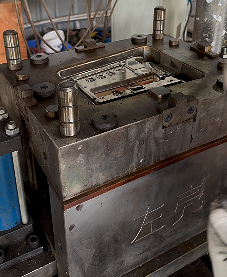
First aid kit accessory molds require specialized material selection and manufacturing processes to ensure consistent performance in critical emergency applications. This guide outlines the optimal steel solutions for producing high-precision, durable components that meet medical device standards while maintaining cost-effectiveness. The document focuses on material properties, design considerations, and quality control protocols specific to first aid kit components, with emphasis on dimensional accuracy, chemical resistance, and production efficiency.
Material Selection
Stainless Steel 420
Application Scenario: Primary structural components including case shells and tool compartments.
Performance Parameters:
- Hardness: 45-48 HRC after heat treatment
- Tensile strength: 1250-1400 MPa
- Impact resistance: 25 J/cm² (Charpy V-notch at 23°C)
- Corrosion resistance: ASTM B117 1000-hour salt spray compliant
Heat Treatment: 1010°C austenitizing followed by oil quenching and tempering at 200°C.
Advantages: Exceptional durability for impact-prone applications; maintains integrity after 1.5m drop tests per ASTM D4169; compatible with all common disinfectants.
Pre-hardened Steel 718H
Application Scenario: Complex internal components and multi-cavity mold applications.
Performance Parameters:
- Delivery hardness: 32-36 HRC
- Dimensional stability: 0.0015mm/m flatness tolerance
- Machining efficiency: 90% tool life compared to standard mold steels
- Polishing capability: Uniform finish up to Ra 0.8 μm
Heat Treatment: Pre-hardened to specification, no post-machining heat treatment required.
Advantages: Ideal for components with variable wall thickness (0.8-3.0mm); reduces mold lead time by 20% for complex geometries with undercuts and side actions.
Corrosion-Resistant Steel S136
Application Scenario: Transparent covers and high-visibility components requiring frequent cleaning.
Performance Parameters:
- Hardness: 48-50 HRC after hardening
- Surface finish:可达 Ra 0.02 μm (mirror polish)
- Chemical resistance: Unaffected by isopropyl alcohol, hydrogen peroxide, and iodine solutions
- Wear resistance: 50,000+ cycles without measurable surface degradation
Heat Treatment: 1050°C solution annealing followed by triple tempering at 200°C.
Advantages: Eliminates bacterial growth points through ultra-smooth surface; meets USP Class VI requirements for medical device components.
Design and Manufacturing Guidelines
Mold Design Essentials
- Tolerance specifications: ±0.01mm for mating components; ±0.05mm for non-critical features
- Draft angles: 1.0-1.5° for external surfaces; 0.5° minimum for textured surfaces
- Radii requirements: Minimum 0.5mm internal radii for impact resistance; 0.3mm minimum for external edges
- Wall thickness: Optimal range 1.2-2.5mm with maximum variation ≤0.3mm to prevent sink marks
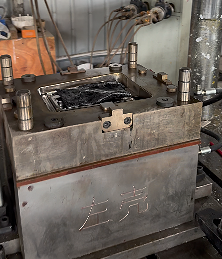
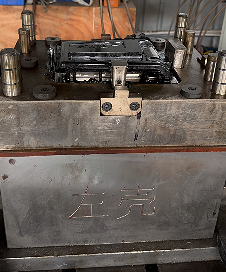
Manufacturing Processes of First aid kit accessory mold
- CNC machining: 5-axis capability for complex geometries with 0.005mm positioning accuracy
- EDM operations: Surface finish control to Ra 0.4 μm for functional surfaces
- Texturing options: Uniform matte finish (Ra 1.6 μm) for non-slip grip areas
- Assembly features: Molded-in locators with ±0.02mm positional accuracy for subsequent assembly
Tooling Considerations
- Gating system: Edge gating preferred for cosmetic surfaces; submarine gating for structural components
- Cooling design: 8mm diameter cooling channels with 25mm spacing; turbulent flow (Reynolds number >4000)
- Ejection system: Balanced pin ejection with 0.05mm clearance; lifter systems for undercut features up to 5mm depth
Quality Control Standards
Material Verification
- Chemical composition: Spectrometric analysis confirming compliance with AISI/SAE standards
- Mechanical testing: Tensile, impact, and hardness verification per ASTM E8, E23, and E18
- Microstructure evaluation: Grain size ASTM 7-8; carbide distribution rating ≤2 (ASTM E45)
Dimensional Inspection
- Measurement equipment: Coordinate measuring machine with 0.001mm resolution
- Inspection points: 100% coverage of critical features; sampling plan MIL-STD-105E for non-critical dimensions
- Documentation: AS9102 first article inspection reports for all new mold designs
Performance Validation
- Cycle testing: 100,000 consecutive molding cycles with dimensional monitoring
- Environmental conditioning: Temperature cycling (-40°C to +70°C) per IEC 60068-2-14
- Impact testing: 1.5m drop test per ASTM D4169 Procedure I (transportation simulation)
Application and Maintenance of First Aid Kit Accessory Mold
Processing Parameters
- Recommended resins: ABS (impact modified), PC/ABS blends, and PP copolymer
- Melt temperatures: 220-260°C (ABS); 240-280°C (PC/ABS)
- Mold temperatures: 60-80°C (ABS); 80-100°C (PC/ABS)
- Cycle times: 35-55 seconds depending on part weight (10-80g)
Maintenance Protocol
- Preventive maintenance: Every 5,000 cycles for critical components; 10,000 cycles for general maintenance
- Cleaning procedures: Ultrasonic cleaning with neutral pH detergent; avoid abrasive cleaners
- Storage requirements: Climate-controlled environment (18-24°C, 40-60% RH); rust inhibitor application during storage periods exceeding 30 days
Frequently Asked Questions
Q1: What material is best for emergency kit components requiring frequent opening/closing?
A: 718H pre-hardened steel provides the optimal balance of wear resistance and dimensional stability for hinge features and snap-fit components, maintaining functionality through 10,000+ opening/closing cycles.
Q2: How does First Aid Kit Accessory Mold steel selection impact sterilization compatibility?
A: S136 stainless steel offers the highest resistance to repeated sterilization cycles, maintaining corrosion resistance after 500+ autoclave cycles (134°C, 3 bar pressure) or 1000+ chemical disinfection cycles.
Q3: What design features should be incorporated for emergency use reliability?
A: Critical design elements include: reinforced corner radii (≥1.5mm), mechanical interlocks with 0.1mm interference fit, and intentional over-design of load-bearing features (150% of calculated requirements) to ensure functionality under emergency conditions.
Conclusion
The selection of appropriate First aid kit accessory mold directly impacts product durability, user safety, and manufacturing efficiency. By implementing the material recommendations and design guidelines outlined in this document, manufacturers can produce components that meet the rigorous requirements of emergency response equipment while optimizing production costs and lead times.
This guide establishes a comprehensive framework for mold steel application in first aid kit manufacturing, addressing the unique combination of mechanical performance, chemical resistance, and dimensional precision required for these critical safety components.
>>You may also like
Standards & References
The following industry standards are referenced in this article: