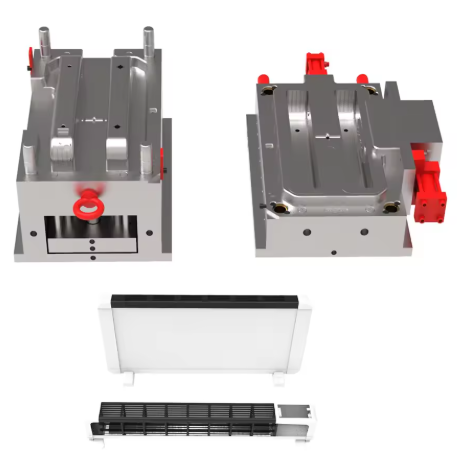
Material Selection for Electric Heater Plate Molds
Selecting the right mold steel is critical for electric heater plate manufacturing, where high temperatures and thermal cycling demand exceptional material performance. Pre-hardened steel grades like 718H and NAK80 (30-45 HRC) balance hardness and machinability for complex geometries. For high-volume production (>500,000 cycles), heat-treated steels such as H13 (42-48 HRC) or S136 (45-50 HRC) provide superior wear resistance for 150-300°C operating temperatures.
Advanced alloys like SDCM-S offer thermal conductivity advantages over conventional H13: at 100°C, SDCM-S demonstrates 1.86 times higher thermal conductivity, maintaining 1.26 times superiority at 700°C. Its optimized composition—low silicon (≤0.3%), low manganese (≤0.5%), reduced chromium (8-10%), and elevated molybdenum (2.5-3.5%)—promotes stable Mo2C carbide formation, retaining hardness above 38HRC after 20 hours at 620°C (9HRC higher than H13 under identical conditions).
Material choice directly impacts longevity and quality. Corrosion-resistant steels like 2316 are mandatory for water-based coolants, while mirror-polish grades (S136) ensure uniform heat distribution. Proper selection reduces maintenance costs by 30% and extends tool life by 40% versus generic grades.
Molding Process Parameters Optimization
Precision control of injection parameters prevents defects in heater plates. Melt temperature should be 230-280°C for PC/ABS blends, with injection pressure 800-1200 bar to ensure cavity filling without excessive shear. Cooling time (25-40 seconds) prevents warpage in PPS/PEI materials.
High-performance polymers demand specialized parameters: PEI requires melt temperatures of 340-440°C with mold temperatures maintained at 135-180°C, while PPS processes optimally at 280-330°C melt temperature and 120-180°C mold temperature. Glass fiber reinforcement (30-40% loading) typically reduces shrinkage from 1.5-2% to 0.2-0.4% but necessitates higher mold temperatures (>150°C) to prevent fiber orientation stresses.
Mold flow analysis optimizes gate design and venting to eliminate air traps. Optimizing hold pressure (50-70% of injection pressure) and cooling channels reduces dimensional variation by 25%. Multi-cavity molds require ±2°C temperature uniformity for consistent quality.
Safety and Industry Standards Compliance
Electric heater plates require strict safety compliance to prevent hazards. UL 746B and IEC 60335 certifications mandate designs ensuring insulation and heat resistance. Mold steel must maintain integrity at 120% of operating temperature, requiring HDT >200°C at 1.82 MPa.
UL 746B certification involves rigorous high-temperature aging protocols: specimens undergo sequential exposure at 85°C and 105°C with mechanical performance evaluations every 96, 500, and 1000 hours. Critical criteria include retention of ≥50% original tensile strength, thermal deformation temperature measurement under 1.82 MPa stress, and dimensional stability verification (allowable deviation ≤±0.05mm) following 85°C/85%RH humid heat cycle. Venting systems release VOCs during molding, while ejection systems prevent surface damage creating hotspots. Recent regulations emphasize traceability, requiring steel certificates and process documentation for RoHS/REACH compliance.
Surface Treatment and Finishing Techniques
Surface finish affects part release, heat transfer, and corrosion resistance. Mirror polishing (Ra < 0.2 μm) minimizes friction and facilitates cleaning. Nitriding increases surface hardness by 50-80% without distortion, ideal for glass-filled thermoplastics.
PVD coatings like TiAlN deliver exceptional performance with 3000-3400 HV hardness, 800°C maximum operating temperature, and 0.4 friction coefficient. For enhanced corrosion resistance, TiAlSiN coatings outperform TiAlN by reducing self-corrosion current density by one order of magnitude in saline environments. These treatments reduce wear rates by 60% and extend maintenance intervals 2-3 times. Chemical passivation ensures FDA CFR 21 Part 177 compliance for medical applications. Optimized treatments reduce cycle times by 15% through improved heat transfer.
Structural Design Considerations
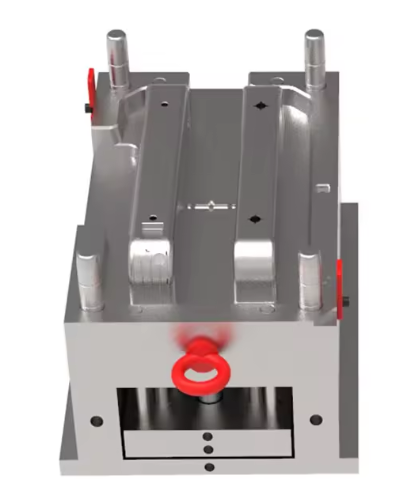
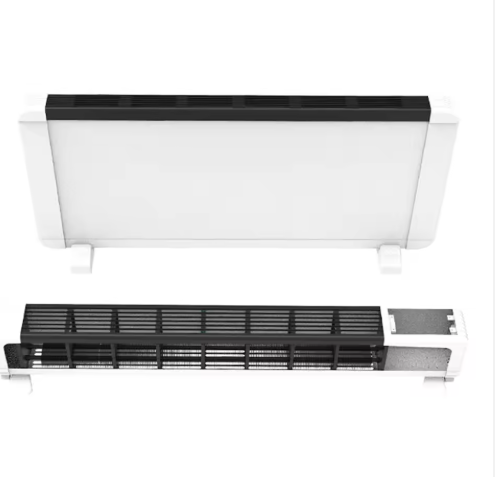
Heater plate mold design balances thermal management with rigidity. Conformal cooling channels reduce cooling time by 30-40% versus conventional channels, ensuring uniform temperature. Draft angles of 1.5-3° aid demolding, while core/cavity alignment tolerances (±0.02 mm) prevent flash in high-pressure molding.
FEA simulation validates advanced cooling designs: topological optimization of conformal channels reduces cooling time by 30-40% while improving temperature uniformity by 25%. Laser Metal Deposition (LMD) technology enables fabrication of complex Irregularly shaped cooling channels with internal diameters as small as 2mm, as demonstrated in automotive heater molds where cycle time decreased from 45 to 28 seconds and part warpage reduced from 0.3mm to 0.12mm, achieving 99.2% production yield. Stress analysis prevents deflection in large-format plates (>500mm). FEA optimizes rib design and wall thickness, reducing material usage by 20%. Modular designs with interchangeable inserts enable quick changes and reduce tooling costs by 25-35%.
Emerging Trends and Future Developments
The industry evolves with advanced manufacturing technologies. Additive manufacturing enables conformal cooling designs improving thermal efficiency by 40%. AI-driven monitoring predicts wear and maintenance needs, reducing downtime by 35%.
3D printing applications demonstrate tangible benefits: Selective Laser Melting (SLM) of mold steel CX with conformal cooling channels extended thermal cycle life by 2.3 times while lowering production costs by 15%. In medical device manufacturing, SLM-fabricated blood heater molds feature 40% more complex cooling geometries, increasing heat exchange efficiency by 35% and reducing per-unit costs by $22. Sustainability drives demand for recyclable materials and energy-efficient processes. Smart mold technologies with IoT connectivity will capture 20% of the market by 2028, offering real-time quality control as EV and renewable energy sectors expand.
Q1: What is an Electric Heater Plate Mold used for?
A: An Electric Heater Plate Mold is used to manufacture electric heater plates with precise dimensions and consistent heating performance.
Q2: What materials are Electric Heater Plate Molds made from?
A: Electric Heater Plate Molds are typically made from high-grade steel or aluminum, ensuring durability and stable thermal performance.
Q3: Can Electric Heater Plate Molds be customized?
A: Yes, Electric Heater Plate Molds can be fully customized in size, thickness, heating channel layout, and surface finish.
Q4: Are Electric Heater Plate Molds suitable for mass production?
A: Yes, Electric Heater Plate Molds are designed for stable, repeatable, and high-volume production with consistent quality.
Q5: What molding processes are supported by Electric Heater Plate Mold designs?
A: Electric Heater Plate Molds support compression molding, casting, and injection molding depending on the heater material.
Q6: What is the typical lifespan of an Electric Heater Plate Mold?
A: With proper maintenance, an Electric Heater Plate Mold can support tens of thousands of production cycles.
Q7: Can heating elements or grooves be integrated into the mold?
A: Yes, Electric Heater Plate Molds can be designed with embedded grooves or channels for heating elements and sensors.
Q8: How is dimensional accuracy ensured in Electric Heater Plate Mold production?
A: Precision machining and strict quality control ensure consistent dimensions and flatness.
Q9: Can logos or markings be added using Electric Heater Plate Mold?
A: Yes, brand logos, part numbers, and technical markings can be engraved directly into the Electric Heater Plate Mold.
Q10: What industries commonly use Electric Heater Plate Molds?
A: Electric Heater Plate Molds are widely used in home appliances, industrial heating equipment, and electrical components manufacturing.
>>You may also like
Standards & References
The following industry standards are referenced in this article: