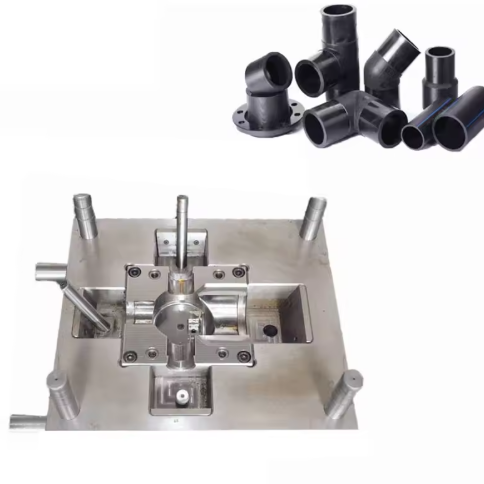
Understanding 45# Steel in Elbow Fitting Mold Manufacturing
45# steel has emerged as a cornerstone material in elbow fitting mold manufacturing, offering a unique balance of mechanical properties, cost-effectiveness, and machinability. As the global automotive mold market continues to expand at a CAGR of 6.11%, reaching an estimated USD 79.4 billion by 2033, manufacturers are increasingly turning to this medium-carbon steel for its versatility in producing high-precision elbow components. The material’s popularity stems from its ability to withstand the rigorous demands of injection molding processes while maintaining dimensional stability and surface finish quality.
The selection of 45# steel for elbow fitting molds is particularly advantageous due to its moderate carbon content (0.42-0.50%), which allows for significant improvements in hardness and strength through heat treatment without excessive brittleness. This characteristic makes it ideal for producing molds that must maintain precise tolerances during thousands of injection cycles. Unlike higher alloy steels, 45# steel offers a cost-effective solution for medium-volume production runs, striking a balance between performance and affordability that resonates with manufacturers across the automotive and plumbing sectors.
Heat Treatment Parameters for Optimal Performance
Achieving the perfect balance between hardness and toughness requires precise heat treatment parameters. The optimal process begins with austenitization, where the steel is heated to 820-860°C (1508-1580°F) and held at this temperature for 1-2 hours per 25mm of section thickness. This ensures complete transformation of the microstructure to austenite, preparing the material for subsequent quenching.
Quenching should be performed in water or oil to rapidly cool the steel, typically to temperatures below 200°C (392°F). Water quenching produces higher hardness but increases the risk of distortion, while oil quenching offers more uniform cooling with slightly lower hardness. For elbow fitting molds, oil quenching is generally preferred to maintain dimensional stability, resulting in a hardness range of 55-60 HRC.
Tempering is critical to reduce brittleness and achieve the desired mechanical properties. The steel should be tempered at 550-600°C (1022-1112°F) for 2-3 hours, followed by air cooling. This process reduces hardness to a more suitable 28-32 HRC while enhancing toughness and dimensional stability. The resulting microstructure consists of fine tempered sorbite, which provides the optimal combination of wear resistance and impact strength required for elbow fitting molds.
Proper heat treatment not only enhances its mechanical properties but also improves its machinability and polishability. This is particularly important for elbow molds, where surface finish directly impacts the quality of the molded parts. A well-executed heat treatment process ensures that the mold maintains its precision dimensions throughout its service life, which can exceed 500,000 cycles when properly maintained.
Injection Molding Parameters for Molds
Successfully utilizing molds for elbow fittings requires careful optimization of injection molding parameters to ensure both part quality and mold longevity. The material’s thermal conductivity (approximately 50 W/m·K) and heat capacity influence the cooling phase, making it essential to adjust cycle times accordingly.
The injection temperature profile should be tailored to the specific thermoplastic material being processed. For common materials like PP and PVC used in elbow fittings, barrel temperatures typically range from 180-230°C (356-446°F). The mold temperature, controlled by the cooling system, should be maintained between 40-80°C (104-176°F) to ensure proper flow and solidification. This temperature range helps prevent premature solidification while reducing internal stresses in the molded part.
Injection pressure is another critical parameter, with recommended values between 80-120 MPa (11,600-17,400 psi) for most elbow fitting applications. This pressure must be sufficient to fill the mold cavity completely while avoiding excessive stress on the mold components. The injection speed should be set to ensure smooth flow without creating shear-induced defects, typically in the range of 50-100 mm/s.
Hold pressure and time are particularly important for maintaining dimensional accuracy in elbow fittings. A hold pressure of 60-90% of the injection pressure, applied for 10-20 seconds, helps compensate for material shrinkage. The cooling time, which constitutes the majority of the cycle, should be optimized based on part thickness, typically ranging from 20-40 seconds for standard elbow fittings.
Proper parameter setting not only ensures part quality but also minimizes wear on the mold. Excessive pressure or temperature can accelerate mold degradation, while insufficient cooling can lead to dimensional inconsistencies. By carefully controlling these parameters, manufacturers can maximize both part quality and mold lifespan, leveraging the full potential in elbow fitting production.
Mold Structure Design Considerations
Designing elbow fitting molds requires careful attention to structural details that ensure both manufacturing efficiency and part quality. The mold base should be constructed with sufficient rigidity to withstand injection pressures, typically utilizing standardized mold base components to ensure compatibility and reduce costs. The cavity and core, machined from steel, must incorporate proper draft angles (typically 1-3°) to facilitate part ejection and prevent damage to both the mold and the molded component.
Cooling system design is critical for maintaining consistent part quality and cycle times. For elbow fittings, a combination of straight and conformal cooling channels should be incorporated to ensure uniform heat dissipation. The cooling channels should be positioned 15-20 mm from the cavity surface, with a diameter of 8-12 mm, and arranged to follow the contour of the elbow to minimize temperature variations. This design approach helps reduce warpage and ensures dimensional stability in the final part.
The gating system for elbow fitting molds should be carefully designed to minimize flow marks and ensure complete filling. Edge gates or submarine gates are commonly used, positioned to allow balanced flow into the cavity. The gate size should be proportional to the part thickness, typically 0.5-1.5 mm in diameter, to control flow velocity and pressure drop. For complex elbow geometries, multiple gates may be necessary to ensure uniform filling and reduce internal stresses.
Ejection system design must account for the curved surfaces of elbow fittings. A combination of ejector pins and ejector sleeves is often employed, positioned to provide uniform ejection force and prevent part deformation. The ejector pins should be placed in areas of sufficient part thickness, typically 8-12 mm in diameter, and arranged to distribute the ejection force evenly across the part surface.
Finally, the mold should incorporate appropriate venting to allow trapped air to escape during injection. Vents, typically 0.01-0.03 mm deep and 5-10 mm wide, should be positioned at the furthest points from the gate and in areas where air is likely to become trapped, such as the corners of the elbow. Proper venting prevents burn marks and ensures complete filling of the mold cavity.
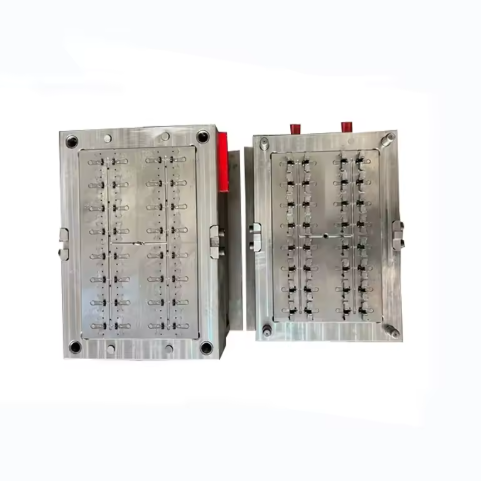
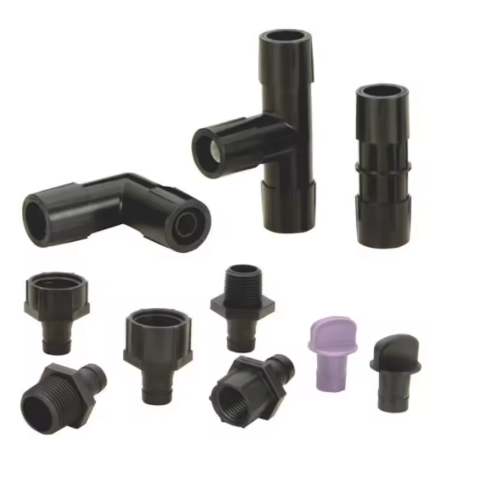
Industry Standards and Quality Control
Manufacturing elbow fitting molds requires adherence to stringent industry standards to ensure product quality and performance. The mold must comply with ISO 9001:2015 quality management system requirements, which cover design, production, and testing processes. This includes documentation of all manufacturing steps, from material selection to final inspection, ensuring traceability and consistency.
Dimensional accuracy is a critical aspect of elbow fitting mold production. The mold should be manufactured to tolerances of ±0.02 mm for critical dimensions, ensuring that the molded parts meet the required specifications. This level of precision is typically achieved through CNC machining and EDM processes, followed by thorough inspection using coordinate measuring machines (CMM).
Surface finish requirements for elbow fitting molds are defined by industry standards such as SPI/SPE mold finish classifications. For most applications, a finish of SPI B-1 or better is required, corresponding to a surface roughness (Ra) of 0.4-0.8 μm. This level of finish ensures proper release of the molded parts and minimizes the need for secondary operations.
Material certification is another important aspect of quality control. The steel used in mold construction should be accompanied by a material certificate (EN 10204 3.1) verifying its chemical composition and mechanical properties. This documentation ensures that the material meets the required standards for hardenability and machinability.
Finally, mold testing and validation are essential to ensure performance. The mold should undergo a series of test runs under production conditions, with the resulting parts inspected for dimensional accuracy, surface quality, and mechanical properties. This validation process helps identify any design or manufacturing issues before full-scale production begins, ensuring that the mold will perform reliably in a production environment.
Conclusion: Maximizing Performance in Elbow Fitting Molds
The application in elbow fitting molds represents a balance of performance, cost-effectiveness, and manufacturability that is difficult to achieve with other materials. By carefully controlling heat treatment parameters, manufacturers can tailor the material’s properties to meet the specific demands of each application, ensuring optimal hardness, toughness, and wear resistance.
The injection molding parameters must be optimized to work in harmony with the properties, ensuring both part quality and mold longevity. This includes careful control of temperature, pressure, and cycle times to minimize stress on the mold while producing consistent, high-quality elbow fittings.
Mold structure design plays a crucial role in maximizing the performance. By incorporating proper cooling, gating, and ejection systems, manufacturers can ensure efficient production and consistent part quality. Adherence to industry standards and rigorous quality control procedures further ensures that the molds meet the highest requirements for precision and reliability.
As the automotive and plumbing industries continue to evolve, the use in elbow fitting molds is likely to grow, driven by its versatility and cost-effectiveness. By following the guidelines outlined in this guide, manufacturers can leverage the full potential of this material, producing molds that offer excellent performance and value for a wide range of applications.
In an industry where precision and reliability are paramount, it stands out as a material that can meet the challenges of modern elbow fitting production. Its unique combination of properties, when properly harnessed through careful heat treatment, mold design, and process control, makes it an excellent choice for manufacturers seeking to balance performance and cost in their moldmaking operations.
FAQs – Elbow Fitting Molds
Q1: What are Elbow Fitting Molds used for?
A1: Elbow Fitting Molds are used to manufacture elbow pipe fittings with high dimensional accuracy and strength.
Q2: Which materials are suitable for Elbow Fitting Molds?
A2: Elbow Fitting Molds can be designed for PVC, PP, PE, ABS, and other thermoplastic materials.
Q3: Can Elbow Fitting Molds be customized?
A3: Yes, Elbow Fitting Molds can be customized in angle, diameter, cavity number, and mold structure.
Q4: What elbow angles can Elbow Fitting Molds produce?
A4: Elbow Fitting Molds commonly support 45°, 90°, and other customized elbow angles.
Q5: Are Elbow Fitting Molds suitable for high-volume production?
A5: Yes, Elbow Fitting Molds are designed for stable, efficient, and long-term mass production.