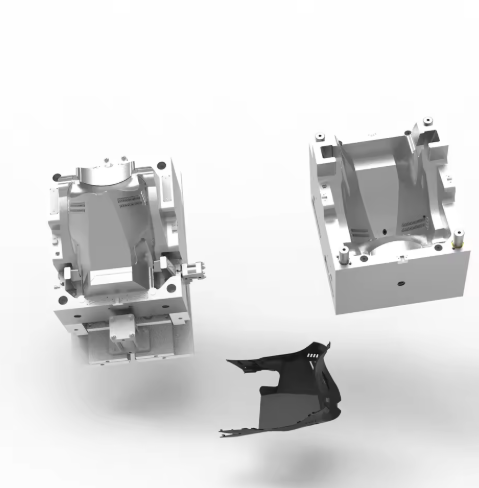
Bicycle component molds serve as the foundation for producing high-quality, durable parts that balance performance, safety, and lightweight design. As the global bicycle industry evolves—encompassing commuter bikes, mountain bikes, and high-performance racing models—the demand for precision-engineered components has never been greater. Steel remains the material of choice for bicycle component molds due to its unique combination of strength, durability, and dimensional stability. This guide explores the applications, manufacturing processes, and design considerations specific to steel bicycle component molds, highlighting their importance in creating reliable and innovative bicycle parts.
Material Selection for Bicycle Component Molds: The Advantages of Steel
Steel stands out as the optimal material for bicycle component molds, offering properties that directly address the industry’s core requirements. High tensile strength ensures molds can withstand the stresses of high-volume injection molding while maintaining tight tolerances—critical for components like chainrings and derailleurs that require precise fitting. Wear resistance is another key benefit; steel molds maintain their integrity even when producing abrasive-reinforced plastics, reducing maintenance downtime and extending tool life.
For bicycle components that demand lightweight yet strong finished parts, steel molds enable the production of thin-walled structures with consistent wall thickness. This is particularly important for frames and handlebars, where weight reduction without compromising strength is essential. Additionally, steel’s thermal conductivity allows for uniform cooling of molded parts, minimizing warpage in complex geometries like wheel hubs and brake calipers. Different steel grades are selected based on component requirements: high-carbon steel for high-wear parts like sprockets, and alloy steel for molds requiring enhanced toughness, such as those used for suspension components.
Design Considerations for Bicycle Component Molds
Effective bicycle component mold design must balance functionality, production efficiency, and part performance. Dimensional accuracy is paramount, as even minor deviations can affect component compatibility—for example, misaligned bottom bracket molds may result in frames that cannot accommodate standard cranksets. Mold designers must account for material shrinkage rates, especially when working with fiber-reinforced composites commonly used in high-performance bicycle parts.
Draft angles and ejection systems require careful planning to prevent damage to delicate features like spoke holes in wheel rims or gear teeth in cassettes. For complex components such as integrated handlebar-stem units, molds often incorporate side-action cores to form undercuts, ensuring intricate designs can be produced in a single molding cycle. Cooling channel design is equally critical; uneven cooling can cause residual stresses in parts like seat posts, leading to premature failure under load. By optimizing cooling uniformity, steel molds reduce cycle times while maintaining part consistency.
Manufacturing Processes for Steel Bicycle Component Molds
The production of steel bicycle component molds involves precision machining and heat treatment to achieve the required hardness and surface finish. CNC milling and EDM (Electrical Discharge Machining) are standard processes for creating intricate mold cavities, such as the gear profiles in cassette molds or the aerodynamic contours of frame tubes. These technologies enable the reproduction of fine details with tolerances as tight as ±0.02mm, ensuring parts fit together seamlessly.
After machining, mold components undergo heat treatment to enhance durability. Processes like quenching and tempering harden the steel to 45–50 HRC (Rockwell hardness), making molds resistant to wear during repeated injection cycles. Surface polishing follows, with critical areas (such as mold faces for visible components like handlebar grips) finished to a mirror-like surface to prevent defects in the final part. Assembly of the mold incorporates guided pins and bushings to ensure alignment, while hot runner systems may be used for high-volume components like pedal bodies to reduce material waste and cycle times.
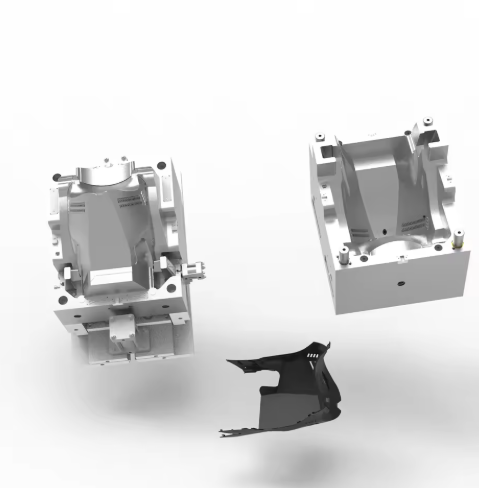
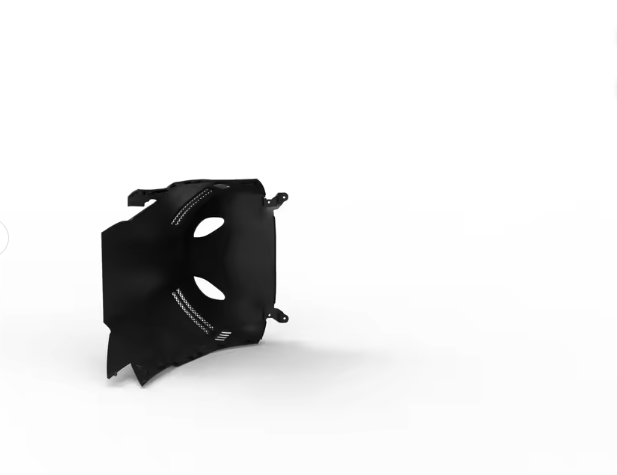
Applications of Steel Molds in Bicycle Component Production
Steel bicycle component molds support the manufacturing of a wide range of parts, each with unique requirements. Structural components such as frame lugs and fork dropouts rely on steel molds to achieve the strength needed to withstand rider weight and impact forces. Molds for these parts often feature reinforced cavities and precision cooling to ensure uniform material distribution, critical for preventing stress concentrations.
Transmission components—including chainrings, cogs, and derailleur pulleys—demand molds with exceptional dimensional accuracy to ensure smooth gear engagement. Steel molds excel here, as their stability allows for the production of intricate tooth profiles that maintain consistent spacing and shape. Wheel components like rim molds benefit from steel’s thermal conductivity, which helps produce uniform wall thickness, essential for balanced wheels that reduce vibration during riding.
Even smaller components such as brake levers and shifter housings rely on steel molds for their ability to reproduce fine details, such as texture patterns for grip or precise mounting points for cables. The versatility of steel molds makes them indispensable across all segments of bicycle manufacturing, from budget-friendly commuter bikes to high-end racing models.
Maintenance and Longevity of Steel Bicycle Component Molds
Proper maintenance is key to maximizing the service life of steel bicycle component molds and ensuring consistent part quality. Regular cleaning removes plastic residue and debris from mold cavities and cooling channels, preventing defects like surface blemishes or incomplete fills. Specialized cleaning agents safe for steel surfaces are used to avoid corrosion, particularly in humid production environments.
Preventive maintenance includes inspecting mold components for signs of wear, such as erosion in gate areas or deformation of ejector pins. Damaged components are repaired or replaced promptly to prevent further deterioration. Lubrication of moving parts (slides, lifters) reduces friction and extends their operational life. For long-term storage, molds are coated with rust inhibitors and stored in controlled environments to protect against moisture and temperature fluctuations. With proper care, steel bicycle component molds can produce hundreds of thousands of parts, making them a cost-effective investment for manufacturers.
Conclusion
Steel bicycle component molds play a pivotal role in the production of safe, reliable, and high-performance bicycle parts. Their strength, precision, and durability make them ideal for meeting the diverse needs of the bicycle industry, from lightweight racing components to rugged mountain bike parts. By leveraging steel’s material properties and advanced manufacturing techniques, mold designers and manufacturers continue to push the boundaries of bicycle design, enabling innovations in comfort, efficiency, and safety. As the industry evolves—with growing focus on sustainability and electric mobility—steel molds will remain a cornerstone of bicycle component production, ensuring that new technologies can be efficiently and reliably manufactured at scale.
FAQ
Q1: Why is steel preferred for bicycle component molds?
Steel offers an optimal balance of strength, wear resistance, and thermal stability, ensuring molds maintain precision over high-volume production runs. Its ability to withstand the stresses of molding fiber-reinforced plastics makes it ideal for manufacturing lightweight yet durable bicycle parts.
Q2: What tolerance levels can steel bicycle component molds achieve?
Steel molds typically achieve tolerances of ±0.02mm, critical for components like gear cassettes and bottom brackets where precise fitting is essential for performance and safety.
Q3: Can steel molds produce parts from different materials?
Yes, steel molds accommodate various materials including ABS, polycarbonate, and glass-fiber reinforced composites, making them versatile for manufacturing frames, wheels, and transmission components.
Q4: How often should steel bicycle molds be maintained?
Maintenance frequency depends on production volume, but regular cleaning of cooling channels and inspection of ejector systems are recommended every 50,000 shots to prevent wear-related defects.
Q5: Are steel molds suitable for low-volume custom bicycle production?
While steel molds have higher upfront costs, their durability and precision make them cost-effective even for low-volume runs, especially for custom components requiring consistent quality and complex geometries.