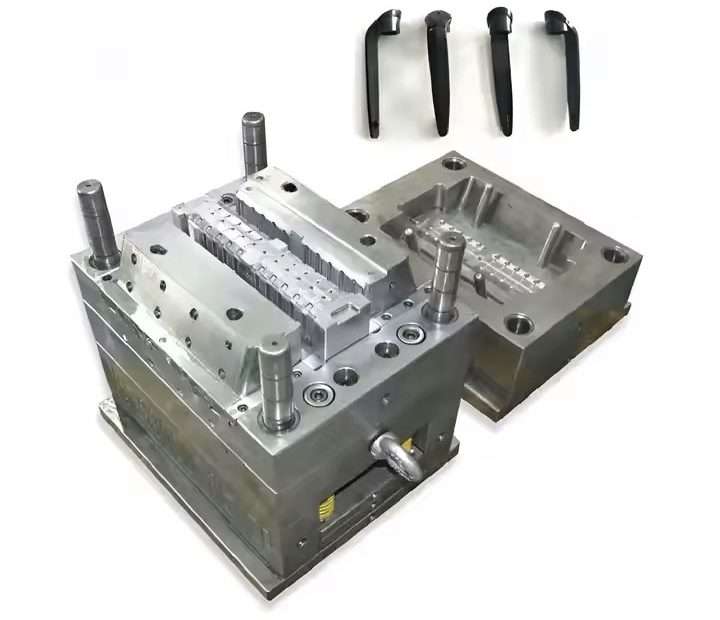

Ballpoint pens, as a daily writing tool, are widely used around the world due to their convenience and practicality. In the production of ballpoint pens, the design and manufacture of Ballpoint Pen Molds play a crucial role. High-quality molds not only directly influence the production efficiency of ballpoint pens but also determine the appearance quality and service life of the products.
Manufacturing Process of Ballpoint Pen Molds
Ballpoint Pen Molds:Designing molds is the first and most critical step in ballpoint pen production. The design of the mold needs to consider various factors, including product dimensional accuracy, shape complexity, material properties, and production costs. Typically, mold design involves using computer-aided design (CAD) software for 3D modeling and simulation testing to ensure the rationality and feasibility of the design.
Ballpoint Pen Molds:Mold manufacturing mainly includes several steps: material selection, rough machining, heat treatment, precision machining, and assembly.
- Material Selection: Common mold materials include high-strength steel, hard alloys, and aluminum alloys. The choice of material primarily depends on the mold’s usage requirements and working environment.
- Rough Machining: After selecting the material, we proceed with rough machining. Rough machining primarily uses mechanical equipment such as saws, lathes, and milling machines to initially shape the mold.
- Heat Treatment: Post rough machining, we perform heat treatment to enhance the hardness and wear resistance of the material. Common heat treatment methods include quenching, tempering, and surface carburizing.
- Precision Machining: After heat treatment, we carry out precision machining, mainly using CNC machines (Computer Numerical Control) to ensure the dimensional accuracy and surface quality of the mold.
- Assembly: Finally, we assemble the processed components to form a complete mold. The assembly process requires strict control of each step to ensure the fitting accuracy and overall performance of the mold.
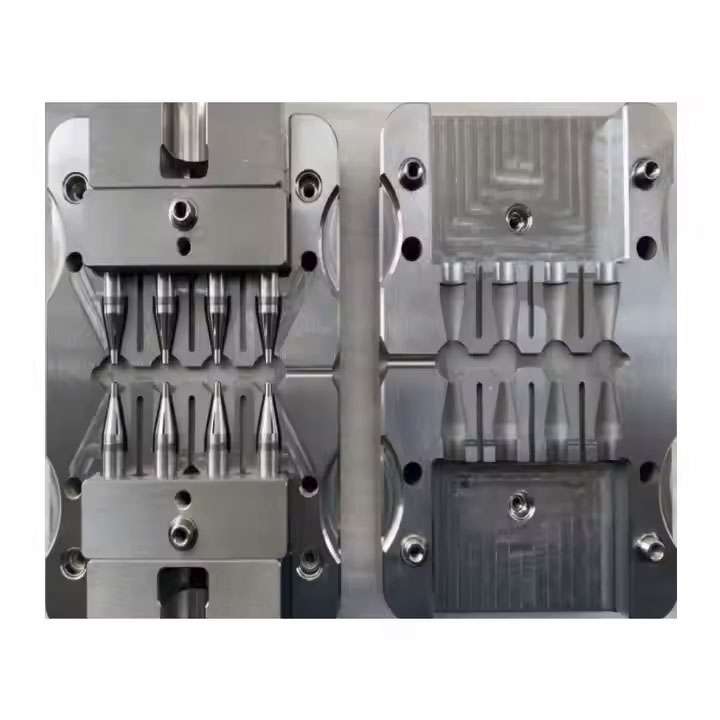
Common Issues and Solutions in the Use of Ballpoint Pen Molds
Mold Wear
Mold wear is common during use due to friction and high temperatures. Mold wear leads to imprecise product dimensions and decreased surface quality. To address mold wear:
- Material Optimization: We use more wear-resistant materials, such as hard alloys and high-strength steel.
- Surface Treatment: We perform surface treatments like nitriding and chrome plating on the mold to increase hardness and wear resistance.
- Lubricant Usage: Using appropriate lubricants during mold operation reduces friction and heat, extending the mold’s service life.
Mold Deformation
Mold deformation mainly occurs due to improper heat treatment or high working temperatures. Mold deformation causes deviations in product shape and dimensions. To address mold deformation:
- Heat Treatment Control: We strictly control the temperature and duration of heat treatment to avoid overheating and overcooling of mold materials.
- Working Environment Control: During mold operation, we avoid prolonged exposure to high temperatures and implement effective cooling measures to maintain mold temperature stability.
Mold Cracking
Mold cracking primarily results from internal material defects or external impact forces. Mold cracking leads to mold scrapping, affecting production efficiency. To address mold cracking:
- Material Inspection: We rigorously inspect material quality during selection to avoid using materials with internal defects.
- Process Optimization: We optimize processing techniques to reduce stress concentration and prevent cracking from external impact forces.
What is the role of injection molding in ballpoint pen molds manufacturing?
Injection molding is one of the most commonly used processes in ballpoint pen mold manufacturing. By heating plastic pellets to a molten state and then injecting them into the mold to cool and solidify, various shapes and sizes of plastic parts can be efficiently produced. This process requires precise control of temperature, pressure, and time to ensure product quality and consistency.
What is the cause of mold deformation and how to solve it?
Mold deformation is mainly caused by improper heat treatment or excessively high working environment temperatures. This results in the mold changing shape during use, which affects the accuracy and quality of the products. Here are the specific causes and solutions:
Causes
Improper Heat Treatment: If the temperature is too high or the duration is too long during heat treatment, it can lead to stress concentration within the mold material, causing deformation.
High Working Environment Temperatures: Prolonged exposure to high temperatures during use can cause the material to expand and contract, leading to deformation.
Incorrect Material Selection: If the mold material is not suitable for the working conditions, it may not withstand high temperatures or stress, resulting in deformation.
Mechanical Stress: Uneven mechanical stress during processing or use can also lead to deformation.
Solutions
Heat Treatment Control: During mold manufacturing, strictly control the temperature and duration of heat treatment to ensure even distribution of internal stress in the material, avoiding overheating or overcooling.
Working Environment Control: During mold use, avoid prolonged exposure to high temperatures. Implement effective cooling measures, such as using coolant or cooling systems, to maintain stable mold temperatures.
Material Optimization: Select materials suitable for mold working conditions, such as high-strength steel or hard alloys, to ensure the material can withstand high temperatures and stress.
Stress Relief Treatment: After heat treatment, perform stress relief treatments on the mold, such as tempering or low-temperature annealing, to reduce residual stress within the material.
Process Optimization: Optimize the process flow during mold design and manufacturing to ensure even distribution of mechanical stress and reduce stress concentration.
>>You may also like
injection tooling
Standards & References
The following industry standards are referenced in this article: