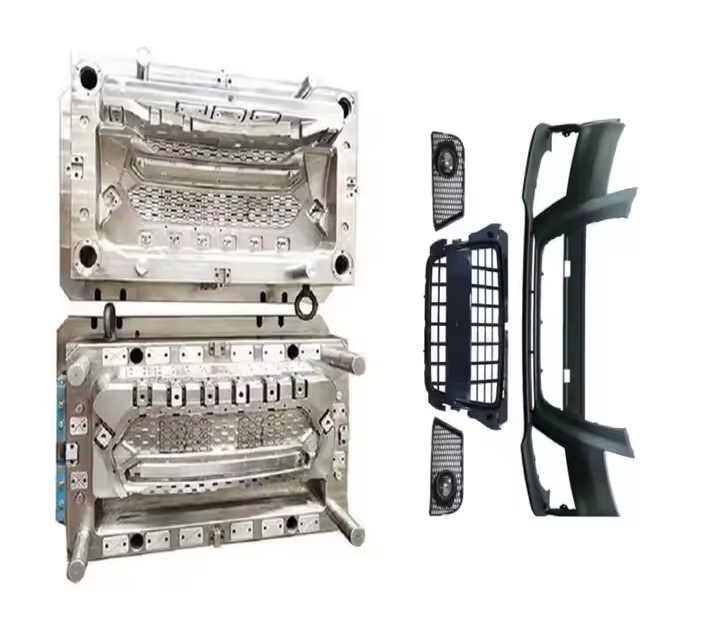
The exceptional sound quality and reliable performance of automotive speakers originate from highly precise, robust manufacturing tools: Automotive Speaker Molds. These molds serve as the silent cornerstone of modern industrial manufacturing, directly determining the geometric accuracy, microstructure, and ultimate performance of core speaker components (such as baskets, diaphragms, and magnetic circuit assemblies). Avoiding personification and metaphor, the following analysis details the core value and manufacturing logic of these molds from a technical perspective.
Material Basis and Core Properties
- Material Selection: Mold bodies utilize high-strength, high-wear-resistance steel. This material provides essential structural rigidity, long-term dimensional stability, and the capacity to withstand significant mechanical stress during high-pressure injection molding or stamping.
- Key Performance Characteristics:
- Extreme Rigidity: Ensures micron-level precision of the mold cavity geometry is maintained under continuous high-pressure operation, eliminating dimensional deviations caused by deformation.
- Superior Wear Resistance: Withstands abrasive wear from plastic pellets or metal sheets during high-speed filling and forming processes, significantly extending mold service life and ensuring long-term production stability.
- Excellent Thermal Stability: Maintains critical dimensional consistency amidst the cyclical, severe temperature fluctuations inherent in injection molding, reducing product tolerances caused by thermal expansion/contraction.
Precision Design: The Source of Acoustic Performance Guarantee
Automotive speaker molds design is the critical bridge translating physical acoustic targets into manufacturable geometric entities.
- Complex Cavity Geometry Definition:
- Diaphragm Surface Replication: The mold cavity surface directly defines the final shape of the diaphragm (cone, dome). Its curvature and thickness distribution decisively influence the speaker’s frequency response and breakup modes.
- Basket Structural Rigidity Construction: The mold precisely forms support ribs, reinforcing structures, and mounting interfaces of the basket, ensuring mechanical stability of the speaker unit within the vibrating automotive environment, preventing rattles.
- Magnetic Circuit Precise Positioning: Related molds guarantee dimensional accuracy and assembly references for key magnetic components (pole plates, magnets, pole pieces), directly impacting magnetic gap uniformity and transduction efficiency.
- Microstructure Control:
- Surface Finish: Polishing to a mirror finish (Ra < 0.1 μm) is replicated onto plastic diaphragm or metal basket surfaces, reducing air friction noise and optimizing high-frequency response.
- Micro-texturing: Specific mold surfaces undergo special etching or laser treatment to create controlled microstructures for producing diaphragms with specific damping or diffusion properties.
- Integrated Thermal Management: Efficient cooling/heating channel systems integrated within the mold ensure rapid, uniform solidification of molten material during injection molding, reducing internal stress, improving part consistency, and shortening cycle times.
- Optimized Venting System: Precisely designed vent slot locations and depths ensure efficient evacuation of air from the cavity during molding, preventing defects like short shots, burn marks, or surface blemishes caused by air trapping.
High-Precision Manufacturing: Micron-Level Engineering Realization
The automotive speaker molds manufacturing process itself embodies cutting-edge machining technology.
- Ultra-Precision Machining:
- Computer Numerical Control (CNC) Machining: Multi-axis high-speed milling and precision turning perform roughing and finishing of the mold body and complex surfaces.
- Electrical Discharge Machining (EDM): Essential for precisely shaping deep cavities, narrow slots, sharp corners, or hardened areas inaccessible or difficult for CNC, achieving accuracy through controlled spark erosion.
- Jig Grinding/Boring: Used for ultra-high-precision (±0.003mm) finishing of critical locating and motion elements like guide pin/bushing holes and ejector pin holes.
- Measurement and Verification:
- Coordinate Measuring Machine (CMM): Performs full dimensional scanning inspection of all critical mold surfaces, hole positions, and sizes, generating detailed reports compared against the design model.
- Laser Scanning/White Light Interferometry: Enables rapid, high-resolution non-contact measurement of complex surfaces and micro-textures, verifying surface contour compliance.
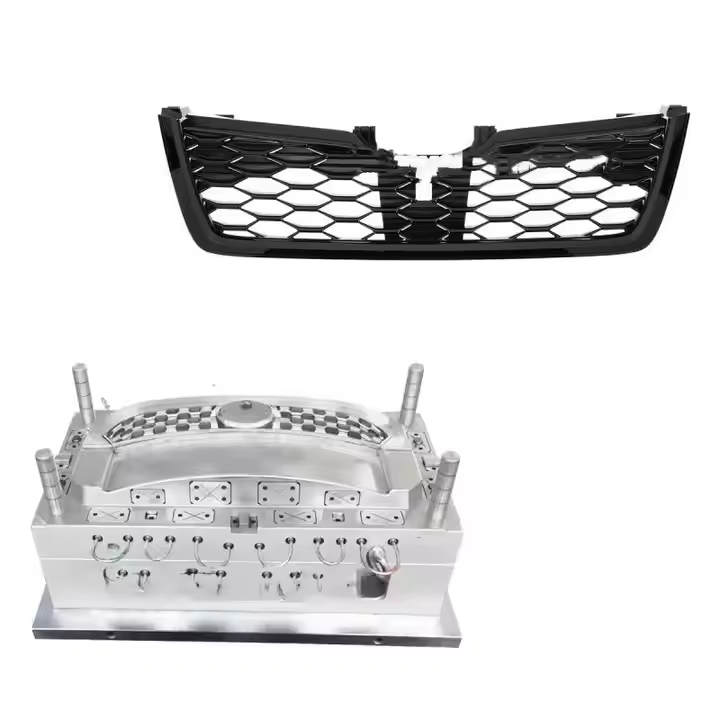
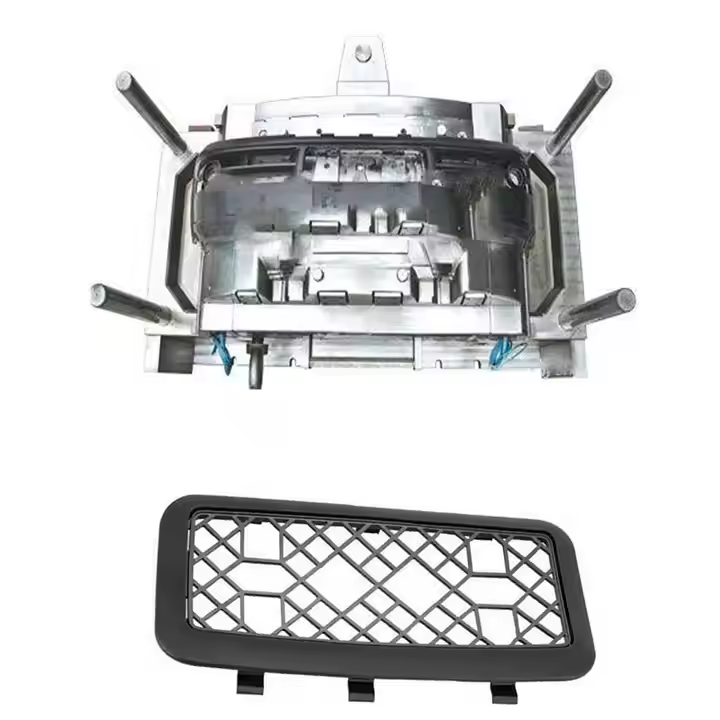
Surface Enhancement and Long-Term Protection
Extending mold service life and maintaining stable output are core economic factors.
- Physical Vapor Deposition (PVD): Deposits ultra-hard, low-friction coatings (TiN, TiAlN, CrN) onto critical working surfaces (cavity, ejector pins, sliders). Coatings significantly enhance wear resistance, anti-adhesion properties (preventing material sticking), and provide corrosion resistance.
- Nitriding: Increases surface hardness and fatigue strength, improving wear resistance and resistance to galling.
- Corrosion Protection: Non-working areas receive professional anti-rust coatings or passivation treatments to protect against corrosion from environmental humidity or coolants.
Rigorous Testing and Continuous Validation
Molds undergo systematic validation before delivery and during production.
- Final Dimensional Accuracy Inspection: Full dimensional re-verification using CMM or similar equipment ensures compliance with design specifications.
- Trial Molding and Part Inspection:
- First Article Inspection (FAI): First parts produced with the new mold undergo full dimensional measurement, material property testing (e.g., for molded parts), and visual inspection.
- Acoustic Parameter Testing: Trial parts are assembled into speaker units and tested for key acoustic parameters (frequency response, distortion, sensitivity) in standard anechoic chambers or HATS (Head and Torso Simulators), validating the mold’s actual impact on acoustic performance.
- Life Testing (Accelerated Simulation): High-cycle production testing under specific conditions evaluates mold wear trends, critical moving component lifespan, and maintenance intervals.
- Production Process Monitoring: Establishes strict periodic mold maintenance schedules (cleaning, lubrication, key dimension spot checks) and part sampling protocols, ensuring stable output of qualified parts throughout the mold’s lifecycle.
Application of automotive speaker molds
The application effectiveness of precision steel molds is directly reflected in the final product and production process:
- Part Consistency Guarantee: High-precision, high-stability molds are the sole means to achieve millimeter or even micron-level dimensional tolerances and batch consistency for critical speaker components.
- Complex Acoustic Structure Realization: Enables the efficient, precise mass production of speaker parts with complex designs and fine geometric features (e.g., specific-curvature diaphragms, reinforced baskets).
- Core Production Efficiency: Optimized hot runner/cold runner systems, cooling channels, and high-reliability design minimize injection/stamping cycle times, improving equipment utilization and throughput.
- Comprehensive Cost Control: Long lifespan, low maintenance requirements, and high yield rates significantly reduce per-unit manufacturing costs, offsetting the high initial investment in the mold itself.
Conclusion
Automotive speaker steel molds are far more than simple containers or templates. They are complex systems integrating knowledge of materials science, precision mechanical engineering, thermodynamics, fluid dynamics, and acoustic physics. Every stage of their design, manufacturing, treatment, and maintenance is measured by quantifiable physical parameters (e.g., micron-level accuracy, HRC hardness, Ra surface roughness, cooling time in seconds, millions of cycles). It is the engineering intelligence and manufacturing capability embedded within these “silent precision tools” that provide the reliable, consistent acoustic core components for modern automotive sound systems.
They meet the stringent demands of the vehicle environment while continuously pushing the boundaries of auditory experience. Continuous investment and advancement in mold technology represent the fundamental logic for enhancing automotive acoustic quality and manufacturing competitiveness.
FAQ
Why must automotive speaker molds achieve a mirror-level polish?
Surface finish (Ra < 0.1 μm) reduces air friction noise on the diaphragm, optimizing high-frequency acoustic performance.
What role does Electrical Discharge Machining (EDM) play in automotive speaker molds manufacturing?
EDM is used to machine deep cavities, micro-features, and other areas difficult for CNC, ensuring the accuracy of complex surfaces.
How is the dimensional compliance of an automotive speaker molds verified?
Coordinate Measuring Machines (CMM) perform micron-level full-dimensional inspection on critical locations like the cavity and ejector pin holes.
How do automotive speaker molds ensure basket structural rigidity?
Molds precisely form reinforcement ribs and mounting interfaces, ensuring speaker unit stability without resonance noise in the vibrating automotive environment.
What is the relationship between automotive speaker molds precision and magnetic circuit performance?
Related molds guarantee assembly tolerances for components like magnets and pole pieces, directly impacting magnetic gap uniformity and transduction efficiency.
>>You may also like
Standards & References
The following industry standards are referenced in this article: