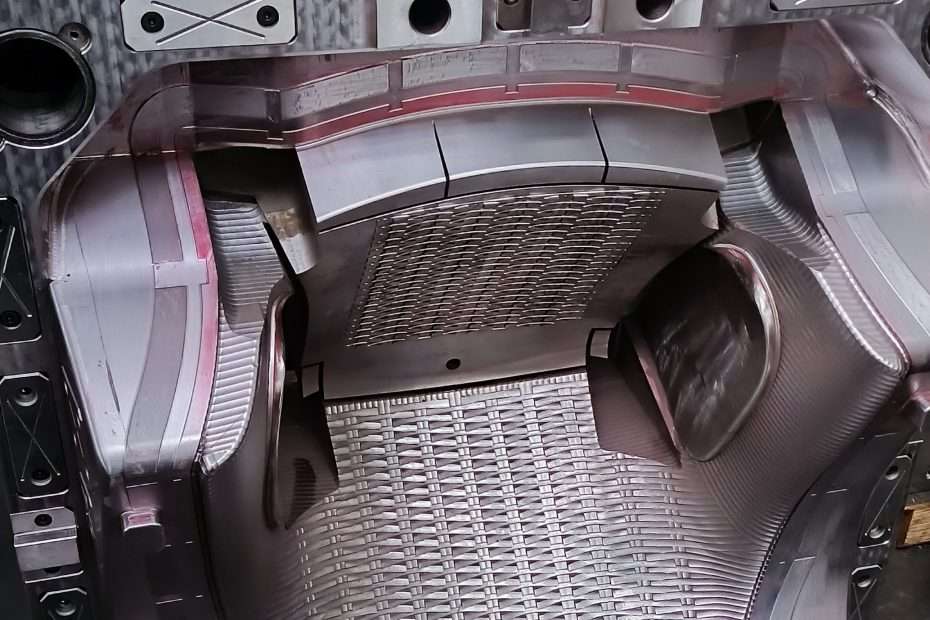
Automotive seats are crucial components of a vehicle’s interior, directly affecting the comfort of driving and riding, and closely related to the overall safety, functionality, and aesthetics of the car. The manufacturing process of automotive seats is complex, requiring high precision, quality, and efficiency.Automotive seats Molds play an indispensable role in this process.
Different types of automotive seats molds have distinct characteristics and are suitable for different application scenarios. For example, single-operation molds are simple in structure and low in cost, making them suitable for small-scale production; composite molds are complex in structure but can produce high-quality products efficiently, making them ideal for large-scale production; progressive and transfer molds are suitable for mass production due to their high efficiency and ability to handle large volumes of workpieces.
Design of Automotive Seats Molds
Designing a automotive seats molds requires considering many factors, including material properties, part structure, manufacturing process, product function, etc. The design process includes:
- Requirement Analysis: We determine mold design objectives and parameters based on seat design requirements, including material selection, structural design, and process flows.
- Conceptual Design: Using computer-aided design (CAD) software, we create initial mold designs, outlining the basic structure and functions of the molds.
- Detailed Design: We refine the mold design, determining dimensions, shapes, and materials of each component, and conduct simulations to verify design feasibility.
- Design Optimization: Based on simulation results and production needs, we optimize the mold design to enhance precision and efficiency while minimizing material waste and manufacturing costs.
- Design Review: Before mold manufacturing, we conduct design reviews to ensure all design parameters and requirements are thoroughly considered, preventing issues during production.
Manufacturing Process of Automotive Seats Molds
The manufacturing process of automotive seats molds is complex, involving multiple processes and technologies:
- Material Preparation: We select appropriate mold materials and perform pre-processing such as cutting and heat treatment based on design requirements.
- Machining: Using CNC machines, EDM (Electrical Discharge Machining), grinding, and other techniques, we shape mold materials into the basic structure.
- Finishing: We perform finishing processes such as grinding and polishing to ensure the surface smoothness and precision of molds.
- Assembly and Testing: We assemble mold components and conduct trial molding and adjustments to ensure molds work stably and meet manufacturing expectations.
- Quality Inspection:We perform stringent quality inspections on completed molds. This ensures all performance indicators meet design requirements. It ensures stability and reliability during production.


Importance of Automotive Seat Molds in Production
Molds are vital in automotive seat production, significantly contributing to the following areas:
- Enhancing Production Efficiency: Using molds greatly enhances manufacturing efficiency, enabling rapid production of high-quality seat components through automation and batch processing.
- Ensuring Product Quality: High-precision mold designs and manufacturing ensure dimensional accuracy and consistency, reducing defects and rework rates.
- Reducing Production Costs: Rational mold design and optimization reduce material waste and energy consumption, lowering manufacturing costs and improving economic efficiency.
- Improving Product Performance: High-precision and quality molds ensure seat safety, comfort, and durability, enhancing overall product performance and market competitiveness.
- Driving Technological Innovation: Continuous improvements and innovations in mold design and manufacturing drive technological advancement in automotive seats, meeting market demands for high-performance, personalized seats.
Future Development Trends
As the automotive industry evolves and market demands change, mold design and manufacturing technologies are advancing. Future mold manufacturing will focus on intelligent, automated, and environmentally friendly practices. Applying smart manufacturing technologies will enhance mold precision and efficiency, enabling personalized customization and rapid market response. Promoting eco-friendly materials and processes will reduce environmental impact, supporting sustainable development in the automotive industry.
Conclusion
Automotive seat molds play a crucial role in modern car manufacturing. High-precision, efficient, and innovative mold designs enhance seat production quality and efficiency, driving technological progress and market competitiveness. As technology advances, automotive seat molds will play a key role. Market demands will evolve continually. Automotive seat molds will advance the automotive industry.