
The automotive instrument panel is a crucial interface through which drivers receive vehicle information. Its appearance and functionality not only affect the driving experience but also relate to the overall aesthetics and convenience of the vehicle. As the key tool in its production, the automotive instrument panel molds determines the quality and production efficiency of the instrument panel.
Design of Automotive Instrument Panel Molds
Functional Requirements:The design of automotive instrument panels must meet various demands, including aesthetics, functionality, and safety. Thus, mold design needs to consider the shape, size, material, and positions of various openings and buttons on the instrument panel. Designers need to work closely with automakers to ensure that the Automotive instrument panel molds can produce instrument panels that meet design specifications.
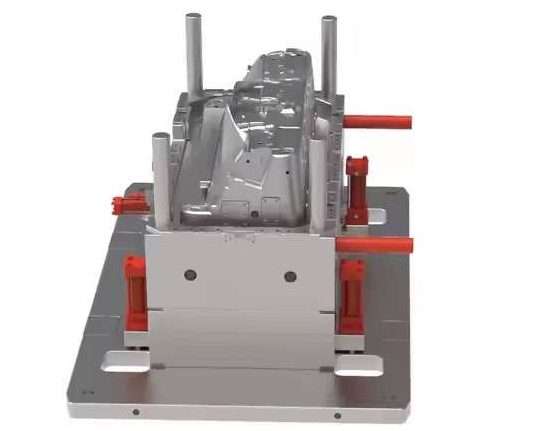
Structural Design:The structural design of the mold is crucial for ensuring its proper function. The mold usually consists of multiple parts, including the mold frame, core, cavity, cooling system, and exhaust system. The mold frame provides overall support, the core and cavity define the final shape of the instrument panel, and the cooling and exhaust systems ensure temperature and gas control during the molding process.
Material Selection:The material selection for the mold directly affects its lifespan and molding quality. Common mold materials include high-strength steel, aluminum alloy, and composite materials. High-strength steel offers excellent wear and corrosion resistance, suitable for high-precision and high-volume molds. Aluminum alloy provides good thermal conductivity, suitable for molds with complex structures and rapid molding. Composite materials excel in lightweight and high-strength aspects, suitable for specialized molds.
Manufacturing of Automotive Instrument Panel Molds
- Digital Design and Simulation:Modern mold manufacturing relies on advanced digital design and simulation technologies. With computer-aided design (CAD) software, engineers can design and optimize mold structures in a virtual environment. Computer-aided engineering (CAE) software allows for simulation analysis to predict mold performance in actual use. This approach not only improves design efficiency but also reduces trial production and adjustment time and costs.
- Precision Machining:Precision machining of molds is a critical step to ensure their quality. Common machining methods include CNC milling, EDM, laser cutting, and wire cutting. These methods achieve high machining accuracy, ensuring that the mold’s dimensions and shapes meet design requirements. Additionally, surface treatment processes like polishing, electroplating, and nitriding are essential to enhance the mold’s wear resistance and surface quality.
- Assembly and Debuggin:The assembly and debugging of molds are the final steps to ensure their proper operation. During assembly, careful alignment and fixation of various components are necessary to ensure the mold’s overall precision and stability. During debugging, trial production checks the mold’s function and performance, identifying and resolving potential issues to ensure the mold’s stability and efficiency in mass production.

Applications of Automotive Instrument Panel Molds
Efficient Production:Efficient mold design and manufacturing can significantly improve the production efficiency of automotive instrument panels. Advanced mold materials and machining technologies ensure high mold life and precision, reducing downtime and maintenance costs in the production process. This is especially beneficial for automakers engaged in large-scale production, lowering costs and enhancing market competitiveness.
Custom Production:The modern automotive market increasingly demands personalization and diversification, making custom production of instrument panels a trend. Modular and flexible mold designs allow manufacturers to quickly respond to market needs and produce custom instrument panels that meet customer requirements. This approach not only enhances customer satisfaction but also expands market opportunities.
Quality Control:High-quality molds are fundamental for producing high-quality automotive instrument panels. Strict mold design and manufacturing standards ensure that each instrument panel meets the required dimensional accuracy, appearance quality, and functionality. Advanced inspection equipment and methods, such as CMM and X-ray inspection, enable real-time monitoring and control of production quality, ensuring product consistency and reliability.
Environmental and Sustainability Considerations:With rising environmental awareness, the mold manufacturing industry is also moving towards green and sustainable development. The use of environmentally friendly materials and energy-saving processes reduces energy consumption and waste during mold manufacturing. Additionally, the application of renewable materials allows for mold recycling at the end of its service life, reducing environmental impact.
What role does digital design play in Automotive Instrument Panel Molds manufacturing?
- Improving Design Efficiency: With the use of Computer-Aided Design (CAD) software, engineers can quickly create and modify mold design drawings. Digital design makes the design process more efficient, reduces the time and errors associated with manual drawing, and enhances the overall accuracy and speed of design.
- Optimizing Structural Design: Digital design allows engineers to simulate and optimize mold structures in a virtual environment. Computer-Aided Engineering (CAE) software can perform simulation analysis to predict mold performance in actual use, optimizing the mold’s strength, rigidity, and cooling effects to ensure rationality and reliability of the mold design.
- Shortening Development Cycle: Digital design significantly shortens the development cycle of molds. Traditional mold design and manufacturing processes require repeated trials and adjustments, but through digital simulation and optimization, issues can be identified and resolved during the design phase, reducing trial production times and adjustment periods, thereby speeding up the time to market.
- Enhancing Product Quality: Digital design enables more precise mold manufacturing, thereby improving the quality of the final product. Engineers can precisely control every detail of the mold through detailed 3D models, ensuring that the mold’s dimensions and shapes meet design requirements and produce high-quality, consistent products.
- Facilitating Collaborative Design: Digital design tools support multi-person collaboration, allowing engineers to share design data on a unified platform and collaborate in real-time. This collaborative design approach enhances team efficiency and reduces errors and delays in information transmission.
- Simplifying Production Processes: The combination of digital design and CNC machining equipment makes mold manufacturing processes more automated and precise. The designed 3D model can be directly input into CNC machines for automatic processing, reducing manual operations and human errors, thus improving production efficiency and precision.
>>You may also like
Standards & References
The following industry standards are referenced in this article: