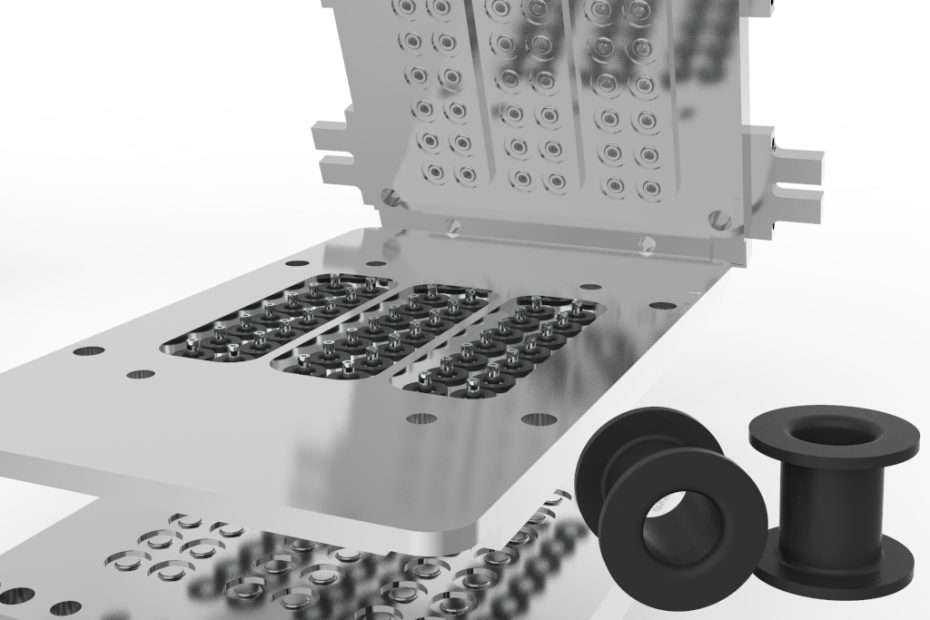
An SMC compression mold costs $50,000 to $150,000. The difference between a mold that produces in-spec parts for 50,000 cycles and one that produces in-spec parts for 150,000 cycles is almost never the steel grade or the heat treatment. It’s what happens to the mold between production runs. A maintenance program that costs $5,000-10,000 a year in technician time and consumables returns ten times that in extended tool life, avoided emergency repairs, and parts that stay within tolerance instead of gradually drifting out as the cavity surface wears. Yet most SMC mold maintenance programs never get written down—they live in the head of one senior technician who retires or moves to a different shop, and the mold maintenance quality drops overnight. This article is the written version of that technician’s knowledge: what to do daily, weekly, monthly, and at scheduled cycle-count intervals on an SMC compression mold to get the full engineered life out of the tool.
| Maintenance Level | Frequency | Duration | Key Activities |
|---|---|---|---|
| Daily (per shift) | Every shift | 5 min | Cavity visual, parting line flash check, ejector operation, temperature verification |
| Weekly inspection | Every ~40hr operation | 1 hr | Full cavity clean, ejector pin inspection, shear edge wear measurement, bolt torque check |
| Scheduled overhaul | Every 10,000-15,000 cycles | 1-2 days | Full disassembly, CMM cavity measurement, re-polish to SPI A2/A3, replace worn components |
| Major overhaul | Every 50,000-75,000 cycles | 1-2 weeks | Cavity CMM vs CAD, weld + re-machine wear areas, full ejector system replacement, thermocouple replacement |
Daily Maintenance: The Five-Minute Check That Prevents Most Problems
The daily maintenance routine on a production SMC mold takes five minutes per shift and catches 80% of the problems that would otherwise escalate into tool damage or scrap parts. The checklist: (1) Visual inspection of the cavity surface under oblique lighting—look for scratches, galling, or resin buildup in corners. A scratch you can feel with a fingernail is deep enough to transfer to every part the mold produces. (2) Check the parting line for flash buildup. SMC resin bleeds out of the parting line during molding and cures into a thin flash that accumulates over cycles. If the flash is allowed to build up without removal, it can dent the parting line surface when the mold closes on it, or break off and fall into the cavity. (3) Verify the ejector system operates smoothly through a full stroke—any binding, uneven motion, or unusual noise means the ejector pins or bushings need attention before they seize. (4) Check the mold temperature readout against the setpoint. A mold running 5°C below setpoint because a heating element failed or a thermocouple drifted will produce under-cured parts that look fine but fail mechanical testing. (5) Verify the vacuum system (if the mold uses vacuum assist for air evacuation) is pulling the specified vacuum. A vacuum leak reduces the assist and increases porosity in the part. Each of these checks takes less than a minute. Together they take five minutes. Skipping them to save time is false economy—the five minutes you save today becomes five hours of mold repair next month.
Weekly Inspection: The One-Hour Deep Look
The weekly inspection goes beyond what the operator can see with the mold in the press. The mold comes out (or at minimum, the inspection is done with the press open and the mold accessible with good lighting). The weekly checklist: (1) Clean the cavity thoroughly with a soft brass brush and a mold cleaner compatible with the mold steel. Remove all resin residue, especially from corners, ribs, and the area around ejector pins. Residue in these areas carbonizes over repeated cycles and becomes progressively harder to remove. (2) Inspect the ejector pins individually—rotate each pin 90 degrees and check for galling on the pin surface or in the bushing. A galled ejector pin will eventually seize, and a seized pin in a closed mold can crack the cavity insert. Replace galled pins immediately; they cost $20-50 each and a cracked cavity insert costs $2,000-5,000 to repair. (3) Check the shear edge or pinch-off for wear. SMC compound is abrasive—the glass fibers in the material erode the shear edge over thousands of cycles, gradually increasing the flash thickness. Measure the flash thickness on the last-run parts. If it’s increased by more than 0.1mm from the baseline measured at tryout, the shear edge is wearing and needs to be evaluated for re-machining. (4) Verify all bolts—clamp bolts, insert retaining bolts, manifold bolts—are at the specified torque. Thermal cycling loosens bolts over time, and a loose insert shifts under molding pressure, changing the part dimensions and potentially damaging both the insert and the cavity pocket. (5) Check the mold alignment: with the mold closed but not under full tonnage, check the parting line gap with a feeler gauge at all four corners. Uneven gap means the mold or the press platens are out of parallel, which will cause flash on one side and under-fill/porosity on the other.
Scheduled Maintenance: Polishing, Storage, and Major Overhauls
The scheduled maintenance intervals are driven by cycle count, not calendar time. At 10,000-15,000 cycles: remove the mold from the press, fully disassemble the cavity inserts, clean all surfaces, inspect all components (ejector pins, bushings, shear edges, heating elements), replace any worn components, and re-polish the cavity surface to the original finish specification (usually SPI A2 or A3 for SMC molds, achieved with diamond compound starting at 3 microns and finishing at 1 micron). A mold that runs 1,000 cycles a week hits this interval every three to four months. At 50,000-75,000 cycles: the mold goes to the toolroom for a major overhaul. The cavity is measured against the original CAD dimensions using a CMM. Wear areas (the shear edge, areas of high SMC flow velocity where glass fiber erosion is concentrated) are compared to the dimensional baseline. If the wear exceeds 20-30% of the part tolerance band, the affected areas are welded and re-machined. The ejector system is fully replaced—pins, bushings, return springs—regardless of visual condition, because ejector failure is the single most common cause of catastrophic mold damage. The heating system is recalibrated: all thermocouples are replaced and the temperature controller is re-tuned to the mold’s actual thermal response. A mold that has passed its 50,000-cycle overhaul should produce parts within the original tolerance band for the next 50,000 cycles. Storage procedure between runs: the mold must be stored clean, dry, and protected. After the last production run, the cavity is cleaned of all resin residue. The cavity surface is sprayed with a mold protectant (a light oil or a dedicated mold storage spray). The mold is closed but not clamped—the parting line surfaces should be in light contact, not under pressure, to prevent moisture ingress without deforming the parting line. For storage longer than one month, desiccant packs are placed inside the mold envelope and the mold is wrapped or bagged to exclude ambient humidity. A mold stored properly can sit for a year and go back into production with nothing more than a wipe-down and a heat-up cycle. A mold stored wet with resin residue in the corners will have pitting corrosion at the residue sites within a month, especially in humid climates.
The Economics of Mold Maintenance
A mold that runs 150,000 cycles with a $10,000/year maintenance program costs $0.07 per cycle in maintenance. A mold that runs 50,000 cycles with no maintenance before it needs a $40,000 rebuild costs $0.80 per cycle—and then it fails at 50,000 instead of continuing to 150,000. The difference is a factor of ten. The maintenance program pays for itself in avoided rebuilds alone, even before accounting for the cost of scrap parts produced by a deteriorating mold, the cost of press downtime for unplanned repairs, and the cost of late deliveries to customers who were promised parts from a mold that’s out of service. The shops that get 150,000+ cycles out of SMC molds aren’t doing anything exotic. They’re doing the daily five-minute check, the weekly one-hour inspection, and the scheduled overhauls at the cycle-count intervals—every time, without skipping because the production schedule is tight. The discipline is the hard part, not the technical difficulty of the maintenance tasks themselves. The technical part is straightforward: keep the mold clean, keep the ejectors working, keep the cavity polished, and store the mold dry. Do those four things consistently, and the mold will run past 100,000 cycles. Skip them, and it won’t.