Buying an SMC compression mold is not like buying a standard machine tool. Every mold is a custom-engineered product whose cost, lead time, and eventual production performance depend on decisions made during the quoting phase. A mold that is under-specified to save $5,000 on the purchase price can cost $50,000 in lost production from flash, sticking, and premature wear over its first year. This guide covers what procurement teams and project engineers need to know to buy the right mold at the right price.


Key Factors to Consider When Choosing an SMC Mold
Five factors determine the mold specification. First, the production volume — prototype (<1,000 parts/year), low-volume (1,000–10,000/year), or production (10,000+/year). This drives the mold steel choice. Second, the part geometry — simple flat parts can use a single-cavity mold; complex parts with undercuts need slides, lifters, or multiple parting lines. Third, the surface finish requirement — Class A painted surface, textured, or industrial finish. Fourth, the SMC material — standard polyester SMC, vinyl ester for chemical resistance, or carbon fiber SMC for structural parts. Each material has different flow characteristics, abrasiveness, and curing behavior. Fifth, the press specifications — the mold must fit within the press platen size, daylight, and tonnage capacity available in your production facility.
Material and Specification Comparison
Mold steel selection is the single largest driver of mold cost and life. P20 pre-hardened steel (28–32 HRC) is the standard for prototype and low-volume molds, costing $15–25/kg for the rough block and machining relatively easily. H13 hot work tool steel (46–50 HRC after heat treatment) is the production standard, costing $25–40/kg but delivering 5–10× the cycle life of P20. For corrosive SMC formulations (vinyl ester with acid catalysts) or high-gloss Class A parts, 420 stainless steel (48–52 HRC) or chrome-plated H13 is specified. Chrome plating adds $3,000–8,000 to mold cost but provides 65–70 HRC surface hardness and near-perfect corrosion resistance.
Supplier Evaluation Checklist
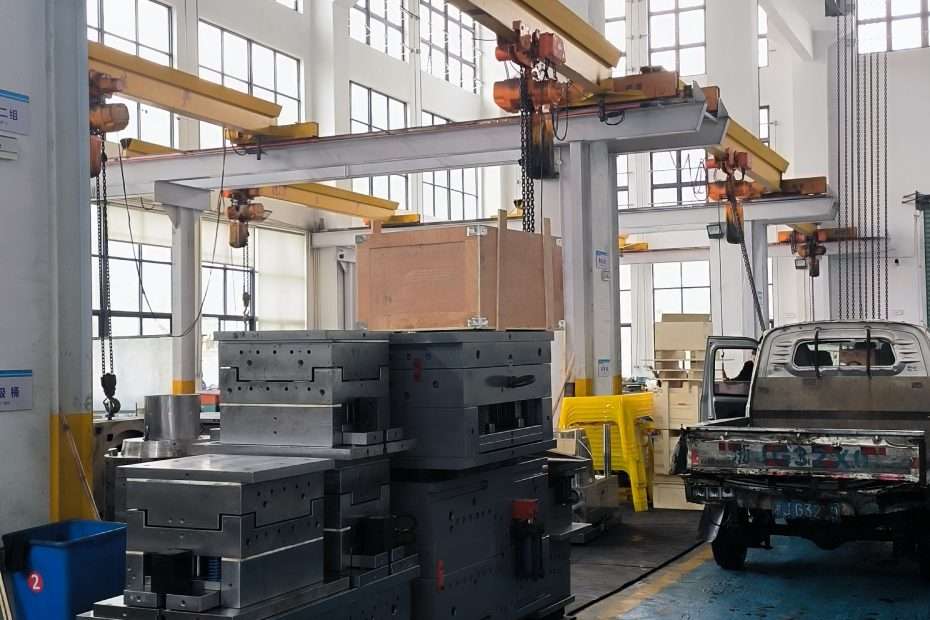
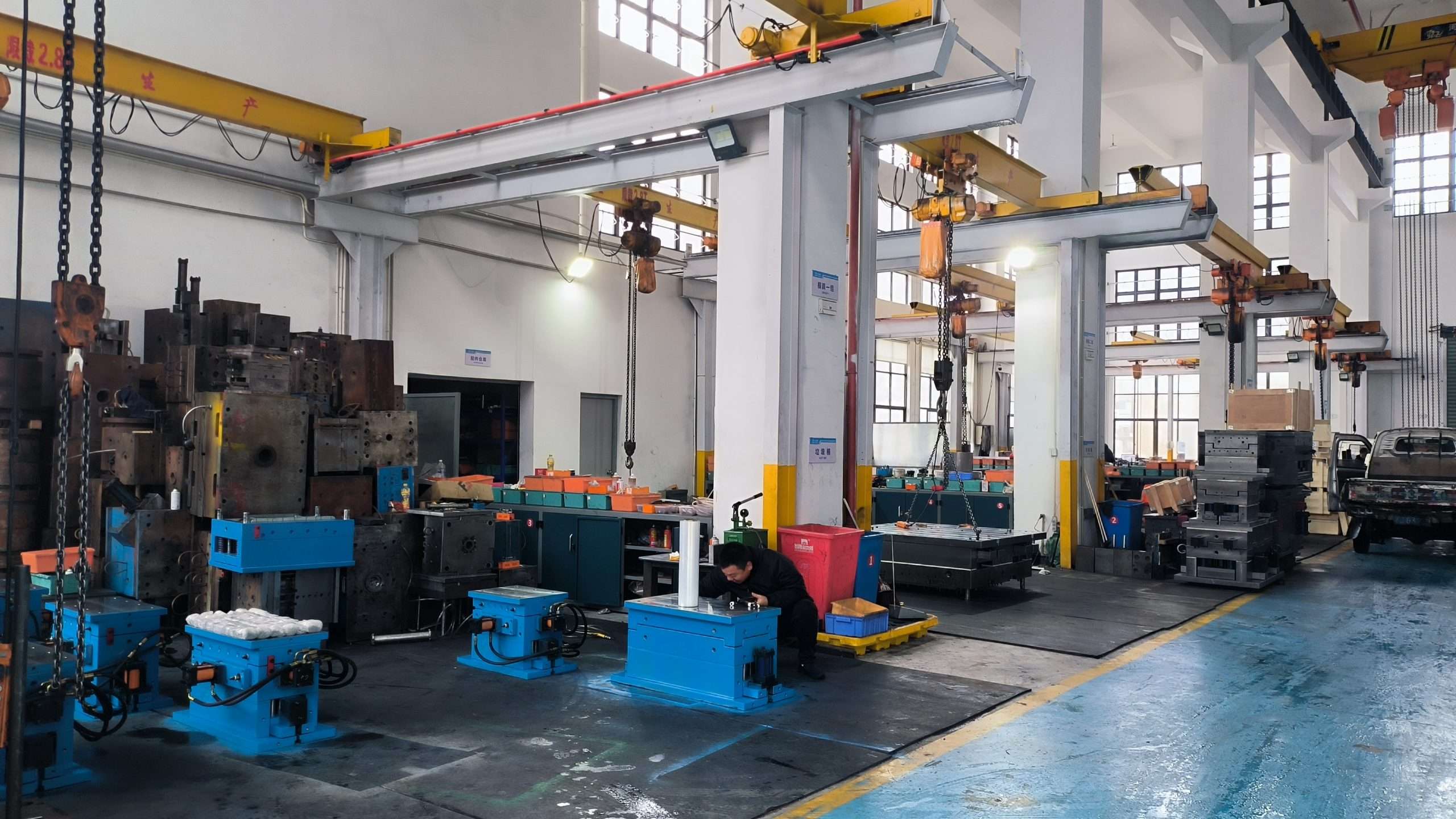
Visit the mold shop before placing an order. Look at molds currently being built — the quality of machined surfaces, the organization of the shop floor, and the calibration stickers on measuring equipment tell you more than any sales presentation. Ask for references from customers who have been running their molds in production for at least two years — a mold that ran 20 good samples in the toolroom proves nothing about long-term durability. Verify the shop has in-house CNC machining with at least 3-axis capability for simple molds or 5-axis for complex geometries. In-house EDM (electrical discharge machining) is essential for molds with deep ribs, sharp corners, or textured surfaces — a shop that outsources EDM has less control over quality and schedule.
The most important single question: will the supplier perform a tryout with your production SMC material in a press similar to yours? A tryout in the mold shop’s press with generic SMC demonstrates that the mold opens and closes, not that it will produce good parts in your facility. The purchase agreement should specify an on-site tryout at your facility or, at minimum, a tryout with your material at the mold shop with your engineers present.
Cost-Benefit Analysis: Upfront vs Lifecycle
A single-cavity SMC mold for a part the size of a laptop (300 × 200 mm) costs approximately: $8,000–15,000 in P20 (prototype), $15,000–30,000 in H13 (low-volume production), and $25,000–50,000 in chrome-plated H13 (full production). Each price tier buys a different mold life: P20 molds last 5,000–20,000 cycles before the shear edges wear beyond acceptable flash levels. H13 molds last 50,000–150,000 cycles. Chrome-plated H13 molds can reach 150,000–300,000 cycles with proper maintenance.
The per-part tooling amortization is what matters. A $30,000 H13 mold producing 100,000 parts adds $0.30 per part. A $15,000 P20 mold producing 20,000 parts adds $0.75 per part — 2.5× more. The cheaper mold is more expensive on a per-part basis for any volume above 20,000 parts. For volumes above 50,000 parts per year, a two-cavity mold ($50,000–90,000) doubles throughput and halves per-part tooling cost, typically paying back within the first year of production.
Quality Certifications to Look For
For automotive production, the mold shop should be IATF 16949 certified or at minimum ISO 9001 with automotive customers as references. The mold should be delivered with a dimensional inspection report — CMM measurement of the cavity at 20–30 points compared to the 3D model, with all points within ±0.05 mm of nominal. The material certification for the mold steel should be included — not just the grade designation but the mill test report with actual chemistry and hardness values. For chrome-plated molds, the chrome thickness should be measured and reported at 5–10 points (target: 25–50 μm, uniform within ±10 μm).
Common Sourcing Mistakes
Selecting a mold shop based on the lowest quote without visiting the facility is the most expensive single mistake. A mold that is $3,000 cheaper but arrives 4 weeks late and produces flash from day one costs far more than $3,000 in lost production. Second, not specifying the shear edge material — the shear edge takes the most wear in an SMC mold. It should be an insert made of D2 or M2 tool steel hardened to 58–62 HRC, replaceable without re-machining the entire cavity. Third, failing to specify the number of thermocouple wells and their locations — a mold with inadequate temperature sensing will have hot and cold spots that warp parts. Fourth, ordering a mold without confirming that it fits your specific press — platen size, mounting pattern, ejector stroke, and minimum/maximum shut height must all be verified before cutting steel.
SMC Mold Cost by Volume Tier
| Volume Tier | Mold Steel | Cavities | Approx Cost (300x200mm part) | Mold Life (cycles) | Per-Part Tooling Cost* |
|---|---|---|---|---|---|
| Prototype (<1K/yr) | P20 | 1 | $8K–15K | 5K–20K | $0.75–1.50 |
| Low Volume (1K–10K/yr) | H13 | 1 | $15K–30K | 50K–150K | $0.20–0.60 |
| Mid Volume (10K–50K/yr) | H13 + Chrome | 1–2 | $30K–60K | 150K–300K | $0.15–0.40 |
| High Volume (50K–150K/yr) | H13 + Chrome | 2–4 | $60K–150K | 150K–300K | $0.10–0.25 |
TSTAR Mold designs and manufactures SMC compression molds from single-cavity prototypes to multi-cavity production tools. In-house CNC machining, EDM, chrome plating, and tryout press. IATF 16949 quality system. Contact us with your part model for a technical quotation and mold design proposal.