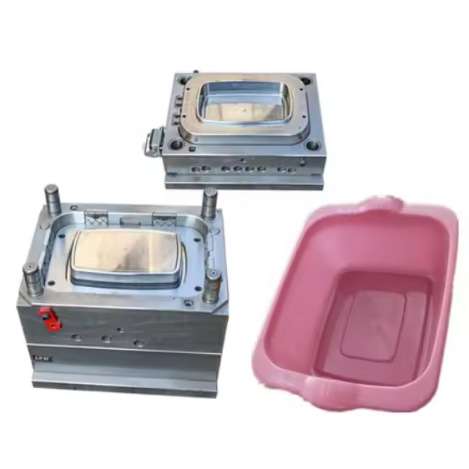
The manufacturing of baby bath tubs represents a specialized segment of the juvenile products industry, demanding meticulous attention to safety standards and ergonomic design considerations. These essential childcare products require molds that can produce components with exacting specifications for safe, comfortable, and durable use. The success of baby bath tub production hinges on the quality of mold construction, which directly influences product safety, manufacturing efficiency, and overall production economics. This comprehensive guide examines the critical aspects of mold material selection, design considerations, and manufacturing best practices specifically adapted for baby bath tub applications.
The unique requirements of baby bath tubs present both challenges and opportunities for mold manufacturers. The product must incorporate smooth, rounded surfaces to ensure infant safety while maintaining structural integrity to support the weight of babies and toddlers. The mold must produce components that meet these requirements consistently across thousands of production cycles while maintaining tight tolerances for assembly and leak prevention. Understanding these specific needs is essential for developing effective mold solutions that balance safety requirements with manufacturing efficiency.
Material Selection Fundamentals
When selecting materials for baby bath tub molds, manufacturers must evaluate multiple interconnected factors that collectively determine production success. The chosen material must demonstrate exceptional dimensional stability under the thermal cycling inherent in injection molding processes. Wear resistance becomes particularly critical given the abrasive nature of polypropylene and other materials commonly used in juvenile products. The material’s ability to maintain surface quality over extended production runs directly impacts the safety and appearance of finished products.
The safety requirements for baby products add another layer of complexity to material selection. Mold surfaces that form the interior bathing surface must achieve exceptional smoothness to eliminate potential pinch points or sharp edges that could harm infants. The material’s polishability becomes crucial for producing the seamless, rounded surfaces required for safe baby products. Additionally, the material must withstand the repeated injection of child-safe, chemically resistant plastics without degrading surface quality or dimensional accuracy, particularly for products that must withstand frequent cleaning and exposure to various substances.
Steel Grade Specifications and Properties
Steel grade 45 has emerged as a preferred material choice for baby bath tub mold manufacturing, offering an optimal balance of performance characteristics and economic considerations. This medium carbon steel possesses a carbon content of approximately 0.45%, providing sufficient hardness after appropriate heat treatment while maintaining adequate machinability during initial mold fabrication. The material’s mechanical properties enable it to withstand the high pressures and temperatures encountered during injection molding cycles without significant deformation or wear.
The heat treatment response of this steel material allows manufacturers to achieve surface hardness levels suitable for production volumes ranging from prototype to large-scale production. Through quenching and tempering processes, the material can be optimized to provide sufficient wear resistance while maintaining the toughness needed to prevent cracking during thermal cycling. The material’s relatively consistent chemical composition ensures predictable heat treatment results, allowing manufacturers to reliably achieve desired material properties across multiple mold components, including the large, complex cavity geometries required for bath tub formation.
Safety-First Design Considerations
The design of molds for baby bath tubs requires careful attention to safety-critical features that distinguish these products from ordinary household items. All interior and exterior surfaces must be designed with generous radii to eliminate sharp edges that could potentially harm infants during bathing. The mold must produce components with dimensional accuracy that ensures consistent radii across all surface transitions, preventing any protrusions or edges that could cause injury. Even microscopic imperfections could create potential safety hazards, making surface quality a critical consideration throughout the mold design and manufacturing process.
The mold must also produce integrated features such as non-slip surfaces, supportive backrests, and ergonomic handles that enhance user safety and convenience. These features often require complex mold geometries and precise dimensional control to function reliably. The selected steel must maintain precise dimensions over thousands of cycles to ensure that safety features remain consistent throughout production. Surface finish requirements for these components are particularly stringent, as any roughness or surface defects could compromise the product’s safety characteristics or create areas where bacteria could accumulate.
Ergonomic and Comfort Features
Baby bath tubs must provide comfortable, supportive environments for infants during bathing, creating additional requirements for mold design and construction. The mold must produce contoured seating areas that properly support infant bodies while allowing water to drain effectively. The integration of ergonomic features such as angled backrests, molded support structures, and comfortable seating positions demands exceptional precision in mold design and manufacturing.
The mold design must account for the diverse range of infant sizes and developmental stages that the product will accommodate. Adjustable or multi-position features require complex mold mechanisms and precise dimensional control to function reliably. The material selected for mold construction must exhibit exceptional stability and wear resistance to produce thousands of units with consistent ergonomic characteristics. Surface finish requirements for comfort surfaces are particularly critical, as any roughness or imperfections could cause discomfort or irritation to delicate infant skin.
Leak Prevention and Structural Integrity
The structural integrity of baby bath tubs represents a critical safety consideration that directly influences mold design requirements. The mold must produce components with consistent wall thickness to prevent weak points that could lead to structural failure under load. Joint areas and connection points must be designed to prevent leakage while maintaining structural stability during use. The selected steel material must maintain precise cavity dimensions over extended production runs to ensure consistent wall thickness and structural characteristics.
The mold design must address potential stress concentrations and ensure that the molding process produces components free of internal defects that could compromise structural integrity. Parting line placement becomes particularly important for baby bath tubs, as poorly positioned parting lines can create leak paths or weak points in the finished product. The mold material’s stability under thermal cycling becomes essential for maintaining precise dimensions that ensure leak-free operation throughout production. Regular inspection of structural features becomes necessary to maintain safety standards over extended production runs.
Large Surface Area Challenges
Baby bath tubs typically feature large surface areas that present unique molding challenges and material requirements. The mold must fill extensive cavity volumes uniformly while maintaining consistent quality across all surfaces. The material selected for mold construction must exhibit excellent thermal conductivity to ensure uniform cooling across large surface areas, preventing warpage or dimensional inconsistencies that could affect product quality or safety.
The large cavity dimensions require careful consideration of mold material strength and rigidity to prevent deflection during injection molding. The selected steel must maintain dimensional stability under high injection pressures while accommodating thermal expansion and contraction during production cycles. Surface finish consistency across large areas becomes challenging, requiring exceptional material polishability and wear resistance to maintain quality throughout the mold’s service life. The mold design must incorporate appropriate venting and cooling strategies to address the unique challenges of large-part production.
Drainage and Water Flow Design
Effective drainage and water flow characteristics are essential features of baby bath tubs, creating specific requirements for mold design and construction. The mold must produce properly designed drain outlets, water channels, and sloped surfaces that facilitate complete water drainage after use. These features require precise dimensional control and smooth surface finishes to ensure reliable performance while preventing water accumulation that could lead to bacterial growth.
The mold design must account for flow characteristics during injection to ensure uniform material distribution and consistent wall thickness in drainage areas. The selected steel material must maintain precise dimensions over extended production runs to ensure that drainage features function consistently throughout production. Surface finish requirements for drainage channels and outlets are particularly stringent, as any irregularities could impede water flow or create areas where water could accumulate. Regular inspection of drainage features becomes essential for maintaining product functionality over time.
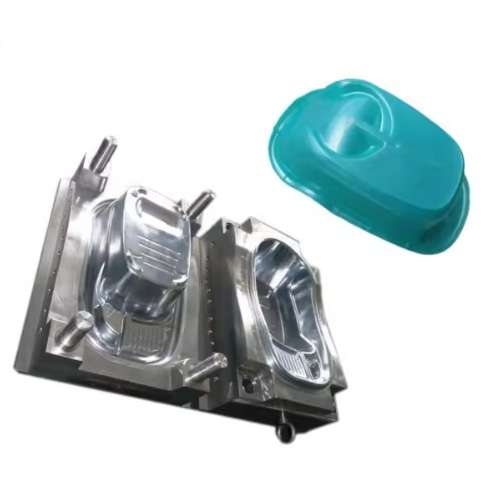
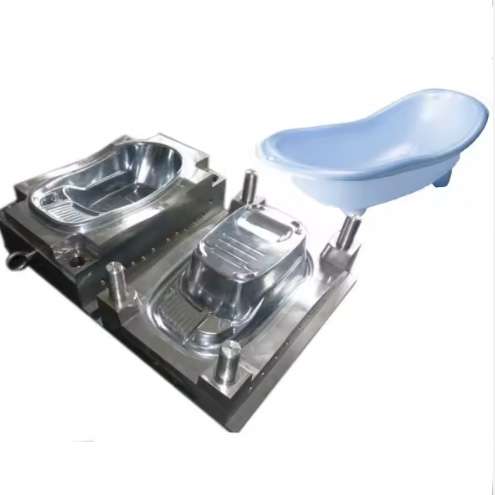
Chemical Resistance and Cleaning Requirements
Baby bath tubs must withstand frequent cleaning with various household cleaning agents and sanitizing solutions, creating specific requirements for mold design and material selection. The mold must produce components that maintain their dimensional stability and surface quality despite repeated exposure to cleaning chemicals. The selected steel material must resist degradation from molding materials that may include chemical additives to enhance cleanability and stain resistance.
The mold design must produce surfaces that are easy to clean and resist staining from common substances encountered during bathing, such as soaps, lotions, and food residues. Smooth, non-porous surfaces become essential for maintaining hygiene and preventing bacterial growth. The mold material’s ability to maintain surface finish quality over extended production runs becomes critical for ensuring that cleaning characteristics remain consistent throughout the product lifecycle. Regular surface inspection and maintenance become necessary to preserve the quality and cleanability of mold surfaces.
Manufacturing Process Optimization
Optimizing the manufacturing process for baby bath tub molds involves addressing the unique requirements of safety-critical juvenile products. The initial machining operations must establish extremely precise geometric tolerances while accounting for anticipated heat treatment effects. Pre-machining allowances should be calculated with careful consideration of final dimensions required for safety features and ergonomic contours. The use of advanced machining techniques, including large-format precision milling and surface grinding, enables the production of mold components with the exceptional accuracy required for baby bath tub manufacturing.
Surface preparation assumes paramount importance for safety and comfort. The mold surfaces that form interior bathing surfaces must be polished to exceptionally high standards to ensure safe, comfortable infant contact. Similarly, surfaces that form exterior features must achieve consistent surface finish to ensure proper appearance and easy cleaning. The implementation of appropriate surface treatment processes, including hardening and polishing where appropriate, can extend mold life while maintaining the surface quality needed for safe juvenile products.
Quality Assurance and Safety Testing
Establishing comprehensive quality assurance protocols is essential for successful baby bath tub mold production, given the safety implications for infant users. Initial mold inspection must verify dimensional accuracy against design specifications, with particular attention to edge radii, surface smoothness, and structural integrity. Coordinate measuring machines provide precise verification of critical dimensions, while surface profilometers quantify surface finish quality on infant-contact surfaces. First article inspection must confirm that all functional requirements are met, including safety features, structural integrity, and ergonomic characteristics.
In-process quality monitoring ensures consistent production throughout the mold’s service life. Regular inspections detect wear patterns that might affect part quality before they become safety concerns. Measurement of cavity pressures and temperatures provides insights into process stability and helps identify potential issues early. Periodic safety testing of molded components, including edge sharpness testing, load testing, and leak testing, ensures that safety characteristics remain consistent throughout production runs. Documentation of all inspection results creates a valuable history that supports traceability and continuous improvement.
Maintenance and Lifecycle Management
Proactive maintenance strategies are particularly important for baby bath tub molds due to the safety-critical nature of the components produced. Regular cleaning procedures prevent material buildup that could affect part quality or create surface irregularities on safety-critical surfaces. Inspection of mold surfaces that form infant-contact areas must occur frequently to detect wear that could affect surface smoothness or safety characteristics. The monitoring of wear patterns helps predict maintenance requirements and schedule interventions during planned downtime to prevent production of potentially unsafe components.
When maintenance becomes necessary, strict procedures must be followed to preserve mold accuracy and safety characteristics. Weld repair of worn areas requires careful control to prevent distortion that could affect critical dimensions. Re-polishing of infant-contact surfaces must maintain original specifications while removing wear痕迹. Documentation of all maintenance activities creates a valuable history that guides future maintenance decisions and ensures that safety characteristics are maintained throughout the mold’s operational life.
Performance Metrics and Economic Considerations
Evaluating the performance of baby bath tub molds requires tracking several key metrics beyond standard production measures. The consistency of edge radii and surface smoothness across production lots becomes a critical quality indicator, as variations could affect product safety. Structural integrity testing results provide important insights into mold performance and material selection effectiveness. The surface finish quality of infant-contact surfaces must be monitored closely, as degradation could compromise safety characteristics.
The economic performance of baby bath tub molds must also consider the cost implications of safety requirements. While initial tooling costs may be higher due to the precision requirements for safety-critical features, these investments often pay dividends through reduced liability risk and consistent product quality. Maintenance costs must be balanced against the safety implications of allowing mold components to operate beyond their optimal performance window. The mold’s ability to maintain safety characteristics over extended production runs directly impacts overall manufacturing economics and brand reputation.
Future Developments and Technology Integration
The future of baby bath tub mold manufacturing lies in the integration of advanced technologies that enhance precision and safety monitoring capabilities. The incorporation of in-mold sensors could provide real-time monitoring of critical dimensions, enabling immediate detection of deviations that could affect product safety. Additive manufacturing techniques may enable the production of conformal cooling channels that improve thermal management for large cavity geometries, ensuring more uniform cooling and reduced warpage.
Artificial intelligence and machine learning algorithms could optimize process parameters to maintain optimal production conditions while monitoring safety-critical characteristics in real time. Advanced coating technologies may further enhance mold life while maintaining the surface quality needed for safe infant products. The integration of automated inspection systems with real-time feedback could enable immediate detection of potential safety issues, reducing the risk of producing components with compromised safety characteristics. Digital twin technology could enable simulation of mold performance before physical construction, identifying potential issues and optimizing designs for safety and efficiency.
Conclusion
The successful manufacturing of baby bath tubs depends fundamentally on the quality of mold construction and the precision with which safety-critical features are produced. By understanding the unique requirements of these juvenile products and implementing appropriate material choices, design considerations, and manufacturing practices, producers can achieve consistent quality while maintaining the highest safety standards. The balanced properties of the selected steel material, combined with precise mold design and rigorous quality assurance, ensure reliable performance of safety-critical components throughout extended production runs.
As consumer expectations for safety and quality continue to evolve in the juvenile products industry, mold manufacturers must remain committed to advancing their capabilities in precision engineering and quality assurance. The integration of emerging technologies and continuous improvement in manufacturing processes will enable producers to meet the increasingly stringent requirements for child safety and product reliability. Through careful attention to material selection, safety-focused design optimization, and comprehensive quality management, manufacturers can optimize their mold operations and produce baby bath tubs that provide safe, comfortable, and reliable bathing experiences for infants and toddlers worldwide.
The commitment to excellence in mold manufacturing directly translates to superior baby bath tub products that perform reliably in the most demanding environment imaginable—where infant safety is paramount. By adhering to the comprehensive guidelines outlined in this guide, manufacturers can achieve the precision and consistency required to produce juvenile products that meet the exacting safety standards of regulatory agencies and the high expectations of parents and caregivers everywhere.
FAQ
1. What is a Baby Bath Tub mold?
A Baby Bath Tub mold is a tool used to manufacture plastic or composite bathtubs designed specifically for infants.
2. What materials are used for a Baby Bath Tub mold?
A Baby Bath Tub mold is typically made from steel or aluminum to ensure durability and high-precision molding.
3. Can the Baby Bath Tub mold be customized?
Yes, the Baby Bath Tub mold can be customized in size, shape, logo, and design based on OEM requirements.
4. What products can be made with a Baby Bath Tub mold?
A Baby Bath Tub mold is used to produce infant bathtubs, foldable tubs, and ergonomic baby bathing products.
5. What are the advantages of a Baby Bath Tub mold?
The Baby Bath Tub mold offers high efficiency, consistent quality, smooth surface finish, and long service life.