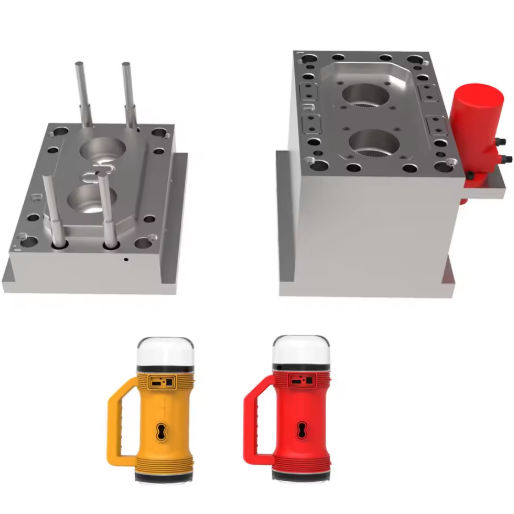
The manufacturing of underwater flashlights presents unique challenges that demand precision engineering and advanced mold design. These specialized lighting devices must withstand extreme pressure conditions, corrosive saltwater environments, and maintain consistent optical performance throughout their operational lifespan. The success of underwater flashlight production heavily relies on the quality of mold construction, which directly impacts product durability, manufacturing efficiency, and overall production costs. This comprehensive guide explores the critical aspects of mold material selection, design considerations, and manufacturing best practices specifically tailored for underwater flashlight applications.
Material Selection Criteria
When selecting materials for underwater flashlight molds, manufacturers must carefully evaluate multiple factors to ensure optimal performance. The chosen material must exhibit exceptional dimensional stability under varying temperature conditions, possess superior wear resistance to withstand repeated molding cycles, and maintain tight tolerances throughout extended production runs. The material’s machinability directly affects tooling costs and production lead times, while its thermal conductivity influences cooling efficiency and cycle times. Additionally, the material must demonstrate excellent polishability to achieve the optical clarity required for flashlight lenses and transparent components.
The structural integrity of the mold material becomes particularly critical when molding components with complex geometries, such as the sealing mechanisms and battery compartments common in underwater flashlights. These features often require precise dimensions and smooth surface finishes to ensure proper functionality and water resistance. The material’s ability to maintain consistent surface quality over thousands of molding cycles is essential for producing reliable underwater lighting devices.
Steel Grade Specifications
For underwater flashlight mold manufacturing, steel grade 45 has established itself as a reliable and cost-effective material choice. This medium carbon steel offers an excellent balance of mechanical properties, including good hardness after heat treatment, adequate toughness, and reasonable wear resistance. The material’s carbon content of approximately 0.45% provides sufficient strength and durability while maintaining reasonable machinability during the initial mold fabrication process. The selected steel demonstrates consistent performance across varying molding conditions, making it particularly suitable for the production requirements of underwater flashlights.
Heat treatment of this steel material typically involves quenching and tempering processes that enhance hardness while maintaining adequate toughness. The resulting material properties support the precise tolerances required for waterproof sealing components and ensure dimensional stability throughout extended production runs. The steel’s response to surface treatment processes also enables manufacturers to achieve the necessary surface finish for optical components and sealing surfaces.
Mold Design Considerations
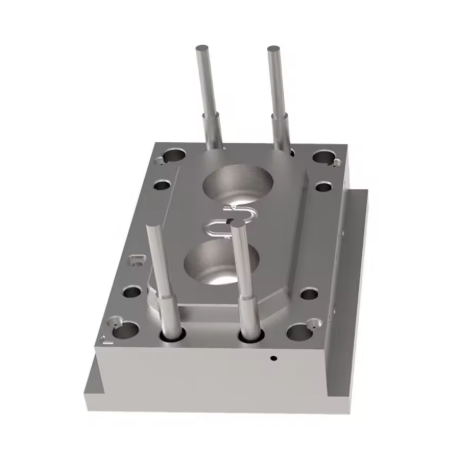
The design of Underwater Flashlight mold requires careful attention to several unique aspects. First, the mold must incorporate precise gating systems that facilitate uniform filling while minimizing weld lines in critical sealing areas. The location and size of gates directly affect the structural integrity of molded components, particularly those involved in pressure resistance and watertight sealing. Second, cooling channel design must optimize thermal management to prevent warpage and ensure consistent part quality across production cycles.
The mold construction must account for the incorporation of O-ring grooves, sealing surfaces, and threaded connections that are essential for underwater applications. These features demand exceptional precision and surface quality to ensure reliable performance under pressure conditions. Vent placement becomes crucial to prevent gas entrapment that could compromise part quality, especially in thick sections typical of flashlight housings. The mold design should also facilitate efficient ejection of parts while maintaining dimensional accuracy of critical features.
Manufacturing Process Optimization
Optimizing the manufacturing process for underwater flashlight molds involves several key considerations. The initial machining operations must establish precise geometric tolerances while accounting for anticipated heat treatment distortions. Pre-machining allowances should be carefully calculated to achieve final dimensions after hardening processes. The use of advanced machining techniques, including high-speed milling and electrical discharge machining, enables the production of complex mold features with exceptional accuracy.
Surface preparation plays a vital role in achieving the required part quality. The mold surfaces that form sealing interfaces must be polished to mirror finish to ensure proper O-ring function and waterproof performance. Similarly, optical surfaces require meticulous polishing to eliminate defects that could affect light transmission and beam quality. The implementation of proper surface treatment processes, including nitriding or hard chrome plating where appropriate, can extend mold life and improve release characteristics.
Quality Assurance Protocols
Establishing comprehensive quality assurance protocols is essential for successful underwater flashlight mold production. Initial mold inspection should verify dimensional accuracy against design specifications, with particular attention to sealing surfaces and optical features. Coordinate measuring machines provide precise verification of critical dimensions, while surface profilometers quantify surface finish quality. First article inspection of molded parts must confirm that all functional requirements are met, including water resistance and optical performance.
In-process quality monitoring ensures consistent production throughout the mold’s service life. Regular inspections detect wear patterns that might affect part quality before they become critical. Measurement of cavity pressures and temperatures provides insights into process stability and helps identify potential issues early. Periodic maintenance schedules should be established based on production volume and material characteristics to maintain optimal mold performance.
Lifecycle Maintenance Strategies
Proactive maintenance strategies significantly extend the operational life of underwater flashlight molds. Regular cleaning procedures prevent material buildup that could affect part quality or cause release issues. Inspection of gating and cooling systems identifies potential problems before they impact production. The monitoring of wear patterns helps predict maintenance requirements and schedule interventions during planned downtime.
When maintenance becomes necessary, proper procedures must be followed to preserve mold accuracy and functionality. Weld repair of worn areas requires careful control to prevent distortion that could affect part quality. Re-polishing of surfaces must maintain original specifications while removing wear trace. Documentation of all maintenance activities creates a valuable history that guides future maintenance decisions and helps optimize mold performance over its entire lifecycle.
Performance Evaluation Metrics
Evaluating the performance of underwater flashlight molds requires tracking several key metrics over time. Production consistency, measured by dimensional variation across multiple lots, indicates mold stability and process control. Cycle time optimization affects production efficiency and cost per part, with improvements often possible through incremental adjustments. Defect rates provide insight into mold condition and process capability, with upward trends indicating the need for maintenance or process optimization.
The economic performance of the mold should also be evaluated based on total cost of ownership considerations. Initial tooling costs must be balanced against expected mold life and production volume requirements. Maintenance costs and downtime impact overall productivity and profitability. The mold’s ability to maintain quality over extended production runs directly affects material efficiency and scrap rates, influencing overall manufacturing costs.
Future Technology Integration
The future of underwater flashlight mold manufacturing lies in the integration of advanced technologies and materials science developments. The incorporation of conformal cooling channels, enabled by additive manufacturing techniques, can significantly improve thermal management and cycle times. Real-time monitoring systems using embedded sensors can provide continuous data on mold conditions and process parameters, enabling predictive maintenance and process optimization.
The development of new surface treatment technologies may further enhance mold performance and longevity. Advanced coating systems can provide superior wear resistance while maintaining release characteristics. The integration of artificial intelligence and machine learning algorithms could enable autonomous process optimization, automatically adjusting parameters to maintain optimal production conditions. These technological advances will continue to improve the efficiency and quality of underwater flashlight manufacturing.
Conclusion
The successful manufacturing of underwater flashlights depends heavily on the quality of mold construction and material selection. By understanding the unique requirements of these specialized lighting devices and implementing appropriate material choices, design considerations, and manufacturing practices, producers can achieve consistent quality and efficient production. The balanced properties of selected steel materials, combined with proper mold design and maintenance protocols, ensure reliable performance throughout extended production runs.
As underwater lighting technology continues to evolve, mold manufacturers must stay current with advances in materials science and manufacturing technology. The integration of innovative processes and quality management systems will enable continued improvements in production efficiency and product quality. By following the guidelines outlined in this comprehensive guide, manufacturers can optimize their mold operations and produce underwater flashlights that meet the demanding requirements of professional and recreational users worldwide.
The commitment to excellence in mold manufacturing directly translates to superior underwater flashlight products that perform reliably in challenging underwater environments. Through careful material selection, precise design optimization, and rigorous quality assurance, manufacturers can achieve the standards of performance and durability required in this specialized market segment.
FAQ – Underwater Flashlight Mold
1. What is an Underwater Flashlight mold?
An Underwater Flashlight mold is a precision mold used to manufacture waterproof flashlight housings and components through molding processes such as injection or compression molding.
2. What materials are suitable for an Underwater Flashlight mold?
Materials commonly used include ABS, PC, nylon, and fiberglass-reinforced plastics, which provide durability, impact resistance, and reliable waterproof performance.
3. Why is precision important in an Underwater Flashlight mold?
High precision ensures proper sealing structures, accurate O-ring grooves, and tight tolerances, which are essential for maintaining waterproof functionality underwater.
4. Can an Underwater Flashlight mold be customized?
Yes, the mold can be customized based on flashlight size, design structure, material requirements, and production capacity.
5. What industries use products made by an Underwater Flashlight mold?
Products manufactured using this mold are widely used in diving equipment, marine operations, outdoor activities, rescue lighting, and underwater inspection tools.
6. What production methods are compatible with an Underwater Flashlight mold?
Depending on the design and material, production methods may include injection molding, compression molding, or other specialized molding processes.