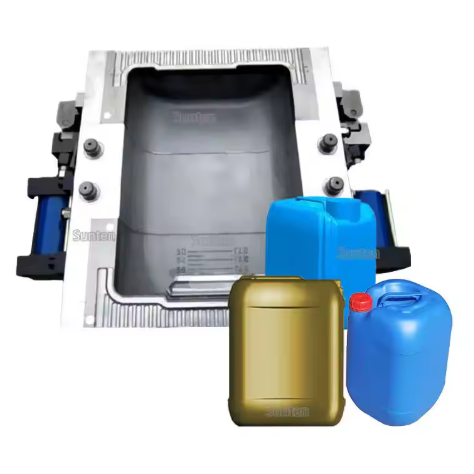
The gasoline barrel mold serves as a critical component in the manufacturing of fuel storage containers, requiring precise material selection and engineering to ensure safety, durability, and compliance with international transport regulations. Gasoline barrel mold technology must address unique challenges including static charge dissipation, chemical resistance to hydrocarbons, and structural integrity under internal pressure. This comprehensive guide explores material selection criteria, design considerations, manufacturing processes, and quality control standards specific to gasoline barrel mold applications, providing engineers with technical frameworks for producing high-performance fuel storage solutions.
2. Material Selection for Gasoline Barrel Molds
2.1 Pre-hardened Steel 718H
718H stands as the premium pre-hardened option for gasoline barrel mold applications demanding superior dimensional stability. This nickel-enriched alloy (1.0-1.5% Ni) offers enhanced hardness uniformity (33-38 HRC) and improved polishability compared to standard P20, making it suitable for gasoline barrel mold components requiring tight tolerances (±0.02mm). The material’s improved toughness and wear resistance extend gasoline barrel mold service life to 300,000-500,000 cycles, particularly beneficial for high-volume production of 200L industrial gasoline barrels. 718H’s superior thermal conductivity (45 W/(m·K)) facilitates more efficient cooling in gasoline barrel mold designs, reducing cycle times by 15-20% compared to conventional P20 configurations.
2.2 Corrosion-Resistant Stainless Steel S136
For gasoline barrel molds applications involving repeated exposure to hydrocarbon fuels, S136 stainless steel provides exceptional performance through its high chromium content (13-14%). This martensitic stainless steel achieves 48-52 HRC after heat treatment and demonstrates superior corrosion resistance (500-hour salt spray resistance per ASTM B117), making it indispensable for gasoline barrel mold components exposed to gasoline, diesel, and aviation fuels. The material’s镜面抛光 capability (Ra ≤0.012μm) ensures smooth inner surfaces that minimize fuel residue accumulation. While approximately 40% more costly than 718H, S136 extends gasoline barrel mold service life to 800,000+ cycles in aggressive environments, providing long-term economic benefits for fuel container production.
2.3 Heat-Resistant Alloy H13
H13 hot work steel finds specialized application in gasoline barrel mold designs for high-temperature molding processes. This chromium-molybdenum-vanadium alloy maintains excellent hardness (48-52 HRC) at elevated temperatures, making it suitable for gasoline barrel mold components operating at sustained mold temperatures up to 200°C. The material’s superior thermal fatigue resistance prevents cracking in gasoline barrel mold cooling channels subjected to cyclic temperature variations, while its high toughness accommodates the internal pressure stresses in large-diameter barrel molds. H13 requires careful heat treatment to balance hardness and ductility, but delivers exceptional performance in gasoline barrel mold applications involving glass-filled materials or high-temperature processing conditions.
3. Design Considerations for Gasoline Barrel Molds
3.1 Structural Integrity Requirements
Gasoline barrel molds must maintain precise structural integrity to ensure safe fuel storage:
- Wall thickness uniformity: ≤5% variation across the barrel
- Pressure resistance: Minimum 0.21 MPa (30 psi) internal pressure rating
- Dimensional stability: ±0.1mm tolerance on critical dimensions
- Seam strength: ≥20 MPa tensile strength at weld lines
Achieving these requirements demands robust gasoline barrel mold construction with reinforced corners and optimized rib structures. Finite element analysis (FEA) should be employed to verify mold deflection under clamping force, ensuring maximum deformation does not exceed 0.15mm at full clamping pressure.
3.2 Static Dissipation System Design
Effective static control is paramount in gasoline barrel molds design to prevent ignition hazards:
- Surface resistance: 10^3-10^6Ω per ASTM D257
- Conductive pathways: Integrated grounding points at 120° intervals around the mold
- Antistatic additives: 2-5% loading of carbon black or carbon nanotubes
- Ionization system: Positioned 150-300mm from mold surface
The gasoline barrel mold should incorporate stainless steel electrodes embedded in the型腔 surface to provide continuous static dissipation during the molding process. These electrodes must be connected to a dedicated grounding system with resistance <10Ω to ensure rapid charge dissipation.
3.3 Cooling System Optimization
Efficient thermal management in gasoline barrel molds reduces cycle time and ensures dimensional consistency:
- Channel diameter: 10-12mm for large barrel molds
- Layout pattern: Concentric circles with radial branches
- Water velocity: 2-3m/s to maintain turbulent flow
- Temperature differential: ≤5°C across all cooling zones
For 200L gasoline barrel molds, the cooling system should incorporate at least 8 independent circuits with individual flow control. Simulation studies show that optimized cooling can reduce cycle time by up to 28% compared to conventional cooling layouts, while maintaining wall thickness variation within 3%.
4. Manufacturing Processes for Gasoline Barrel Molds
4.1 Precision Machining Requirements
The production of gasoline barrel molds demands advanced machining techniques:
- CNC milling: 5-axis machining for complex geometries
- EDM wire cutting: ±0.002mm accuracy for critical dimensions
- Surface grinding: Flatness within 0.005mm/m
- Laser engraving: For permanent part numbering and traceability
Gasoline barrel mold components larger than 500mm require segmented machining with subsequent assembly, ensuring each segment maintains positional accuracy within 0.01mm. Critical surfaces must be finished to Ra ≤0.8μm to prevent fuel residue buildup and facilitate cleaning.
4.2 Antistatic Surface Treatment
Gasoline barrel mold surfaces require specialized treatment to ensure permanent static dissipation:
- Plasma coating: 5-10μm conductive layer (surface resistance 10^4-10^5Ω)
- Chemical etching: Micro-roughness to enhance coating adhesion
- Nitriding: 0.1-0.3mm case depth for wear resistance
- Passivation: To enhance corrosion resistance in stainless steel molds
The surface treatment process must be validated through electrostatic discharge (ESD) testing per IEC 61340-5-1, ensuring the gasoline barrel mold maintains antistatic properties for at least 100,000 molding cycles before reconditioning.
4.3 Assembly and Alignment
Precise assembly is critical for gasoline barrel mold performance:
- Guide pillar parallelism: ≤0.01mm over full stroke
- Clamping force distribution: Uniform within 5% across mold surface
- Ejection system alignment: Coaxiality within 0.02mm
- Hydraulic circuit integrity: 1.5× working pressure test for 30 minutes
Large gasoline barrel molds (over 1500mm in length) should incorporate adjustable tie-bar supports to compensate for thermal expansion during operation. The assembly process must include laser alignment verification at each stage to ensure the final gasoline barrel mold meets all dimensional requirements.
5. Safety and Regulatory Compliance
5.1 UN/DOT Transport Regulations
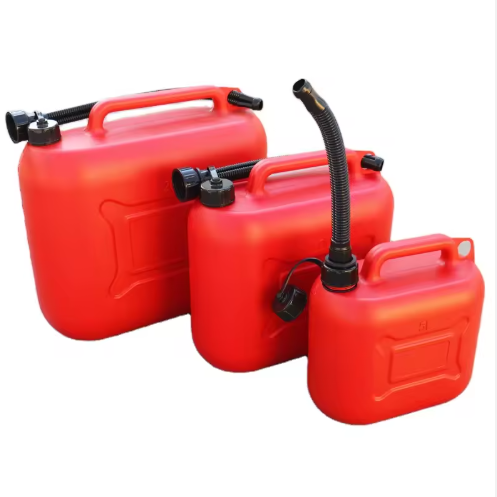
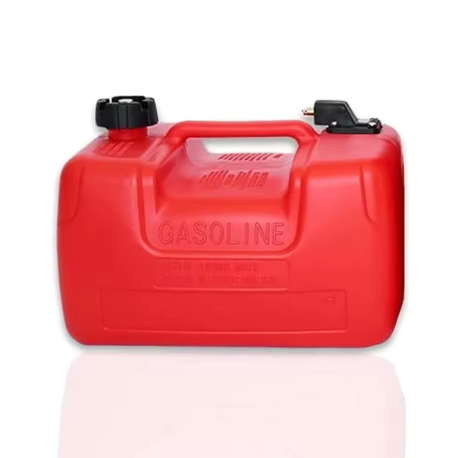
Gasoline barrel molds must comply with United Nations transport regulations:
- UN 31A/Y certification for hazardous materials transport
- Pressure testing: 1.5× working pressure for 30 minutes
- Drop test simulation: 1.2m drop height onto rigid surface
- Leakage test: 0.21MPa air pressure for 5 minutes
The gasoline barrel mold design must incorporate features that facilitate compliance testing, including standardized test points and pressure monitoring ports. Mold documentation should include detailed dimensional records and material certifications to support regulatory approval.
5.2 Static Hazard Mitigation
Comprehensive static control measures are essential in gasoline barrel mold applications:
- Grounding continuity: <10Ω resistance from all metal components to earth
- Ionization: Balanced AC ionizers positioned at mold exit
- Material selection: Antistatic mold release agents (surface resistance <10^8Ω)
- Monitoring: Continuous resistance measurement during production
Gasoline barrel mold operators should implement a regular testing protocol, including weekly surface resistance checks and monthly comprehensive static discharge testing. Any deviation beyond 10^3-10^6Ω range requires immediate mold reconditioning.
5.3 Quality Control Standards
Rigorous quality control ensures gasoline barrel mold reliability:
- Dimensional inspection: CMM with 0.001mm resolution
- Material verification: Spectroscopic analysis for alloy confirmation
- Hardness testing: Every 50mm across mold sections
- Microstructure evaluation: Quarterly metallographic analysis
Statistical process control (SPC) should be implemented for all critical gasoline barrel mold parameters, with control limits set at ±3σ of process capability. Any out-of-specification condition requires root cause analysis and corrective action documentation.
6. Maintenance and Longevity Strategies
6.1 Preventive Maintenance Program
A structured preventive maintenance regimen extends gasoline barrel mold service life:
- Daily: Clean cavity surfaces and check for static dissipation
- Weekly: Inspect cooling channels for blockages and pressure drop
- Monthly: Verify dimensional stability and surface resistance
- Quarterly: Complete disassembly and component inspection
- Annually: Full reconditioning including surface treatment renewal
Maintenance records should document all gasoline barrel mold performance parameters, enabling predictive maintenance scheduling and facilitating root cause analysis for any performance degradation.
6.2 Wear Monitoring and Repair
Proactive wear management is essential for gasoline barrel molds:
- Ultrasonic thickness measurement: Monthly for critical sections
- Surface profilometry: To track wear patterns and rates
- Coordinate measurement: Quarterly dimensional verification
- Repair criteria: Maximum allowable wear of 0.05mm on sealing surfaces
Repair techniques for gasoline barrel molds include laser cladding for dimensional restoration and precision grinding for surface renewal. All repairs must be validated through full performance testing before returning the gasoline barrel mold to production service.
6.3 Storage and Preservation
Proper storage ensures gasoline barrel mold integrity during downtime:
- Climate-controlled environment: 20-25°C, 40-60% relative humidity
- Anti-corrosion treatment: Vapor-phase inhibitors for metal components
- Support structure: Full perimeter support to prevent warping
- Regular inspection: Monthly checks during extended storage
Gasoline barrel molds stored for more than 3 months should undergo complete revalidation before production use, including dimensional inspection and test molding of at least 50 samples.
7. Advanced Technologies in Gasoline Barrel Mold Design
7.1 Computer-Aided Engineering (CAE) Simulation
Advanced simulation techniques optimize gasoline barrel mold performance:
- Mold flow analysis: To predict filling patterns and identify potential defects
- Thermal stress analysis: To optimize cooling system design
- Structural finite element analysis: To verify mold rigidity under clamping force
- Computational fluid dynamics: To optimize cooling channel performance
Simulation-driven gasoline barrel mold design can reduce development time by up to 40% and improve first-pass yield by minimizing design iterations. Virtual prototyping should include worst-case scenario analysis for extreme temperature and pressure conditions.
7.2 Smart Mold Monitoring Systems
Industry 4.0 technologies enable real-time gasoline barrel mold performance monitoring:
- In-mold sensors: Temperature, pressure, and strain measurement
- Wireless data transmission: For real-time process monitoring
- Predictive analytics: To identify potential failures before they occur
- Digital twin: Virtual replica for process optimization
Smart gasoline barrel molds can automatically adjust process parameters to maintain optimal performance, reducing scrap rates by up to 35% while ensuring consistent part quality. The monitoring system should include automated alerts for any deviation from static control requirements.
7.3 Lightweighting and Material Optimization
Advanced design techniques reduce gasoline barrel mold weight while maintaining performance:
- Topology optimization: Material only where structurally necessary
- High-strength alloys: Reduced section thickness without compromising strength
- Composite materials: Carbon fiber reinforced polymers for non-critical components
- Additive manufacturing: For complex internal features with optimized geometry
Lightweight gasoline barrel molds can reduce machine energy consumption by 15-20% and improve handling safety during maintenance. Finite element analysis must validate all lightweight designs for both structural integrity and vibration characteristics.
8. Conclusion
The design and manufacture of gasoline barrel molds require a specialized approach that balances mechanical performance, safety requirements, and production efficiency. By selecting appropriate materials (718H for general applications, S136 for corrosion resistance, H13 for high-temperature processes), implementing robust static control measures, and adhering to UN/DOT regulations, manufacturers can produce gasoline barrel molds capable of meeting the stringent requirements of fuel storage container production.
>>You may also like
Standards & References
The following industry standards are referenced in this article: