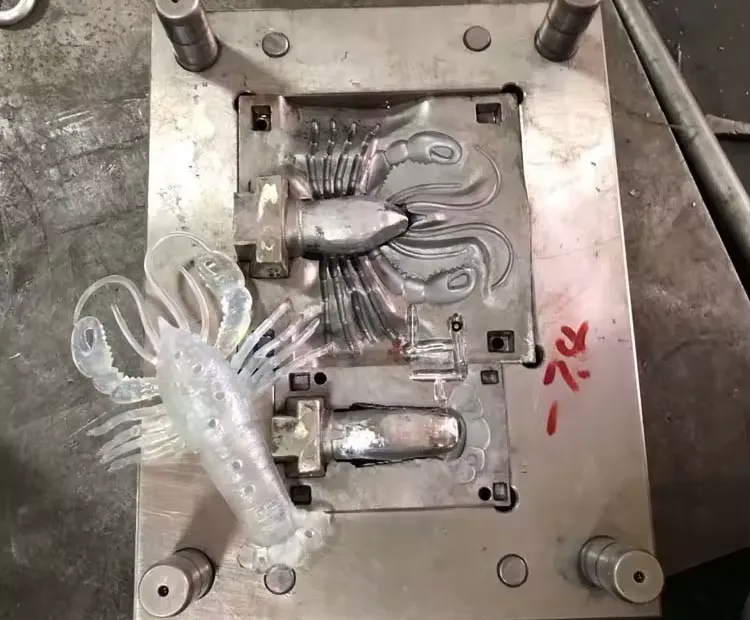
The fishing lure mold plays a critical role in producing artificial baits with precise bionics features and durability required for aquatic environments. A high-quality fishing lure mold must simultaneously achieve intricate surface details, corrosion resistance, and production efficiency to meet the demands of recreational and commercial fishing tackle manufacturers. This comprehensive guide outlines the material selection, design considerations, and manufacturing processes specific to fishing lure mold applications.
Material Selection for Fishing Lure Molds
Pre-hardened Steel 718H
The fishing lure mold industry widely adopts 718H as a standard material for its excellent balance of machinability and performance. This pre-hardened steel (32-36 HRC) offers exceptional dimensional stability during prolonged fishing lure mold production runs, maintaining ±0.02mm tolerance after 100,000 cycles. Its uniform carbide distribution ensures consistent wear resistance when molding glass-filled nylon, a common material for hard-bodied fishing lures.
Mirror Polishing Steel NAK80
For fishing lure molds requiring Class A surfaces (Ra≤0.1μm), NAK80 provides superior polishability without additional heat treatment. This Precipitation-hardening steel eliminates the need for post-mold polishing operations, preserving the intricate scale patterns and 3D details critical to effective fishing lure designs. When properly processed, NAK80 fishing lure molds can achieve SPI #A-1 finish, replicating microscopic bait features that attract predatory fish.
Corrosion-Resistant Stainless Steel S136
Saltwater fishing lure applications demand specialized materials like S136 stainless steel for prolonged mold life. This material offers exceptional resistance to chloride environments (500-hour salt spray test per ASTM B117) and maintains structural integrity when exposed to fishing lure cleaning agents. S136 fishing lure molds typically achieve 300,000+ cycles before requiring maintenance, making them ideal for marine-grade lure production.
High-Strength Alloy Steel H13
For fishing lure molds producing heat-resistant engineering plastics, H13 hot work steel provides the necessary thermal stability. With a working temperature range up to 600°C and thermal conductivity of 26 W/(m·K), H13 maintains dimensional accuracy when molding high-temperature materials like PEEK for specialized fishing lures. Its 44-48 HRC hardness resists deformation during high-pressure injection cycles common in fishing lure manufacturing.
Design Considerations for Fishing Lure Molds
Bionic Feature Replication
The fishing lure mold must accurately reproduce complex biological details that trigger fish strikes. Critical design elements include:
- Scale pattern depth: 0.1-0.3mm with 0.05mm dimensional accuracy
- Fin texture definition: Ra 1.6-3.2μm surface finish for optimal water dynamics
- 3D contour precision: ±0.03mm tolerance on lure body curvature
- Eye socket positioning: concentricity within 0.1mm for realistic appearance
These features require specialized CNC machining with 5-axis capabilities to create the fishing lure mold cavities.
Gating and Runner System
Fishing lure mold design must minimize visible gate marks while ensuring complete filling of thin-walled sections:
- Submarine gate location: positioned on non-visible surfaces
- Gate size: 0.5-1.2mm diameter depending on lure size
- Runner layout: balanced for multi-cavity fishing lure molds (typically 4-8 cavities)
- Venting: 0.02-0.03mm vent depth to prevent burn marks on lure surfaces
Proper gating ensures the fishing lure mold produces consistent parts with minimal post-processing.
Cooling System Optimization
Uniform cooling is essential for fishing lure mold productivity and part quality:
- Cooling channel diameter: 6-8mm for efficient heat transfer
- Channel spacing: 2-3× wall thickness for uniform cooling
- Conformal cooling: following lure contours within 5mm distance from cavity surface
- Temperature control: ±1°C variation across the fishing lure mold
Optimized cooling reduces cycle time by 25% and minimizes warpage in thin-walled lure sections.
Ejection System Design
Fishing lure molds require specialized ejection to prevent damage to delicate features:
- Ejector pin placement: strategic positioning on non-critical surfaces
- Core pull mechanisms: for undercut features like lure hooks and appendages
- Ejection force: balanced to prevent lure deformation (typically 5-10 kgf per cavity)
- Stripper plate design: for large surface area lure bodies
These features ensure the fishing lure mold produces undamaged parts with consistent quality.
Manufacturing Processes for Fishing Lure Molds
Precision Machining Techniques
Modern fishing lure mold production utilizes advanced machining technologies:
- High-speed milling: 40,000 RPM spindles for fine detail work
- EDM sinking: for complex undercuts and internal lure cavities
- Wire EDM: ±0.002mm accuracy for split line definition
- Micro-machining: for eyes and small feature replication (down to 0.1mm)
These processes enable the fishing lure mold to reproduce the biological accuracy required for effective bait performance.
Mold Texturing and Surface Engineering
The fishing lure mold’s cavity surface requires specialized texturing processes:
- Photo chemical etching: depth-controlled patterns (5-50μm)
- Laser ablation: for complex 3D surface modifications
- Electrical discharge texturing: for non-directional finishes
- Diamond engraving: for precision logo and brand marking
These techniques ensure the fishing lure mold transfers lifelike textures that enhance underwater movement and light reflection properties.
assembly and Alignment Procedures
Fishing lure mold assembly demands meticulous attention to detail:
- Guide pillar installation: 0.01mm runout tolerance
- Core/cavity alignment: parallelism within 0.005mm over 300mm length
- Cooling circuit testing: 10 bar pressure, 30-minute hold with no leakage
- Insert fitment: interference fit of 0.001-0.003mm for interchangeable lure components
Precision assembly ensures the fishing lure mold maintains dimensional stability throughout its production life.
Quality Control and Validation
Comprehensive fishing lure mold validation includes:
- CMM inspection: 3D scanning with ±0.005mm accuracy
- Surface finish verification: profilometer measurements at 5 critical locations
- Mold flow simulation: to optimize cooling and filling parameters
- Trial molding: with production-grade materials and process parameters
These validation steps ensure the fishing lure mold meets all performance requirements before full-scale production.
Process Parameters for Fishing Lure Molds
Thermoplastic Elastomer Processing
When molding soft plastic fishing lures, the fishing lure mold requires specific parameters:
- Barrel temperature: 160-200°C (depending on TPE hardness)
- Mold temperature: 30-50°C (controlled via water circulation)
- Injection pressure: 60-80 MPa (with 3-stage pressure profile)
- Cooling time: 15-30 seconds (optimized for wall thickness)
- Cycle time: 45-60 seconds for typical lure geometries
These parameters balance production efficiency with part quality in the fishing lure mold.
Engineering Plastic Processing
For rigid fishing lure components, the fishing lure mold utilizes different settings:
- PA66+GF30 processing:
- Melt temperature: 260-280°C
- Mold temperature: 80-100°C
- Injection speed: 50-70 mm/s
- Hold pressure: 70% of injection pressure
- Cooling time: 25-40 seconds
The fishing lure mold must maintain these precise parameters to ensure consistent wall thickness and dimensional stability.
Process Monitoring and Control
Advanced fishing lure mold systems incorporate real-time monitoring:
- Cavity pressure sensors: ±0.5% accuracy over 0-200 MPa range
- Temperature profiling: 8-point thermal mapping
- Part weight control: ±0.1g tolerance for consistent buoyancy characteristics
- Cycle time monitoring: ±0.5 second variation allowed
Process control ensures the fishing lure mold produces consistent parts that meet performance specifications.
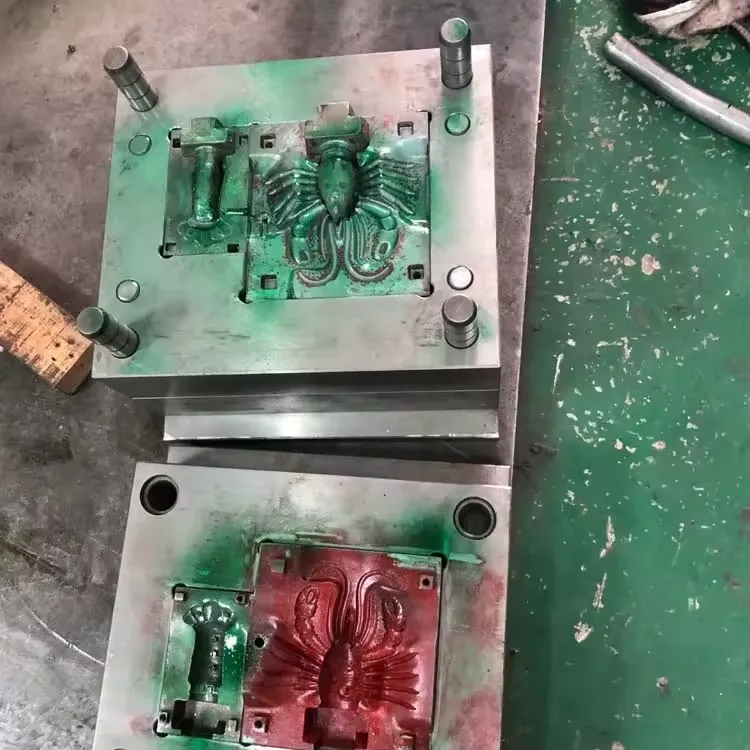

Maintenance and Performance Optimization
Preventive Maintenance Schedule
Maximizing fishing lure mold longevity requires systematic maintenance:
- Daily: visual inspection and cleaning of parting surfaces
- Weekly: lubrication of guide systems and ejector pins
- Monthly: cooling circuit flushing and pressure testing
- Quarterly: dimensional verification and wear assessment
- Annually: complete tear-down inspection and component replacement
Proper maintenance extends the fishing lure mold’s service life to 500,000+ cycles for standard materials.
Troubleshooting Common Issues
Typical fishing lure mold problems and solutions include:
- Flash formation: adjust clamp force or repair worn mold components
- Surface defects: polish cavity or adjust processing parameters
- Dimension variation: check for thermal expansion issues or worn guides
- Texture degradation: re-texture critical surfaces or replace inserts
- Corrosion damage: implement better mold protection or upgrade to stainless steel
Effective troubleshooting minimizes fishing lure mold downtime and maintains production quality.
Performance Enhancement Techniques
Fishing lure mold performance can be enhanced through:
- Surface coating: TiN or CrN coatings to reduce friction and improve release
- Laser welding: for localized repair of worn areas
- Conformal cooling upgrades: to reduce cycle time by 20-30%
- Insert standardization: for quick changeover between lure designs
- Hot runner system optimization: for reduced waste and faster cycles
These enhancements ensure the fishing lure mold remains competitive throughout its service life.
Application-Specific Fishing Lure Mold Considerations
Freshwater Lure Molds
Freshwater fishing lure molds require specific adaptations:
- Material compatibility: with water-based paints and finishes
- Texture optimization: for slow-moving lure presentations
- Weight tolerance: ±0.2g for consistent casting distance
- Colorant distribution: uniform mixing in multi-color lure designs
These features ensure the fishing lure mold produces baits optimized for freshwater species behavior patterns.
Saltwater Lure Molds
Marine environment fishing lure molds demand specialized features:
- Corrosion-resistant materials: for prolonged saltwater exposure
- Reinforced structures: to withstand powerful saltwater game fish
- UV stabilizer compatibility: for prolonged sunlight exposure resistance
- Through-hole precision: for rigging hardware and attachment points
These adaptations ensure the fishing lure mold produces durable saltwater baits capable of withstanding harsh ocean conditions.
Soft Plastic Lure Molds
Soft bait fishing lure molds require specialized design elements:
- Flexible material flow channels: for uniform silicone/rubber distribution
- Release agent compatibility: to prevent sticking with low durometer materials
- Venting optimization: for low-viscosity material trapping air
- Cure temperature control: for material property consistency
These features ensure the fishing lure mold produces soft plastic baits with consistent texture and performance characteristics.
Conclusion
The fishing lure mold represents a specialized intersection of precision engineering and biological mimicry. By selecting appropriate materials (718H, NAK80, S136), implementing advanced manufacturing techniques, and following rigorous quality control procedures, manufacturers can produce fishing lure molds capable of meeting the demanding requirements of modern tackle production. The fishing lure mold’s ability to replicate lifelike details directly impacts angler success, making it a critical component in the multi-billion dollar fishing tackle industry.
Continuous innovation in fishing lure mold technology—including improved materials, advanced cooling systems, and precision machining—will drive future advancements in artificial bait performance. As environmental regulations and sustainability concerns grow, the fishing lure mold industry must also adapt to produce more eco-friendly lure designs while maintaining the biological accuracy that makes artificial baits effective fishing tools.
>>You may also like
Standards & References
The following industry standards are referenced in this article: