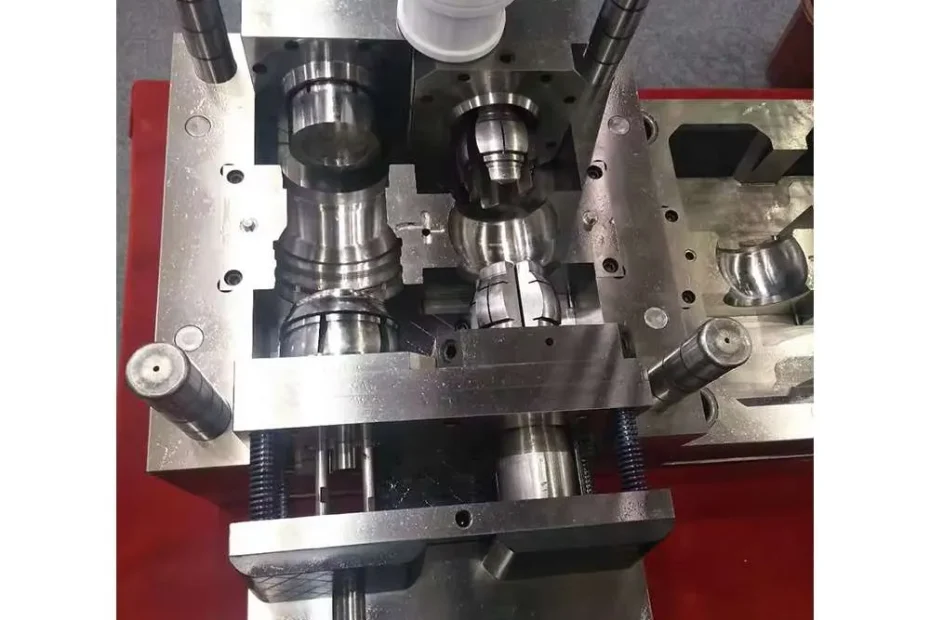
Coffee machine mold manufacturing represents a critical segment in the home appliance industry, demanding exceptional precision, surface quality, and material performance. This guide outlines the optimal steel applications for coffee machine molds, focusing on material selection, design considerations, manufacturing processes, and quality control standards. The content adheres to international mold-making best practices while ensuring compliance with food contact safety requirements and environmental regulations.
Material Selection
Pre-hardened Steel 718H
Application Scenario: Internal structural components such as water channels, brewing units, and support frames.
Performance Parameters:
- Delivery hardness: 32-36 HRC
- Machinability: Excellent for complex 3D contours and thin-walled structures
- Polishing capability: Up to Ra 0.8 μm
- Mechanical properties: Tensile strength 950-1050 MPa, yield strength 850-950 MPa
Heat Treatment: Pre-hardened at 650°C, no post-machining heat treatment required.
Advantages: Reduces production cycle by 20% compared to traditional steel grades; excellent dimensional stability with minimal distortion during machining.
Mirror-Finish Steel S136
Application Scenario: External visible components including water tanks, coffee reservoirs, and front panels.
Performance Parameters:
- Delivery hardness: 28-32 HRC (can be hardened to 48-52 HRC)
- Polishing capability: Superior mirror finish up to Ra 0.02 μm
- Corrosion resistance: Passivated surface meets ASTM B117 500-hour salt spray standard
- Food safety compliance: FDA 21 CFR 175.300 certified for food contact applications
Heat Treatment: Solution annealing at 1050°C followed by tempering at 200-500°C.
Advantages: Maintains surface integrity after 100,000+ molding cycles; resistant to coffee oils and mineral deposits.
Hot Work Die Steel H13
Application Scenario: High-temperature components such as heating blocks and thermal brewing chambers.
Performance Parameters:
- Hardness: 48-52 HRC after heat treatment
- Thermal conductivity: 42 W/m·K
- Hot tensile strength: 1100 MPa at 500°C
- Thermal fatigue life: ≥15,000 cycles under 600°C temperature fluctuations
Heat Treatment: 1020°C quenching followed by triple tempering at 560°C.
Advantages: Withstands continuous operating temperatures up to 220°C; minimal thermal expansion (11.2×10⁻⁶/°C).
Design and Manufacturing Considerations
Coffee Machine Mold Cavity Design
- Dimensional Tolerance: ±0.01mm for sealing surfaces to prevent water leakage
- Draft Angle: 0.5-1° for external surfaces, 1-1.5° for internal features
- Radii and Fillets: Minimum 0.5mm radius on all edges to reduce stress concentration
- Wall Thickness: Uniform 2.5-3.0mm design with maximum variation ≤0.3mm to prevent sink marks
Cooling System Engineering
- Conformal Cooling Channels: 8-12mm diameter with 25-30mm spacing
- Temperature Control: ±2°C variation across cavity surface
- Flow Rate: 6-8 liters per minute per cooling circuit
- Heat Transfer Efficiency: 90% cooling effectiveness for optimal cycle time reduction
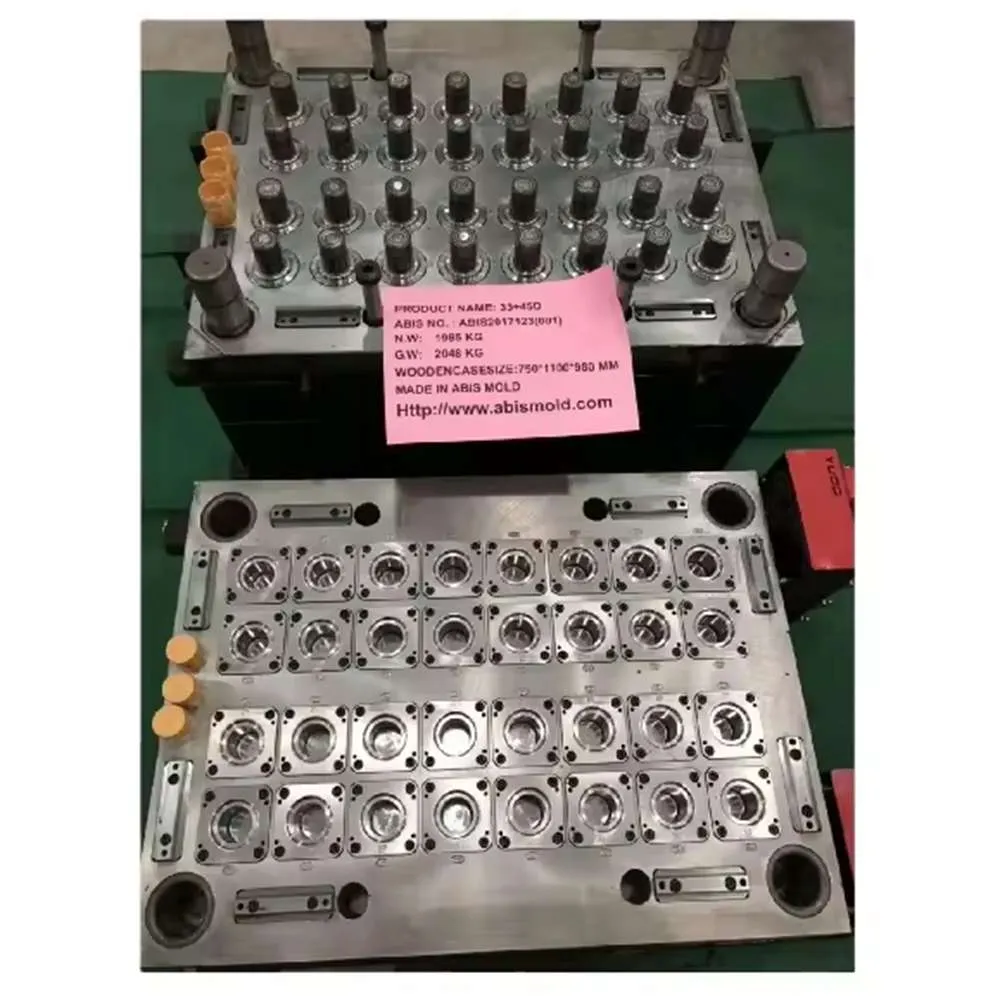
Manufacturing Processes
- CNC Machining: 5-axis milling with 0.005mm positioning accuracy
- EDM Operations: Surface finish up to Ra 0.4 μm for intricate details
- Polishing Sequence: Progressive grit sequence from #400 to #4000 diamond compounds
- Texturing Capability: Precision micro-texturing (5-50μm depth) for non-slip surfaces
Quality Control Standards
Dimensional Inspection
- Coordinate Measuring Machine (CMM): Accuracy of ±0.005mm with 0.001mm resolution
- Optical Comparator: For complex profiles with 50x magnification
- Surface Roughness Testing: Profilometer readings at 5 critical locations per cavity
Performance Validation
- Cycle Life Testing: 100,000 consecutive molding cycles under accelerated conditions
- Pressure Testing: 1.5× operating pressure (up to 10 bar) for 30 minutes
- Temperature Cycling: -40°C to +120°C for 100 cycles to verify thermal stability
Material Certification
- Chemical Composition: Spectrometric analysis within AISI/SAE standards
- Mechanical Properties: Tensile, impact, and hardness testing per ASTM E8, E23, and E18
- Traceability: Full material certification from raw material to finished mold
Application and Maintenance of Coffee Machine Mold
Operational Guidelines
- Injection Parameters: Recommended melt temperature 220-260°C for polypropylene
- Mold Temperature: 60-80°C for general components, 100-120°C for crystalline polymers
- Cycle Time Optimization: 45-60 seconds typical, depending on part complexity
- Release Agent: Food-grade silicone-free release agent only
Preventive Maintenance
- Regular Inspection: Every 5,000 cycles for cavity surface condition
- Cooling System Maintenance: Ultrasonic cleaning every 3 months to remove scale buildup
- Lubrication Schedule: Monthly lubrication of guide pillars and ejector systems with food-safe lubricant
- Storage Requirements: Climate-controlled environment (20±5°C, 40-60% humidity) when not in use
Repair Procedures
- Minor Surface Damage: Laser welding with 0.2mm filler wire, followed by precision polishing
- Edge Wear Restoration: CNC re-machining with 0.01mm depth control
- Cooling Channel Repair: EDM drilling for blockages beyond cleaning capability
Frequently Asked Questions of Coffee Machine Mold
What is the typical service life of coffee machine molds?
A: 300,000-500,000 cycles for S136 molds used in外观件;150,000-300,000 cycles for 718H structural components;100,000-150,000 cycles for H13 high-temperature molds.
How does Coffee Machine Mold steel selection affect product quality?
A: Proper material selection reduces defects by 40-60%;S136 minimizes surface defects;718H ensures dimensional stability;H13 prevents thermal degradation.
What are the environmental considerations in Coffee Machine Mold manufacturing?
A: Modern mold steels reduce energy consumption by 15-20% through optimized cooling;S136’s corrosion resistance reduces water usage in maintenance;all recommended steels are 100% recyclable.
Conclusion
The selection of appropriate mold steel for coffee machine manufacturing directly impacts product quality, production efficiency, and long-term reliability. By following the guidelines outlined in this document—careful material selection based on component function, precision manufacturing processes, and rigorous quality control—manufacturers can achieve consistent, high-quality results while maximizing mold longevity and minimizing total cost of ownership.
This guide establishes best practices for coffee machine mold steel applications, emphasizing the unique requirements of food contact, thermal stability, and aesthetic performance in this specialized field of appliance manufacturing.
>>You may also like
Standards & References
The following industry standards are referenced in this article: