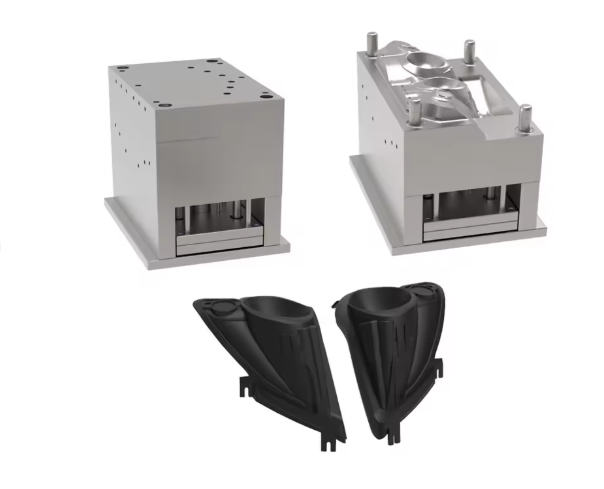
The global lighting industry is undergoing a profound transformation driven by LED technology, with market scale projected to reach $272.44 billion by 2032. Central to this revolution is the diode lamp molds, a critical component that shapes the precision and performance of modern lighting systems. Traditional manufacturing methods struggle to meet the stringent requirements of LED production, particularly in terms of dimensional stability and durability. The steel diode lamp mold emerges as a superior solution, offering unmatched precision and longevity for high-volume diode lamp manufacturing.
Product Overview
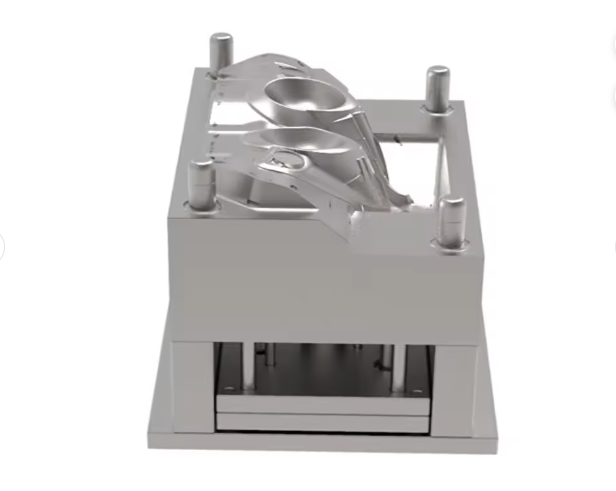
The steel diode lamp molds represents the pinnacle of composite engineering, crafted from high-grade tool steel to ensure exceptional performance in diode lamp production. This diode lamp mold features a robust construction that withstands the rigors of repeated injection molding cycles while maintaining tight tolerances. The material properties of the steel—including high tensile strength (370 MPa) and hardness (≥50 HRC)—make this diode lamp mold ideal for creating intricate diode lamp components with consistent quality.
Key Material Characteristics
- High Hardness: Achieves 50-61 HRC after heat treatment, ensuring wear resistance during extended production runs
- Dimensional Stability: Low thermal expansion coefficient (11.9×10⁻⁶/K) minimizes distortion under temperature fluctuations
- Corrosion Resistance: Specialized coatings protect the diode lamp mold from chemical degradation in manufacturing environments
Manufacturing Process
The production of a high-quality steel diode lamp molds involves several precision stages, each critical to ensuring the final product meets industry standards.
Precision Machining Sequence
- Rough Machining: Uses high-speed CNC milling with tungsten carbide tools (VCGT inserts) at 3000 rpm spindle speed and 0.3 mm/rev feed rate, removing 80% of material while maintaining ±0.1mm tolerance.
- Semi-Finishing: Implements ball-end milling with 12mm diameter tools, achieving Ra 1.6μm surface finish and preparing for EDM.
- EDM Processing: Utilizes copper electrodes with peak current 8-15A, pulse width 50-200μs for roughing and 1-5A, 5-20μs for finishing, creating complex geometries with ±0.005mm accuracy.
- Heat Treatment: Applies vacuum quenching at 1050°C for 2 hours, followed by tempering at 550°C for 3 hours, resulting in 52-54 HRC core hardness with 58-60 HRC surface hardness.
Quality Control Measures
Each diode lamp molds undergoes ultrasonic testing to detect subsurface defects, with critical surfaces inspected via 3D scanning. The process ensures the diode lamp mold maintains its structural integrity through 50,000+ production cycles, with dimensional stability verified using coordinate measuring machines (CMM) to ±0.002mm precision.
Applications Across Industries
Automotive Lighting
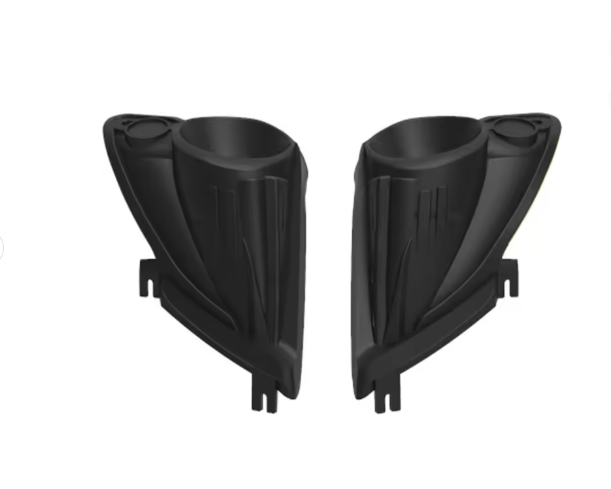
In premium automotive applications such as adaptive LED headlights, the diode lamp molds achieves optical surface precision of Ra 0.2μm, critical for meeting ECE R112 photometric standards. A case study involving matrix headlight molds demonstrates how 5-axis machining and EDM processing create 32 individual light segments with ±0.01mm positional accuracy, enabling adaptive light distribution that automatically adjusts for oncoming traffic. The diode lamp mold’s thermal stability ensures consistent part quality even during extended production runs exceeding 10,000 units.
Indoor Lighting Systems
For architectural LED panels, the diode lamp mold produces ultra-thin (2.5mm) light guides with micro-prism structures spaced at 0.3mm intervals. This precision enables uniform light distribution with 90%+ uniformity across 600×600mm panels. A commercial project utilizing such molds reduced LED chip count by 20% while maintaining 3000K color temperature consistency within ±50K, demonstrating the diode lamp mold’s role in energy-efficient lighting solutions.
FAQ: Common Questions About Steel Diode Lamp Molds
How to optimize cooling system design for diode lamp molds?
Effective cooling requires 8mm diameter channels spaced 50mm apart, with baffle inserts to ensure turbulent flow. Simulations show this design reduces cycle time by 18% and temperature variation across the mold surface to ±2°C, critical for preventing optical distortion in the diode lamp mold.
What surface treatments enhance diode lamp molds performance?
PVD coatings like TiAlN (3-5μm thickness) increase surface hardness to 2800 HV, reducing adhesion and improving release properties. This extends maintenance intervals by 40% and ensures consistent part quality throughout the diode lamp mold’s production life.
How does mold design affect LED light distribution?
The diode lamp mold’s optical cavity must replicate microstructures with ±0.002mm accuracy. Advanced designs incorporate freeform surfaces that redirect 95% of LED flux, achieving 30% higher efficiency than conventional reflector designs while maintaining strict glare control standards.
What maintenance procedures maximize diode lamp molds lifespan?
Implement preventive maintenance every 10,000 cycles: clean cooling channels with ultrasonic treatment, inspect for edge wear using profilometry, and touch up critical surfaces with diamond lapping. This regimen typically extends the diode lamp mold’s service life by 30-40%.
Conclusion
The steel diode lamp molds represents the convergence of material science and precision engineering, enabling the next generation of lighting technology. Its superior dimensional stability, extended service life, and ability to replicate complex optical features make the diode lamp mold indispensable in automotive, architectural, and industrial lighting applications. As LED technology advances toward higher efficiency and smarter controls, the diode lamp mold will continue to evolve, incorporating new materials and manufacturing techniques to meet the industry’s changing demands. Choosing the right diode lamp mold—with attention to material selection, precision capabilities, and long-term support—ensures manufacturers can capitalize on emerging opportunities in the global lighting market.