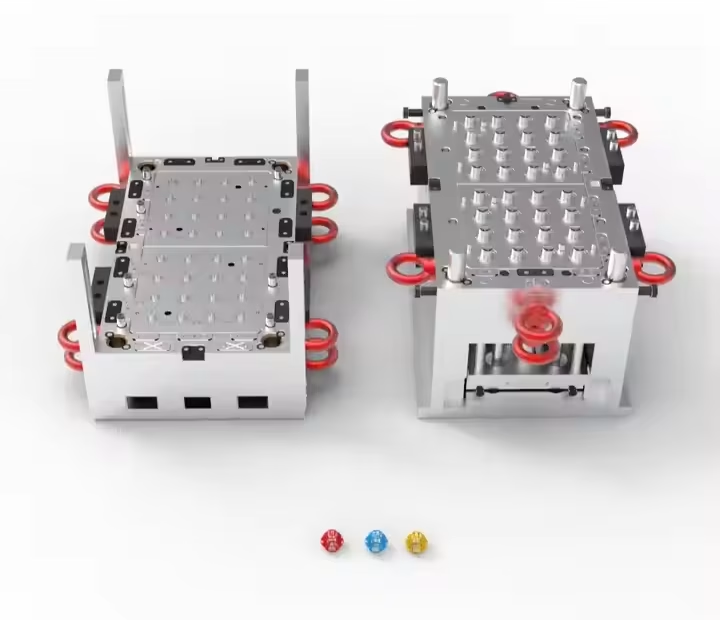
The Origin and Development of Bio-bead Molds
The concept of the Bio-bead Molds can be traced back to the early 20th century. At that time, in order to better study the three-dimensional structure and function of cells, scientists began to create various models that simulated biological tissues. These early models were mostly made from simple materials such as wax or plaster, which were shaped by hand carving or casting. However, the precision and realism of these models were far from meeting the demands of scientific research.
With the rapid development of materials science and manufacturing technology, Bio-bead Molds gradually evolved into high-tech products. In the mid-20th century, with the widespread application of polymer materials, scientists began to use high-molecular materials such as polystyrene and polyethylene to create bioreactor sphere molds.
These materials not only have good biocompatibility but can also be shaped into high-precision models through injection molding and other processes. In the 21st century, the advent of 3D printing technology has brought revolutionary changes to the development of bio-bead molds. With 3D printing technology, scientists can quickly create highly realistic bio-bead molds based on the precise structural data of biological cells, with precision reaching the micron level.
Structural Innovations in Bio-bead Molds Design
- Surface Area Optimization Structures
Modern designs prioritize maximizing carrier surface area. For instance, cylindrical molds with 25 circumferential bar-shaped protrusions (Patent CN210030151U) increase specific surface area by over 30%. Integrated core-shaft and support plate designs enhance structural stability while creating multi-stage mass transfer channels, boosting microbial biofilm adhesion efficiency by 45%. Such configurations are particularly effective for high-concentration organic wastewater treatment. - Dynamic Functionalization
The fan-shaped bio-ball mold proposed in patent CN219429808U adopts a central column-rotating axis linkage structure. The mold has 6 sets of rotatable biological carriers built in, which are driven by water flow impact to rotate 360°, shortening the biofilm renewal cycle to 1/3 of the traditional structure. Test data shows that this design increases the COD removal rate to 92%, and its anti-clogging performance is significantly better than that of static carriers. - Modular Assembly Systems
Hollow ceramic bio-sphere molds utilize split structures with interlocking upper/lower shells and central channels. This modularity enables rapid component replacement during mass production, accommodating bio-sphere diameters from 3–20 mm and improving equipment utilization by 60%.
Material Advantages and Selection Strategies
- Steel Types and Performance Matching
- Cold-work die steel (e.g., Cr12MoV): Hardness 60–62 HRC, ideal for precision slotting.
- Hot-work die steel (e.g., H13): Withstands 600°C, suitable for high-pressure injection molding.
- Stainless steel (e.g., 316L): Biocompatible and corrosion-resistant for sterile pharmaceutical production.
- Heat Treatment Optimization
Vacuum quenching and low-temperature tempering balance toughness and hardness. For instance, D2 steel achieves 1,200 MPa bending strength after heat treatment. Surface nitriding (TD process) elevates hardness to 2,000 HV, extending service life by 30%.
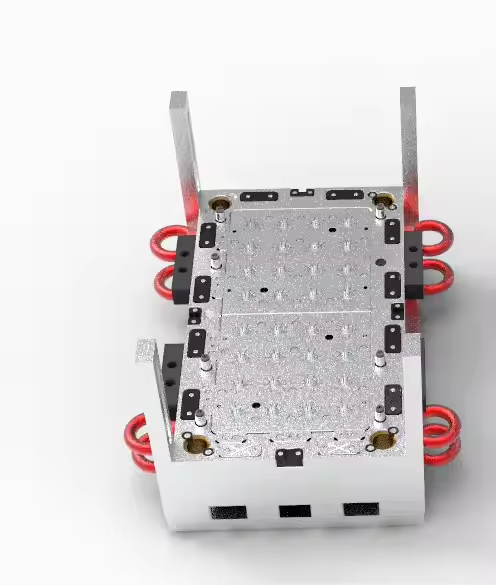
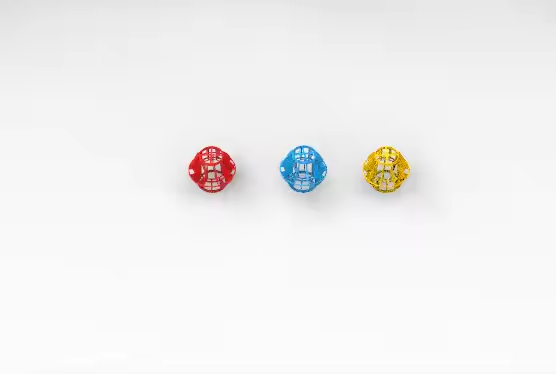
Advanced Fabrication Technologies
- Micro-injection Molding (μIM)
Systems like Suzhou LabioTech’s freeze-dried microsphere molds utilize PID temperature control (±0.5°C) and 0.5 μL precision valves, achieving batch weight variations <1.5%. This technology underpins industrial-scale mRNA vaccine freeze-dried microsphere production. - Multi-stage Sintering
Si₃N₄ molds undergo gradient sintering: 1,650°C nitrogen atmosphere densification followed by 200 MPa HIP to eliminate defects. The resulting 1,200 MPa flexural strength (+40% improvement) supports aerospace ceramic bearing fabrication. - Intelligent Process Control
Systems integrating near-infrared spectroscopy (NIRS) and digital twins, such as Haoying Bio’s smart molds, optimize pre-freeze crystallization rates to 5°C/min, shortening drying cycles by 30% and reducing energy consumption by 25%.
Cross-Disciplinary Applications of Bio-bead Molds
Biomedical Engineering
- 3D Cell Culture: Gelatin-alginate microspheres (150–300 μm) from 85%-porosity molds support organoid growth.
- Targeted Drug Delivery: Surface-patterned PLGA microspheres with tunable zeta potentials (±35 mV).
- Tissue Scaffolds: Collagen microspheres with gradient pores enhance endothelial cell migration (2.3× faster).
Environmental Remediation
- Microbial Immobilization: Honeycomb-structured bioceramic carriers (1,200 m²/g surface area) quadruple nitrifying bacteria loading.
- Pollutant Adsorption: Graphene-hydrogel microspheres achieve 380 mg/g Pb²+ adsorption capacity.
Industrial Biotechnology
- Enzyme Immobilization: Magnetic diatomite-based microspheres retain 92% enzyme activity after 20 cycles.
- Biocatalytic Systems: Core-shell molds enable integrated catalysis-separation microreactors.
Conclusion
The evolution of bio-bead molds epitomizes the deepening synergy between precision manufacturing and biotechnology. As materials science, microfluidics, and AI continue to advance, these tools will transcend scale limitations—from single-cell encapsulation (<10 μm) to ecological engineering (>1 m)—to address global health and environmental challenges. Future bio-bead molds will evolve beyond mere production tools into self-sensing, self-adapting intelligent biofabrication platforms.
>>You may also like
Standards & References
The following industry standards are referenced in this article: