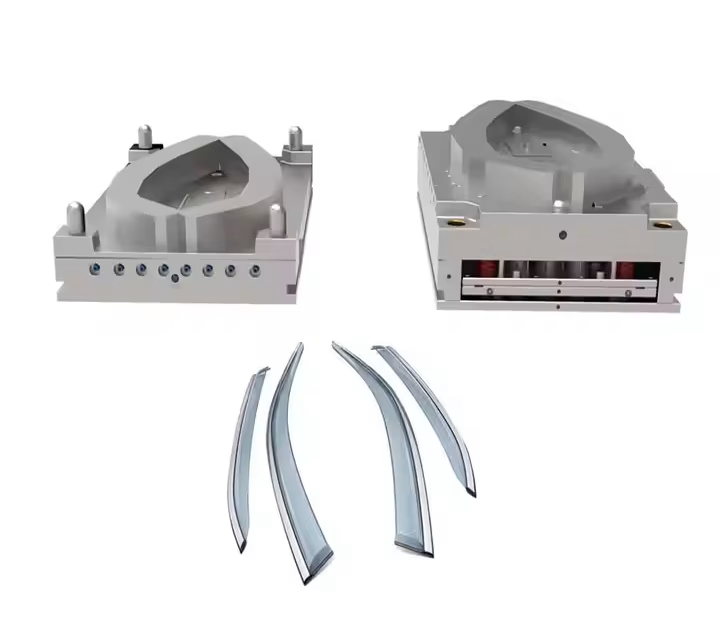
An essential part of the automotive safety system is wipers. Their performance affects driving visibility, which in turn affects road safety. Advanced mold technology is the core of precision manufacturing of wipers. Wiper products’ quality, durability, and cost-effectiveness largely rely on the rationality of Automotive wiper molds design, the scientific and cutting-edge processes of material selection, and manufacturing. In this article, I attempt to capture the wiper mold design systematization, analyzing its core components such as design processes, materials science, and processes optimization, as well as the industry look and prospects.
Design Process and Key Technologies for Automotive Wiper Molds
1. Design Principles and Feasibility Analysis
Automotive wiper Molds mold design must adhere to three principles: functionality, reliability, and cost-effectiveness. During the initial phase, feasibility studies integrate structural characteristics such as lightweight wiper arms and aerodynamic blade designs. Finite element simulation (FEA) is employed to validate stress distribution in critical components, ensuring compatibility with windshield curvature and wiper motion trajectories (e.g., “Z” or “U” shapes)
2. Parting Surface and Cavity Layout Optimization
The parting surface design significantly affects demolding efficiency and product quality. Complex geometries, such as curved wiper arms or rubber blade profiles, require strategic parting surface placement to minimize flash and deformation. For multi-cavity molds (e.g., 16-cavity designs), balanced runner systems ensure uniform material flow and reduce waste. Cooling systems are optimized for thermal uniformity to prevent shrinkage defects
3. Innovations in Guidance and Positioning Mechanisms
Chongye (Suzhou) Precision Industry Co., Ltd.’s patented “wiper hemming mold” (Patent CN222153517U) utilizes guide sleeves and positioning grooves to achieve sub-0.01mm alignment accuracy between upper and lower molds. This innovation reduces edge burrs and dimensional deviations, enhancing product consistency
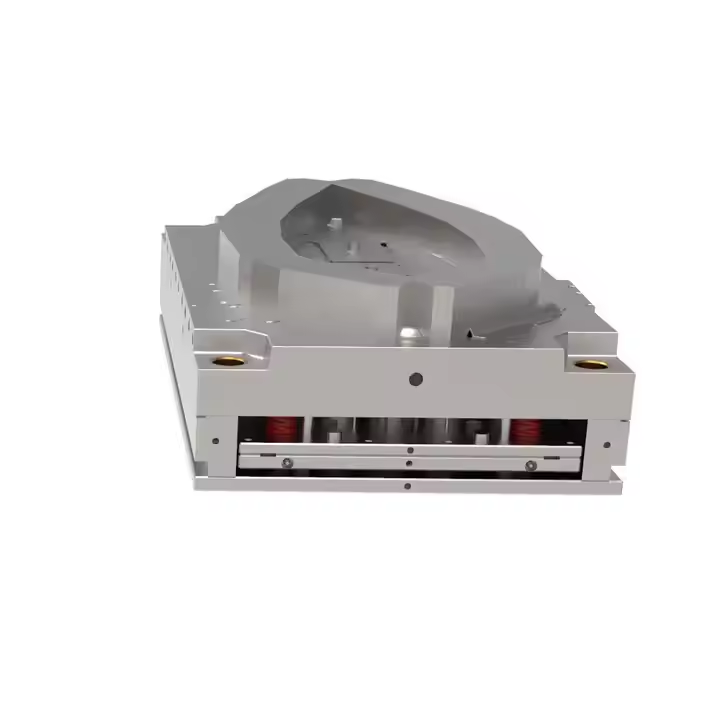
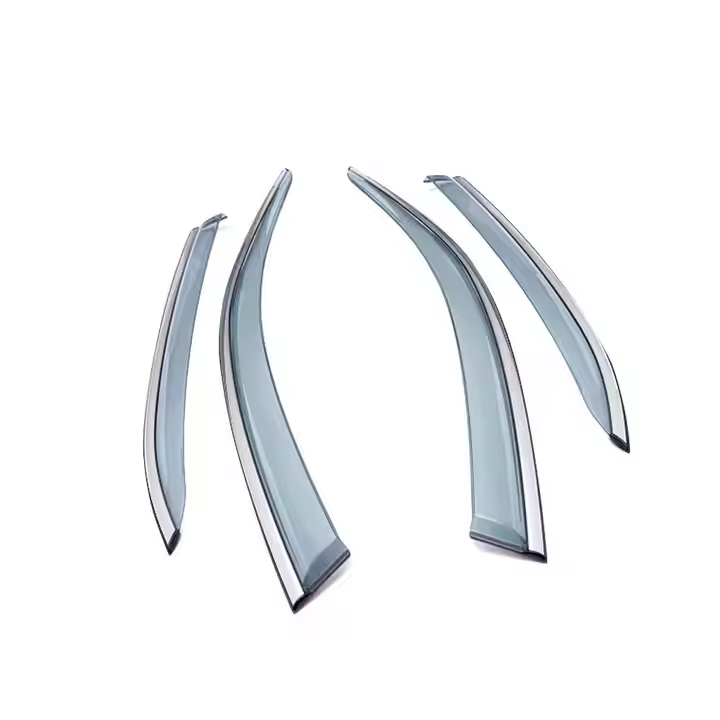
Material Selection and Performance Enhancement of Automotive wiper molds
1. Mold Steel Selection
Automotive wiper molds demand materials with high hardness, wear resistance, and impact toughness to withstand high-frequency stamping or injection molding:
- PA66 Plastic Molds: Ideal for blade frames, offering high-temperature resistance (melting point ~260°C) and low hygroscopicity for precision molding.
- 1.8566 Second-Generation Tool Steel: With hardness up to HRC 60-61 and 2–3× higher toughness than Cr12MoV, it addresses cracking issues in hardened carbon steel stamping.
- PM23 Powder Metallurgy HSS: HRC 64-66 hardness suits high-precision wiper arm stamping, especially for narrow, elongated structures.
2. Surface Treatment Technologies
Nitriding and PVD coatings (e.g., TiAlN) reduce friction and enhance corrosion resistance. Laser welding, with tensile strength up to 35MPa, minimizes mold maintenance frequency
Advanced Manufacturing Processes of Automotive wiper molds
1. Injection Molding
- Parameter Control: Mold temperature is stabilized within ±5°C, while injection pressure and speed are adjusted for PA66 flow characteristics to avoid weld lines or voids.
- Hot Runner Systems: Reduce gate waste and boost efficiency in multi-cavity production.
2. Stamping and Hemming Processes
- Precision Blanking: Clearance control (0.01–0.04mm) prevents tearing or burrs in wiper tray stamping.
- Hemming Automation: Chongye’s patented mechanism enhances blade-edge quality and noise reduction through controlled return motion.
3. Smart Manufacturing Integration
Automated production lines, like Jiaxing Rixin Automation’s “stepper assembly system” (Patent CN118288021B), shorten cycle times by 40% and integrate real-time inspection (e.g., blade thickness tolerance ≤±0.01mm). AI-driven adaptive systems dynamically adjust parameters to improve yield
IV. Industry Trends and Future Challenges
1. Lightweight and Sustainable Materials
The shift toward electric vehicles drives demand for lightweight materials like carbon-fiber-reinforced polymers (CFRP) and bio-based rubbers. Molds must adapt to these materials’ unique forming characteristics
2. Modular Design and Rapid Retooling
Modular molds with interchangeable inserts (e.g., gear-driven positioning) reduce retooling time by 30%, catering to multi-model customization
3. Digital Twins and Virtual Validation
CAE simulations and 3D-printed prototypes enable digital twin modeling to predict defects (e.g., stress concentration) and minimize trial runs
Conclusion
The science and craftsmanship of automotive wiper molds technology embodies an intricate blend of engineering and materials science. Improvements in everything from parting surface design to AI-augmented manufacturing drives innovation and transforms the industry towards being more efficient, high-quality, and sustainable. The integration of automation and electronics will surpass interdisciplinary boundaries (like AI integrated with nano coatings) and ensure enhanced wiper performance as automotive electrification and intelligence progresses, making driving safer and clearer.
>>You may also like
Standards & References
The following industry standards are referenced in this article: