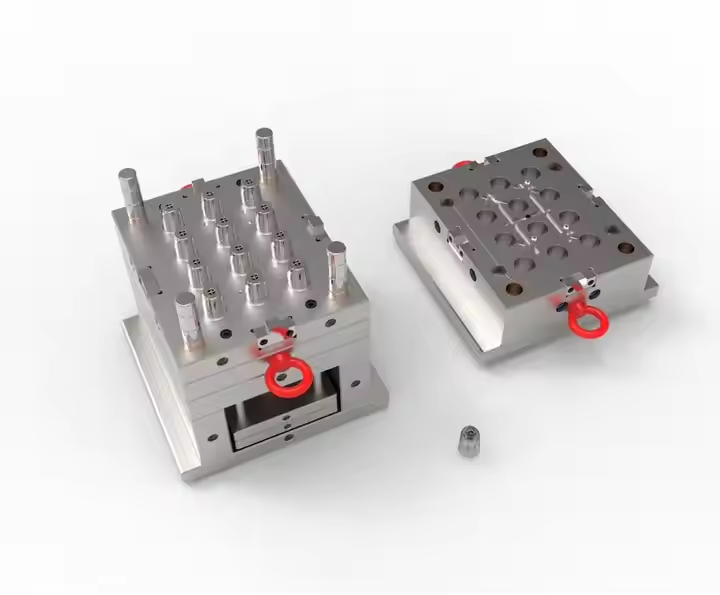
Plastic candle tube molds, as core tools in modern candle production, are quietly revolutionizing this ancient industry. From solemn church candlesticks to home fragrance candles, from festive decorative candles to emergency pillar candles, the diverse forms of candle products all rely on the precision of plastic molds. This seemingly simple industrial product is, in fact, a crystallization of materials science, mechanical design, and production technology, playing a pivotal role in modern manufacturing.
The Scientific Code of Candle Tube Molds Design
In the precise world of candle tube molds, a mere 0.01mm deviation can result in uneven wall thickness. Designers leverage fluid dynamics principles, incorporating spiral flow channels into the mold cavity to ensure stable laminar flow during wax injection. This design not only enhances injection efficiency but also eliminates air bubbles, achieving a light transmittance of over 92% in finished candle tubes.
Breakthroughs in temperature control systems have shattered traditional design limitations. Modern molds employ distributed thermal control modules, embedding 32 micro-thermocouples within the mold body. Coupled with PID (Proportional-Integral-Derivative) algorithms, these systems achieve temperature precision of ±0.5°C. This intelligent thermal management automatically adjusts cooling rates based on ambient conditions, reducing demolding time to one-third of conventional molds while boosting product yield to 99.6%.
Modular design concepts are redefining industry standards. Through standardized interface engineering, a single mold base can rapidly interchange core modules, enabling seamless switching among nine specifications ranging from Φ15mm to Φ120mm. This innovation slashes mold changeover time from 2 hours to 15 minutes, perfectly aligning with small-batch customization demands.
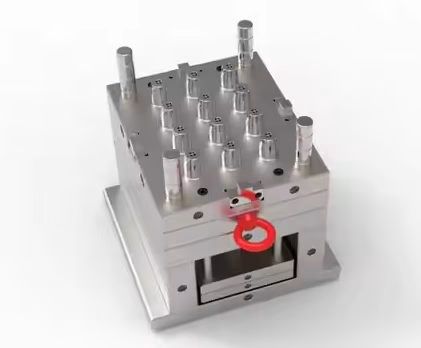
The design of plastic candle tube molds must balance functionality, aesthetics, and production efficiency. The core structure typically comprises an outer mold, inner mold, and head mold, adhering to principles of artistic candle mold design
- Segmented Inner Candle Tube Molds Design: A three-segment assembly structure (as shown in diagrams) facilitates demolding and enables intricate surface patterns. For instance, inner molds can be processed via CNC engraving or chemical etching to create 0.5–1 mm deep grooves, resulting in raised textures on the candle surface1.
- Material Selection: Industrial-grade molds often use ABS or polypropylene for their high-temperature resistance (100–150°C) and deformation resistance. DIY molds may employ heat-resistant plastic sheets bonded with hot glue, as seen in cloud-shaped candle mold cases1.
- Precision Sizing: Molds are tailored to candle tube diameters (e.g., 26–36 mm conical shapes), ensuring tight alignment between outer and inner molds to prevent wax leakage1.
| Mold Zone | Temperature Range (°C) | Cooling Rate (°C/s) |
| Injection Gate | 85±0.5 | 1.2 |
| Central Cavity | 78±0.3 | 0.8 |
| Vent End | 65±0.5 | 1.5 |
Manufacturing Process of Candle Tube Molds
The production integrates precision plastic mold workflows with candle-specific adaptations
1. Requirement Analysis
Define parameters: outer diameter (26–36mm), wall thickness (1.5–3mm), surface textures (matte, glossy,Relief), and production scale
2. Candle Tube Molds Development
- 3D Modeling & Simulation: UG/Pro/E software constructs parametric models, while Moldflow optimizes wax flow paths and cooling efficiency.
- Precision Machining:
- Five-axis CNC mills master molds with Ra0.4μm surface roughness.
- Graphite electrodes replicate 0.2mm microstructures via EDM.
- Trial & Adjustment:
- Initial wax injection at 70–80°C verifies parting surface sealing.
- Ejection stroke calibration ensures deformation-free demolding.
3. Mass Production Optimization
- Dual-color injection creates gradient effects (e.g., white base wax + colored overlay).
- Robotic arms enable automated part removal, achieving 500–800 pieces/hour.
Key Technical Challenges and Solutions
- Demolding Difficulties:
- The segmented inner mold design improves yield by 30% through self-alignment and compression, compared to monolithic molds.
- Food-grade release coatings minimize wax adhesion.
- Temperature Control:
- Integrated water-cooling systems maintain optimal temperatures (103–108°C).
- Layered cooling is critical for multi-color candles, such as allowing the base layer to solidify before injecting colored wax.
- Precision Molding:
- Vacuum wax injection eliminates air bubbles, ensuring dense candle bodies.
- CNC parameters control pattern depth with <0.1 mm accuracy.
Maintenance and Care Protocols
Proper maintenance extends mold lifespan and reduces production costs:
- Daily Maintenance:
- Clean parting surfaces with alcohol after production to remove wax residues.
- Lubricate moving parts (ejector pins, sliders) twice daily with silicone-based oil.
- Periodic Inspections:
- Monthly checks for cooling channel blockages, using acetic acid for descaling.
- Replace worn components after 5,000 production cycles.
- Storage Guidelines:
- Store molds vertically in dry environments (<40% humidity).
- Apply anti-rust coatings and seal with PE film during long-term storage.
Conclusion
Plastic candle tube molds bridge creativity and mass production, driving advancements in candle artistry. From DIY crafts to industrial manufacturing, innovations in mold design—such as precision engineering and smart technologies—continue to transform candles into aesthetic and emotional expressions. As materials and digital tools evolve, future molds will prioritize precision, intelligence, and sustainability, unlocking endless possibilities for candle design
>>You may also like
Standards & References
The following industry standards are referenced in this article: