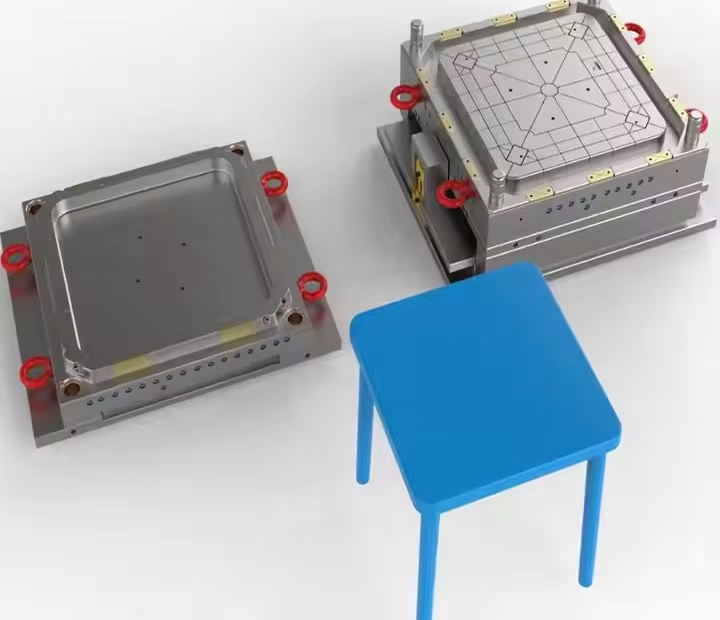
As we witness a rise in urbanization and the adoption of lifestyle-centric living, the outdoor furniture market continuously grows. The already thriving outdoor dining sectors, like parks and gardens, have leaned towards plastic tables and chairs due to their lightweight nature, durability, and affordability. In context to this, plastic products being over 35% of the market share for outdoor furniture plastic tables molds further shows its relevance. The data suggests that the outdoor furniture market was estimated to be worth 30 billion dollars in 2023.
Steel molds are the table top solutions when is the concern is mass outdoor production of plastic tables. With its unique performance benefits, a single steel mold can offer a lifecycle of around 200,000 to 500,000 units, far better than aluminum alloy molds . This allows them to be incredibly efficient and outpaces the production of aluminum alloy molds by a significant margin. Consequently, such high-supply production ability means that steel molds become a default option to use in mass manufacturing.
Scientific Material Selection and Performance Advantages of Mold Steel
1.Performance Comparison of Mainstream Mold Steels
- P20 Pre-Hardened Steel: Rockwell hardness HRC 28–32, delivered in pre-hardened state, suitable for small-to-medium molds.
- H13 Hot Work Steel: Withstands temperatures up to 600°C, ideal for engineering plastics requiring high injection temperatures.
- S136 Stainless Steel: Achieves mirror polishing up to #10,000 grit, excellent corrosion resistance.
- NAK80 Age-Hardening Steel: HRC 40 hardness, requires no heat treatment, ideal for precision texture engraving.
2. Correlation Between Steel Properties and Product Quality
- Thermal conductivity (13–24 W/m·K) impacts cooling efficiency and production cycles.
- Yield strength (800–2,000 MPa) ensures anti-deformation capability.
- Thermal expansion coefficient (10–12×10⁻⁶/°C) controls dimensional stability.
- Surface roughness (Ra 0.025–0.4 μm) determines demolding effectiveness.
Precision Manufacturing Process System for plastic tables molds
1. Digital Design Phase
UG/Moldflow software optimizes gate positioning and cooling channel layouts through plastic tables molds flow analysis. Stress simulations for table leg reinforcement ribs control wall thickness variation within ±0.15 mm. Parametric design reduces development cycles for similar products by 40%.
2. Precision Machining Workflow
- Rough Machining: Uses φ50R5 bull-nose cutters at 1.2 mm depth, leaving 0.3 mm allowance.
- Heat Treatment: Vacuum quenching to HRC 48–52, triple tempering to eliminate internal stress.
- Finish Machining: Five-axis machining centers process curved surfaces with ±0.01 mm tolerance.
- EDM (Electrical Discharge Machining): 0.15 mm copper electrodes create anti-slip textures (Ra = 6.3 μm).
- Surface Treatment: DLC coating (2–3 μm thickness) reduces friction coefficient to 0.1.
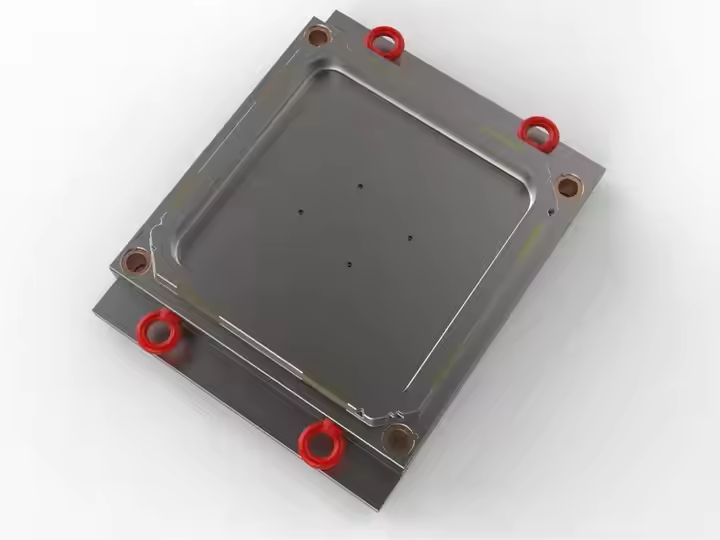
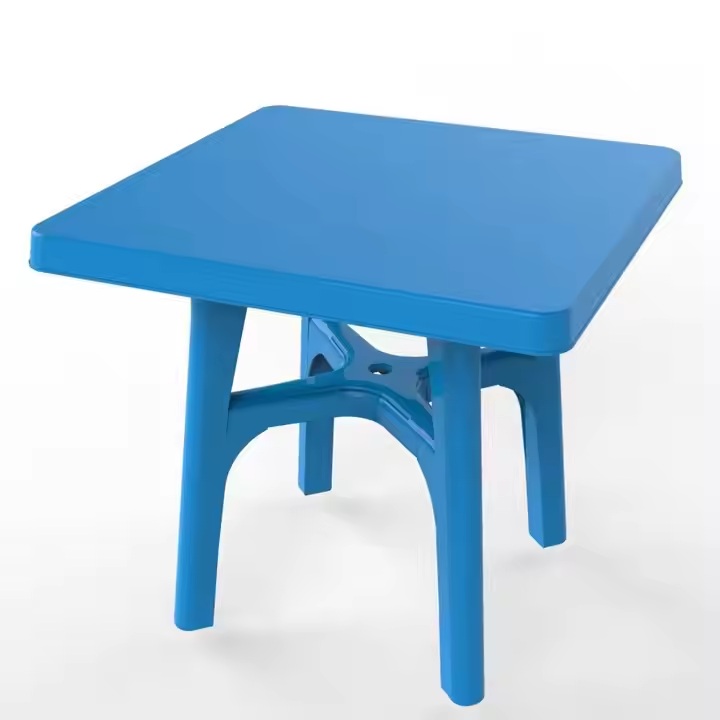
IV. Standardized Maintenance Management System
1. Daily Maintenance Protocols
- Clean cooling channels every 5,000 cycles using 5% nitric acid solution.
- Weekly lubrication of ejector pins with high-temperature grease (drop point: 280°C).
- Daily spraying of release agent (12% silicone content) on cavity surfaces.
2. Preventive Maintenance Strategies
outdoor plastic tables molds health monitoring includes:
- Guide pillar/bushing clearance (alert threshold > 0.03 mm).
- Parting surface flatness (tolerance: 0.02 mm/m).
- Ejection system coaxiality (standard: ±0.015 mm).
A Taiwanese enterprise implementing TPM (Total Productive Maintenance) reduced unplanned mold downtime by 72%, decreased spare parts inventory by 35%, and achieved annual savings of ¥2 million.
Outdoor Plastic Tables Molds Datasheet
| Item | Specification/Description |
| Mold Type | Steel Injection Mold (Two-Plate/Three-Plate) |
| Material Compatibility | PE, PP, ABS, and other outdoor engineering plastics |
| Mold Lifespan | 200,000–500,000 cycles (varies by steel grade and maintenance) |
| Steel Grade | H13/P20/NAK80/S136 (optional, H13 Hot Work Steel recommended) |
| Hardness | HRC 48–52 (after quenching) |
| Dimensional Accuracy | ±0.05–0.1 mm |
| Surface Treatment | DLC Coating/Mirror Polishing (Ra ≤0.4 μm) |
| Cooling System | Conformal cooling channels (30–40% improved cooling efficiency) |
| Cycle Time | 40–90 seconds per part (depends on product size and plastic type) |
| Mold Weight | 1–5 tons (varies by size and structure) |
| Machine Compatibility | 500–3000 ton injection molding machines |
Conclusion
Utilizing steel materials in the outdoor plastic tables molds has many considerable benefits. Their high strength, excellent machinability, and exceptional durability make them suitable as mold materials. Adequate steel mold design and optimization can achieve the production objectives of outdoor plastic tables and foster industry advancement. As technology advances, and environmental factors become more stringent, the use of steel in outdoor plastic table molds will, without a doubt, increase greatly.
Steel materials in outdoor plastic tables molds guarantee product quality and production efficiency while contributing significantly to sustainable development.