
As night falls and mosquitoes swarm during summer evenings, the sharp “crackle” of electric mosquito swatters has become a modern household’s technological weapon against pests. Behind this seemingly simple tool lies the sophisticated wisdom of modern industrial mold manufacturing. As the core equipment in mosquito swatter production, mold quality directly determines product safety, insect-killing efficiency, and user experience. Amidst the wave of consumer upgrades, electric mosquito swatter molds are undergoing a transformative shift from traditional to intelligent manufacturing—a journey that reflects the evolution of China’s manufacturing industry.
Precision Architecture of Electric Mosquito Swatter Molds
The mold system for electric mosquito swatters comprises multiple precision modules working in synergy, far exceeding the complexity of ordinary household appliance molds. The three-layer protective grid module employs 0.15mm-grade precision stamping molds to ensure 7–9 evenly distributed discharge points per square centimeter. These hexagonal apertures must balance conductivity and structural strength, with mold tolerances controlled within ±0.01mm—equivalent to 1/6 the diameter of a human hair.
In high-voltage circuit board molding, engineers utilize multi-layer injection molding technology, achieving precise material compounding through 32 temperature control units. The handle’s anti-slip patterns are shaped via EDM (electrical discharge machining), featuring 0.05mm-deep micro-textures that ensure grip comfort while resisting mildew and bacteria. The safety module adopts a modular design, integrating five protective mechanisms such as overload and short-circuit protection, with molds undergoing over 2,000 opening-closing tests during development.
Emerging composite materials are reshaping traditional mold design paradigms. BASF’s Ultramid® polyamide, applied in mosquito swatter molds, reduces product weight by 30% while boosting impact resistance by 45%. Diamond-like carbon (DLC) coating technology extends mold lifespan from 500,000 to 3 million cycles.
Electric Mosquito Swatter Molds Design
The design of the electric mosquito swatter molds is the first and one of the most crucial steps in the entire production process. The design team needs to comprehensively consider various factors to ensure that the final electric mosquito racket not only meets the functional requirements but also has an excellent appearance and user experience.
From a functional perspective, the mold needs to precisely shape the internal structure of the electric mosquito racket, providing suitable installation spaces and fixing methods for key components such as batteries, circuits, and electric grids. For example, the design of the battery compartment needs to accurately match the size and shape of the battery to ensure that the battery is firmly installed and easy to replace. The circuit slot should ensure that the circuit board can be accurately inserted and the circuit connection is smooth, guaranteeing the stable and reliable electrical performance of the electric mosquito racket.
In terms of appearance design, the mold also shoulders important responsibilities. The handle of the electric mosquito racket needs to conform to the principles of ergonomics, with a comfortable grip, facilitating users to hold and operate for a long time. This requires careful carving of curves and arcs during mold design, fully considering the differences in hand shapes of different users. At the same time, details such as the shape of the housing, color matching, and surface texture are also realized through the mold. A unique appearance design can not only enhance the aesthetic of the electric mosquito racket but also attract the attention of consumers in the market competition.
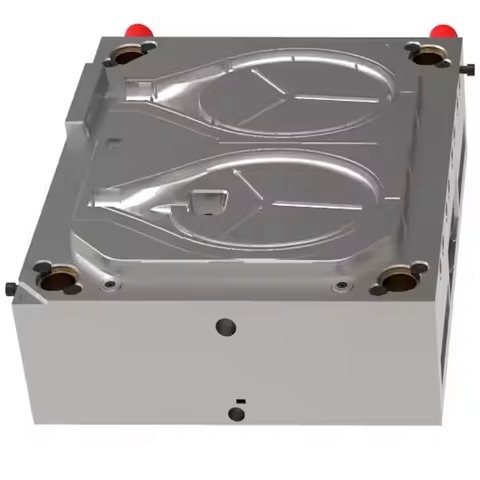

Quality Control of Electric Mosquito Swatter Molds
The quality of an electric mosquito swatter molds directly affects the quality and performance of the product. Therefore, strict quality control is essential during the mold manufacturing process. First, in the raw material procurement stage, the mold materials must undergo rigorous inspection to ensure they meet the required quality standards. For example, when purchasing mold steel, it is necessary to check its composition, hardness, toughness, and other indicators to ensure the mold’s strength and durability.
During the mold machining process, precision must be strictly controlled. High-precision measuring equipment, such as a coordinate measuring machine, is used to accurately measure the dimensions and shape of the mold to ensure that the machining accuracy meets the design requirements. For example, the size of the mesh holes in the mesh mold for an electric fly swatter must be controlled within a very small tolerance range to ensure the uniformity and consistency of the mesh holes. Additionally, the surface quality of the mold, such as surface roughness and finish, must be inspected to ensure that the mold can be easily demolded during the molding process and that the product’s appearance is of high quality.
During the trial molding stage, the trial-molded products must be comprehensively inspected and tested. By examining the dimensions, appearance, and performance of the trial-molded products, the quality and suitability of the mold can be assessed. If issues are found in the trial-molded products, the mold must be adjusted and improved in a timely manner until it can produce products that meet the quality requirements.
Conclusion
Electric mosquito swatter molds, as a core component of the production process, play a vital role in transforming design concepts into tangible products. They not only require precise design and manufacturing processes but also strict quality control. Through continuous technological innovation and process improvement, electric mosquito swatter molds will provide strong support for improving the quality and optimizing the functionality of electric fly swatters. In the future, as technology continues to advance and consumer needs evolve, electric mosquito swatter molds will continue to develop in the directions of intelligence, automation, personalization, and environmental protection, providing people with more convenient and comfortable mosquito control products.
In summary, electric mosquito swatter molds are an essential part of the production of electric fly swatters. They not only demonstrate the power of technology but also the excellence of craftsmanship. Through continuous efforts and innovation, electric fly swatter molds will lay a solid foundation for the continuous development of the electric fly swatter industry and bring more convenience and comfort to people’s lives.