
In outdoor adventures, emergency rescues, and similar scenarios, flashlights are not just lighting tools but critical safety devices. Key performance aspects like waterproofing, impact resistance, and ergonomic grip rely heavily on mold design.
Defying Extreme Environments: Core Principles of Flashlight Molds Design
Outdoor flashlights must withstand rain, sand, impacts, and more, all requiring precision mold engineering.
- Waterproof Sealing
- Dual O-Ring Grooves: Mold cavities for the head-body interface feature 1.2mm-deep, 0.8mm-wide annular grooves. High-precision inserts ensure groove flatness ≤0.01mm, enabling 25–30% silicone compression for IP68 waterproofing. Field tests on a best-selling tactical flashlight showed zero leaks after 2 hours at 10m depth.
- Sand-Resistant Threads: For desert use, molds add 0.3mm debris-collection grooves to focus-adjustment threads. This micro-structure prevents sand jamming while maintaining smooth rotation. Post 200-cycle sand tests, resistance increased only 8%, far better than standard designs (35%).
- Impact Resistance
- Tapered Wall Thickness: Mold cavities create barrel walls that taper from 2.5mm (grip zone) to 1.8mm (ends), passing 3m drop tests while reducing weight by 15% vs. uniform walls. One hiking flashlight using this design weighs just 120g, setting a lightweight benchmark.
- Stress Dispersion: Radial ribs (1.2mm height, R0.5mm root fillets) around buttons are wire-cut with ±0.02mm precision. Tests confirmed 200,000 presses without deformation.
Ergonomics: How Flashlight Molds Shape User Experience
Comfort and usability in harsh conditions demand meticulous flashlight Molds detailing.
- Anti-Slip Textures
- Hybrid Patterns: Diamond grids + horizontal stripes (0.3mm depth) are spark-eroded with 25A roughing and 3A finishing currents, creating 20° edge angles for grip without discomfort. Feedback on a firefighting model showed 40% better wet-glove traction.
- Tactile Button Feedback
- Micro-Step Design: A 0.15mm annular ridge in the button cavity creates a crisp activation threshold. Mirror-finish EDM (Ra≤0.1μm) ensures smooth travel, boosting blind-operation accuracy from 75% to 92%.
High – Quality Flashlight Molds Manufacturing
1. Material Selection
We are well aware of the importance of mold materials for mold life and product quality. Therefore, in material selection, we strictly control and only choose high – quality mold steels, such as NAK80, 718H, etc. These steels have good machinability, polishing performance, and wear resistance, which can ensure that the mold maintains stable dimensional accuracy and surface quality during long – term production, reduce mold wear, improve production efficiency, and save costs for you.
2. Design Innovation
Our design team closely follows market trends and customer needs, and constantly innovates design concepts. In the design of outdoor flashlight molds, we fully consider the product’s appearance, ergonomics, as well as performance requirements such as waterproof, dustproof, and shock – resistant. By optimizing the mold structure, reducing the number of mold parting surfaces and inserts, we improve the overall strength and stability of the flashlight molds, while reducing the flashlight molds manufacturing cost. In addition, we also use advanced CAD/CAM/CAE technology to simulate, analyze, and optimize the mold design, identify and solve potential problems in advance, and ensure the first – trial success rate of the mold.
3. Precision Manufacturing Process
In the flashlight molds manufacturing process, we adopt a series of precision manufacturing processes, such as high – speed milling, EDM, wire – cutting, etc. These processes can achieve high – precision processing of the flashlight molds, ensuring that the fit accuracy between various mold components reaches the micron level. At the same time, we also pay attention to the surface treatment of the mold. Through processes such as polishing, nitriding, and hard chromium plating, we improve the surface hardness and smoothness of the mold, making the outdoor flashlights produced by the mold have a smooth surface and fine texture, enhancing the overall quality and market competitiveness of the product.
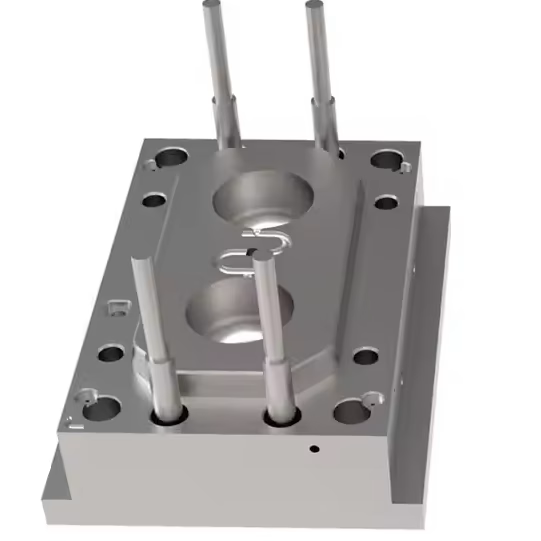

Customized Services
We understand that different customers have different needs and expectations for outdoor flashlight molds. Therefore, we provide a full range of customized services, from mold design and R & D to production and manufacturing, and then to after – sales service. Every link is personalized according to the specific requirements of customers.
In the mold design stage, our design team will communicate with you in depth to understand your product positioning, target market, and design ideas, and tailor the most suitable mold design plan for you. During the production and manufacturing process, we strictly produce according to your requirements to ensure the quality and delivery time of the mold. At the same time, we also provide a complete after – sales service. For any problems that occur during the use of the mold, we will respond in a timely manner and provide solutions to give you peace of mind.
What is the key technology of IP68 waterproof mold?
The key technologies for IP68 waterproof molds involve several aspects, including design, material selection, process control, and quality inspection. In the design and planning stage, it is necessary to ensure that the mold structure can completely encapsulate the parts that need to be waterproof, leaving no gaps. The mold should be designed to be suitable for waterproof materials and should have vent holes and channels to ensure precise coverage of the parts. In terms of material selection, materials with good fluidity and sealing properties, such as liquid silicone, should be chosen.
Additionally, metal or plastic materials that are corrosion-resistant and high-temperature resistant should be used to ensure adhesion with the waterproof material. For process control, surface pre-treatment of the parts is essential, including cleaning off oil and impurities to increase the bonding area. The waterproof material is then injected into the mold using an injection machine, ensuring uniform coverage of the parts and controlling the curing temperature and time.
During the quality inspection stage, high-precision measurement tools are used to check if the product dimensions meet the design requirements, and IP68 waterproof testing is conducted to ensure that the product can withstand being submerged in water at a depth of 1.5 meters for 30 minutes without leaking. These technical points combined ensure the high quality and reliability of IP68 waterproof molds.
Conclusion
Outdoor flashlight molds translate adventurers’ needs into manufacturable solutions. From waterproof seals tested in monsoons to impact-resistant structures surviving cliff falls, from sub-zero material resilience to ergonomic grips for marathon holds—every detail reflects deep understanding of real-world use. Exceptional mold designers act like wilderness guides: technically prepared for extremes yet pragmatic in balancing cost and performance. When users grip these flashlights, they feel not just reliability but the molded embodiment of outdoor dedication—a testament to manufacturing’s quiet poetry.
>>You may also like
Standards & References
The following industry standards are referenced in this article: