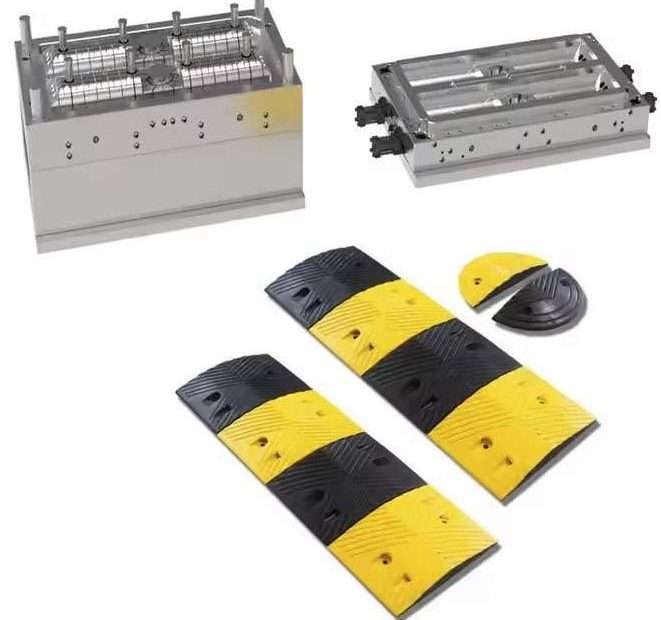
As an indispensable part of modern transportation facilities, speed bumps are widely used in highways, parking lots, residential areas, and other places. Their main function is to force vehicles to slow down and ensure traffic safety as well as the safety of pedestrians. Speed bump molds are the key tools for producing speed bumps, and their design and quality directly affect the performance and usage effects of speed bumps.
Key Points of Speed Bump Molds Design
- Material Selection Speed bump molds are typically made of high-strength steel or aluminum alloy. These materials not only have good wear resistance and corrosion resistance but can also maintain stable dimensions and shapes over long periods of use.
- Mold Structure The structure of a speed bump mold includes the mold cavity, mold core, cooling system, etc. The mold cavity forms the shape of the speed bump, while the mold core ensures the internal structure of the speed bump. The cooling system is used to control the temperature of the mold, ensuring product quality.
- Design Parameters When designing speed bump molds, several parameters need to be considered, such as the size, tolerance, and surface roughness of the mold. Reasonable design parameters can effectively improve the manufacturing efficiency and product quality of speed bumps.
Production Process of Speed Bump Molds
- Mold Manufacturing The manufacturing process of speed bump molds includes material cutting, machining, and heat treatment. First, the material is cut according to the design drawings, then machined into the required shape and size. Finally, heat treatment is used to improve the hardness and wear resistance of the mold.
- Mold Assembly After the mold is manufactured, assembly is required. During the assembly process, the fitting precision of each component must be ensured to avoid issues such as air or water leakage. Additionally, trial molding is necessary to check if the mold can work normally.
- Mold Maintenance During use, speed bump molds require regular maintenance to ensure their normal operation. Maintenance includes cleaning, lubrication, and tightening operations, which can effectively extend the mold’s service life and improve production efficiency.

Application of Speed Bumps
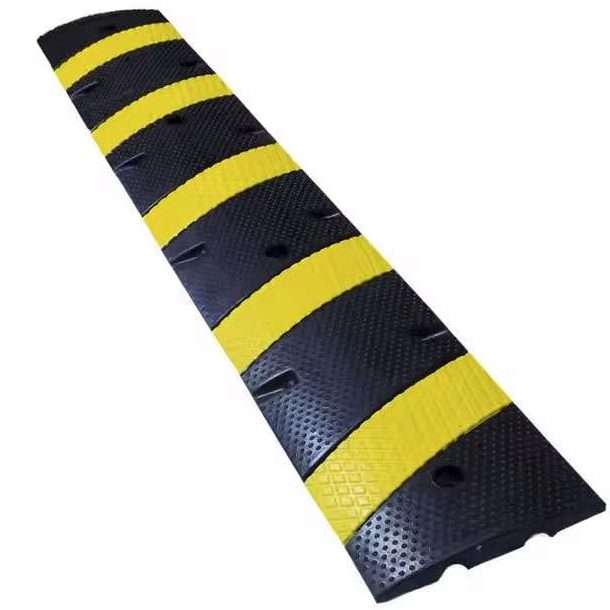
Speed bumps are widely used in urban roads, highways, parking lots, and other areas to control vehicle speed and reduce traffic accidents. Here are some main application scenarios for speed bumps:
- Urban Roads In urban roads, especially in areas with high pedestrian traffic such as schools and hospitals, speed bumps can effectively reduce vehicle speed and ensure pedestrian safety.
- Highways At locations such as toll stations and service areas on highways, speed bumps can remind drivers to slow down and prevent accidents.
- Parking Lots Speed bumps at the entrances, exits, and internal passages of parking lots can regulate vehicle movement and enhance parking lot safety.
What is the role of speed bumps in traffic safety?
The role of speed bumps in traffic safety mainly has the following aspects:
- Compel vehicles to slow down: When a vehicle passes through a speed bump at a high speed, it will produce a strong vibration. This vibration will be transmitted from the tire to the driver through the vehicle body and seat, bringing about a strong physiological and psychological stimulation. Physiologically, the driver will feel uncomfortable; psychologically, it will deepen the doubts about safety and reduce the sense of security for the road environment, thereby prompting the driver to take the initiative to reduce the speed and avoid speeding.
- Improve drivers’ attention: The setting of speed bumps can guide drivers to pay attention to road signs and traffic signals, remind them to slow down, enhance their sensitivity to road conditions, and then improve driving safety. In some special sections, such as schools, hospitals, residential areas, etc., where there is a large flow of people, the existence of speed bumps can make drivers drive more carefully and pay attention to observing the surrounding environment and pedestrian movements.
- Reduce traffic accidents: By forcing vehicles to slow down, speed bumps can effectively reduce the driving speed of vehicles, so that vehicles have more reaction time and a shorter braking distance in the event of sudden situations, thereby reducing the probability of traffic accidents. Especially in some road sections where traffic accidents are likely to occur, such as intersections, curves, downhill roads, etc., the role of speed bumps is more obvious, which can avoid vehicles from losing control or being unable to avoid other road users in time due to high-speed driving.
- Protect pedestrian safety: In areas with frequent pedestrian activities, such as sidewalks and zebra crossings, setting speed bumps can make motor vehicles slow down, give pedestrians more time to cross the street, reduce the conflict between pedestrians and vehicles, and effectively protect the lives and safety of pedestrians.
Design Parameters of Speed Bump Molds
Dimensions and Shape Ensure that the dimensions and shape of the mold match the required speed bump, including width, height, thickness, and profile.
Tolerance Tolerance is the allowable error range of the mold dimensions. Smaller tolerances can improve the precision and consistency of the speed bumps.
Surface Roughness Surface roughness affects the appearance and performance of the speed bump. Usually, a smooth mold surface is required to ensure that the speed bump surface is free of defects.
Material Strength The strength of the mold material must withstand the pressure and wear during the production process. High-strength steel and aluminum alloy are common choices.
Cooling System The cooling system is designed to control the temperature of the mold, ensuring that the mold does not deform during production and that the products cool evenly.
Mold Cavity and Mold Core The design of the mold cavity and mold core needs to be precise to form the shape and internal structure of the speed bump.
Venting System The venting system is designed to remove air from the mold, preventing bubbles or defects during molding.
Mold Life The design life of the mold is an important parameter considering its usage frequency and maintenance cost. Usually, the mold is required to have a long service life to improve economic efficiency.
Installation Precision The installation precision of the mold affects the molding effect and production efficiency of the speed bump. High precision installation can reduce adjustment time and increase production speed.
Mold Weight The weight of the mold affects its handling and installation convenience. Reasonable design of the mold structure to reduce weight can improve operational efficiency.