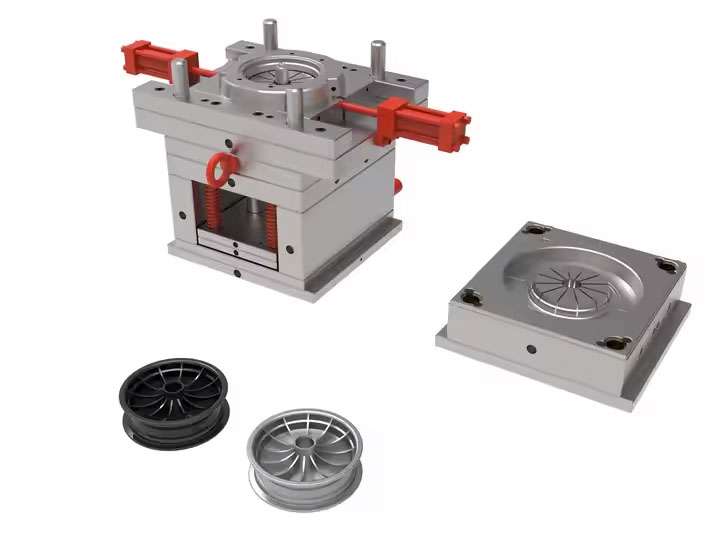
In the modern automotive manufacturing process, wheel hubs are one of the crucial components. They not only bear the weight of the vehicle but also directly affect the driving performance and safety of the car. Therefore, producing high-quality, precision wheel hubs is essential for automotive manufacturers. In this process, wheel hub molds play an indispensable role.
The Importance of Wheel Hub Molds
Ensuring Product Quality: High-quality wheel hub molds ensure that the produced wheel hubs have consistent dimensions and shapes, meeting strict quality standards.
Improving Production Efficiency: Using advanced wheel hub molds can significantly improve production efficiency, reduce waste rates, and lower production costs.
Enhancing Product Competitiveness: By continuously optimizing mold designs, more market-competitive wheel hub products can be produced.
Promoting Technological Innovation: With the development of materials science and processing technology, the design and manufacture of wheel hub molds are constantly innovating, driving technological advancements across the industry.
Design Features of Wheel Hub Molds
High Precision: To ensure the dimensional accuracy and surface smoothness of wheel hubs, molds are usually manufactured using high-precision machining technologies. This includes fine machining with Computer Numerical Control (CNC) machines and advanced processes like Electrical Discharge Machining (EDM) to achieve micron-level precision requirements.
Durability: Wheel hub molds need to withstand high-temperature and high-pressure environments, hence they must be made from high-strength materials to ensure long-term usability. Commonly used materials include high-quality steels and hard alloys. Additionally, surface coating technologies such as nitriding or chromium plating are widely applied to enhance wear resistance.
Easy Maintenance: Good mold design should also consider the convenience of daily maintenance, allowing for quick replacement of worn parts or necessary adjustments. For example, modular design and standardized interfaces make repairs quicker and more convenient.
Multifunctionality: Modern wheel hub molds often have multiple functions, such as automatic venting and cooling, to meet different production process requirements. These functions help improve production efficiency and product quality.
Customizability: To meet the specific needs of different customers, wheel hub molds usually have a degree of customization. This means that mold parameters can be adjusted according to order requirements, achieving personalized product production.
Manufacturing Process of Wheel Hub Molds
- Design and Development: First, detailed design and development work is carried out based on customer requirements and industry standards, including CAD modeling and simulation analysis. The goal of this stage is to create a design that meets technical specifications and is economically efficient.
- Material Selection: Choose suitable steel or other alloy materials as the mold base material. These materials need to possess good mechanical properties and thermal stability. Material selection directly affects the lifespan of the mold and the quality of the final product.
- Rough Machining: Use CNC machines to perform initial cutting and shaping of the raw materials. This step mainly involves removing excess material to lay the foundation for subsequent fine machining.
- Heat Treatment: Improve the mechanical properties of materials through processes such as quenching and tempering to increase hardness and wear resistance. The heat treatment process is crucial for enhancing the overall performance of the mold.
- Fine Machining: Use high-precision equipment to complete detailed machining of the mold, such as polishing and grinding. The goal of this stage is to ensure the mold surface is smooth and flawless, and the dimensions are precise.
- Assembly and Debugging: Assemble all components together and conduct comprehensive testing and adjustments to ensure the mold works properly. This includes checking the fit between various parts and the overall structural stability.
- Quality Control: Conduct comprehensive quality inspections, including dimensional measurements and surface roughness tests, to ensure each mold meets the highest standards. Only products that pass strict inspections are sent to customers.
- Packaging and Shipping: Qualified molds are properly packaged and arranged for shipment to ensure they are not damaged during transportation. Detailed installation guides and maintenance manuals are also provided for customer reference.
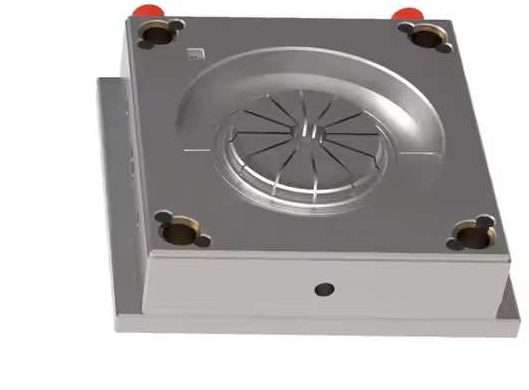
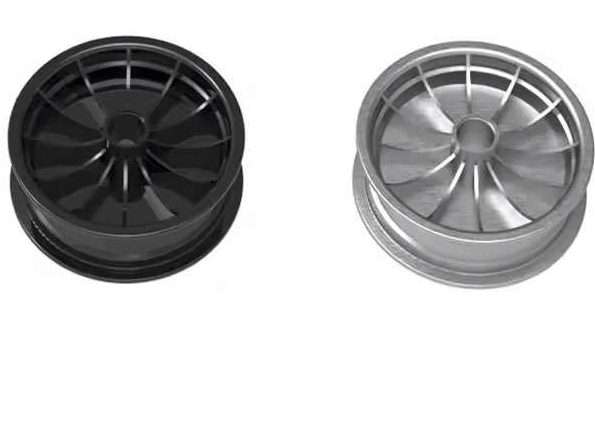
How to ensure the accuracy of wheel hub mold?
Ensuring the precision of wheel hub molds is crucial for producing high-quality wheel hubs. Here are some key measures:
- Choose High-Quality Materials: Use premium alloy tool steel with high mechanical properties and low thermal creep to maintain stability in high-temperature and high-pressure environments.
- Use High-Precision Machining Equipment: Employ high-precision equipment such as CNC machines and machining centers for mold processing to ensure machining accuracy and surface quality.
- Strictly Control Machining Processes: Develop detailed machining processes and parameters, including machining speed, cutting depth, and tool selection, to ensure process stability and consistency.
- Precise Measurement and Calibration: Use high-precision measuring tools such as coordinate measuring machines and high-accuracy calipers to accurately measure and calibrate the mold dimensions, ensuring they meet design requirements.
- Optimize Mold Design: Consider the feasibility of grinding, lapping, and polishing operations on the cavity parts during the design phase to improve the mold’s dimensional accuracy, shape accuracy, positional accuracy, and surface precision.
- Install Positioning Devices: To ensure the dimensional accuracy of the moving and fixed cavity on the parting surface, install additional positioning devices such as taper pins or wedge blocks, besides the commonly used guide posts and bushings, to ensure precise and secure positioning.
- Heat Treatment Process: Apply appropriate heat treatments to the mold materials, such as quenching and tempering, to improve material mechanical properties, enhance hardness, and wear resistance.
- Regular Maintenance and Upkeep: Perform regular maintenance and upkeep on the molds, promptly replace heavily worn parts, and maintain consistent fitting accuracy and stable performance.
- Strict Quality Control: Establish a rigorous quality control system to monitor and inspect each step of the mold processing, ensuring every step meets quality standards and requirements.
How to test and debug wheel hub molds?
Conducting trial molding and debugging of wheel hub molds is a crucial step to ensure mold quality and production efficiency. First, inspect and clean the mold to ensure it is free from damage or contaminants. Then, correctly install the mold onto the injection molding machine or other forming equipment and perform an unloaded trial molding to observe the mold’s operation and adjust injection parameters such as injection speed, injection pressure, and holding time. Load materials for actual production trial molding, conduct comprehensive product inspections, record, and analyze any issues encountered. Based on the trial results, adjust the mold and optimize injection parameters until stable and efficient production of high-quality products that meet requirements is achieved.
Finally, perform a comprehensive performance test on the final mold, recording all key parameters and test results to provide a reference for subsequent production and maintenance. Throughout this process, strictly adhere to safety procedures, establish a quality control system, and regularly maintain and service the mold to extend its lifespan. By following these steps, you can effectively ensure the precision and quality of wheel hub molds and improve production efficiency.