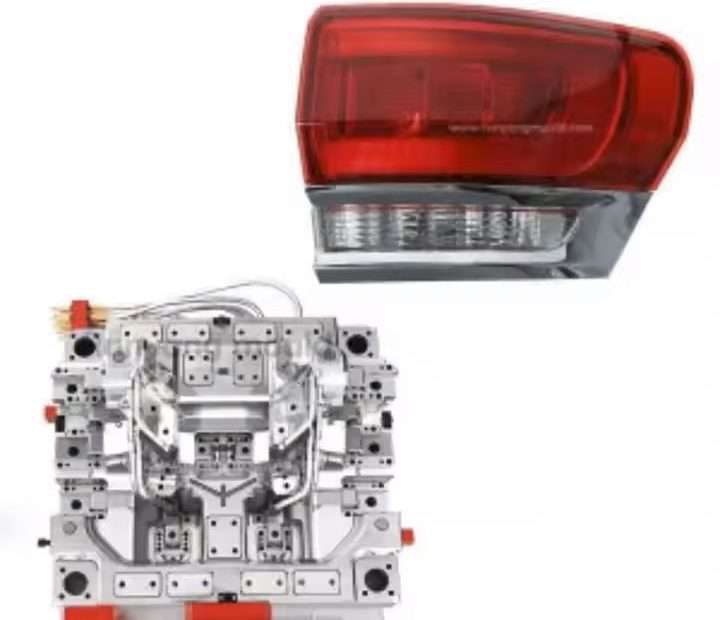
Importance of Automotive Tail Light Molds
Automotive tail lights are a crucial component of a vehicle’s safety system. They help other drivers identify the vehicle at night or under low visibility conditions and signal braking, turning, and other actions, ensuring road safety. The shape and function of tail lights significantly impact the overall design and user experience of a vehicle, and automotive tail light Molds molds are the key tools for manufacturing high-quality automotive tail lights.
Automotive Tail light molds are used to create plastic parts for tail lights. They are usually made of high-strength steel, featuring complex geometries and fine surface textures. The design and manufacturing of the molds determine the appearance, functionality, and durability of the automotive tail lights. Therefore, molds play a critical role in the entire production process of automotive tail lights.
Design of aUTOMOTIVE Tail Light Molds
The design of automotive tail light molds is a highly specialized and technically demanding process, typically accomplished using computer-aided design (CAD) software. Designers must create aotomotive tail light shapes that meet both aesthetic and functional requirements based on the car manufacturer’s specifications. During the design process, multiple factors need to be considered, including material selection, structural rationality, and manufacturability.
- Material Selection: Automotive tail lights typically use high-temperature-resistant and aging-resistant plastic materials such as polycarbonate (PC) or polymethyl methacrylate (PMMA). These materials have good light transmittance and mechanical strength, making them suitable for manufacturing complex shapes and detailed tail light components.
- Structural Design: The structural design of automotive tail light molds needs to consider multiple factors, such as draft angles, cooling systems, and gating systems. A reasonable structural design can extend the mold’s service life and reduce the defect rate during production.
- Manufacturing Process: The primary manufacturing processes for tail light molds include CNC machining, electrical discharge machining (EDM), and polishing. CNC machining achieves high-precision mold manufacturing, while EDM can create complex cavities and fine structures. Polishing ensures the smoothness of the mold surface and the transparency of the tail lights.
Manufacturing Process of Tail Light Molds
The manufacturing process of tail light molds mainly includes the following steps:
- Mold Design: Designers use CAD software to design the mold’s 3D model based on customer requirements and design standards. After the design is complete, simulation analysis and optimization are conducted to ensure the mold’s structure is reasonable and meets production needs.
- Material Preparation: Suitable mold materials are selected according to design requirements and pre-treated, such as cutting and heat treatment. Common mold materials include tool steel and stainless steel.
- Rough Machining: CNC machines are used for rough machining, removing excess material and forming the basic shape of the mold. During rough machining, machining parameters need to be controlled to minimize material deformation and machining errors.
- Precision Machining: High-precision CNC machines are used for precision machining, completing the mold’s detailed parts. High-precision tools and fixtures are required during precision machining to ensure machining accuracy and surface quality.
- Heat Treatment: To enhance the mold’s hardness and wear resistance, heat treatment is necessary. Common heat treatment methods include quenching and tempering. After heat treatment, secondary precision machining is required to eliminate deformation caused by heat treatment.
- Assembly and Debugging: The machined mold parts are assembled and debugged. During debugging, multiple trials are conducted to check if the mold’s functions are normal and if it can stably produce tail lights that meet the requirements.
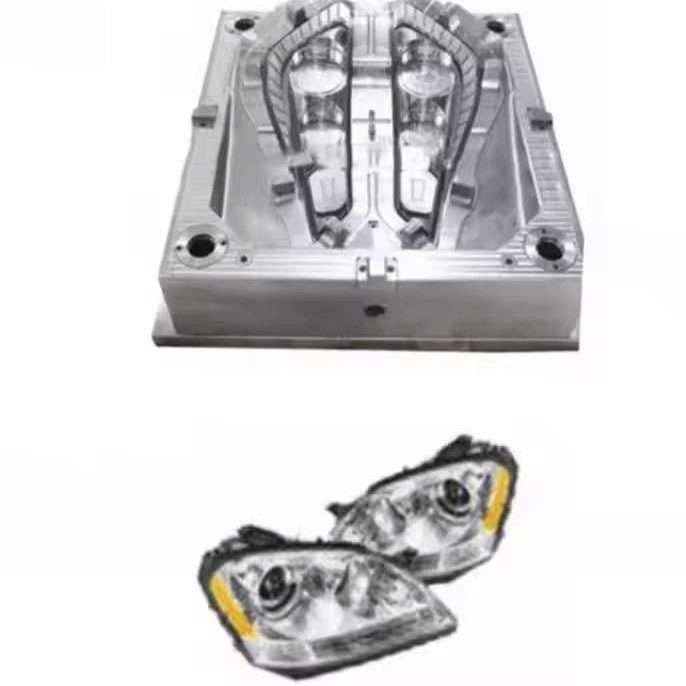

What methods are included in the heat treatment of taillight molds?
- Quenching: This process involves heating the mold to a high temperature and then rapidly cooling it (usually in water, oil, or air) to increase the hardness and strength of the steel. Quenched molds have higher wear resistance and fatigue resistance.
- Tempering: After quenching, molds typically undergo tempering. Tempering involves heating the quenched mold at a lower temperature and then cooling it slowly. The purpose of tempering is to reduce the internal stress generated during quenching, increasing the toughness and stability of the mold.
- Annealing: Annealing involves heating the mold to a certain temperature and then slowly cooling it. Annealing can eliminate internal stresses, soften the material, and improve machinability. Annealed molds are easier to process in subsequent machining.
- Nitriding: Nitriding treatment involves forming a hard nitride layer on the surface of the mold to increase surface hardness and wear resistance. Nitriding is performed at a relatively low temperature, which prevents mold deformation and is suitable for high-precision molds.
- Carburizing: Carburizing involves heating the mold in a carbon-containing medium, allowing carbon atoms to penetrate the mold surface and form a high-carbon layer. Carburizing significantly increases surface hardness and wear resistance while maintaining the mold’s core toughness.
What is the Role of the Cooling System in Tail Light Molds?
The cooling system in tail light molds plays a crucial role during the mold’s operation. Here are its primary functions:
Temperature Control: The cooling system helps control the temperature of the mold, preventing it from overheating, deforming, or getting damaged. Proper temperature control helps maintain the structural stability and dimensional accuracy of the mold.
Increased Production Efficiency: By cooling the mold rapidly, the cooling system shortens the molding cycle for each product, thereby increasing production efficiency. Shorter molding cycles mean that more tail light parts can be produced per hour.
Improved Product Quality: The cooling system helps to distribute the temperature evenly within the mold, preventing internal stresses and deformations in the plastic parts caused by uneven cooling. Uniform cooling improves the quality and appearance of the tail light parts.
Extended Mold Life: Proper cooling can reduce thermal fatigue and wear on the mold, thereby extending its service life. Prolonged exposure to high temperatures accelerates the aging of mold materials, reducing their lifespan.
Reduced Defect Rate: An effective cooling system can reduce the defect rate caused by improper temperature control during production, ensuring stability in the production process and consistency in product quality.
The cooling system of a tail light mold typically consists of cooling channels, coolant, and control devices. These components work together to ensure that the mold maintains an appropriate temperature during operation.