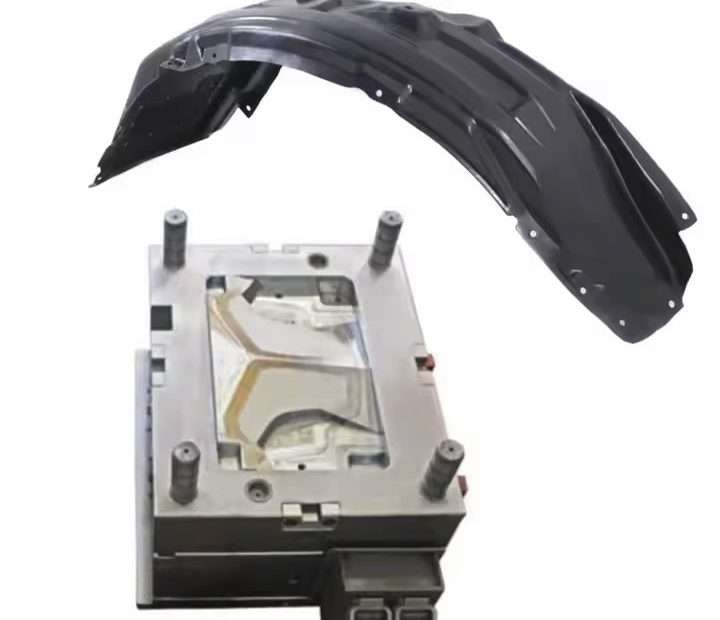
With the continuous development of the automobile industry, the manufacturing technology of auto parts is also improving. As an important part of automobiles, the production process of mudguards cannot do without high-quality automobile mudguard molds.
Manufacturing Process of Automobile Mudguard Molds
Material Selection:The main materials used for making automobile mudguard molds include steel and aluminum. Steel is commonly used for mold making due to its high strength and wear resistance. Aluminum is also used in certain special cases because of its light weight and ease of processing. High-quality alloy steel is usually chosen for its excellent comprehensive performance, high hardness, good toughness, and wear resistance. High-strength aluminum alloys are used for their light weight and good processing performance, which can effectively reduce the weight of the mold.
Processing Technology:The mold processing technology mainly includes forging, casting, machining, and heat treatment. First, the preliminary shape is formed through forging or casting, then precise machining is performed, and finally heat treatment is carried out to improve the hardness and durability of the mold. Forging technology can enhance the density and strength of the material, while casting technology is suitable for making complex-shaped molds. Machining includes turning, milling, drilling, and grinding, which ensure the mold reaches precise dimensions and good surface quality. Heat treatment can change the internal structure of the material, further enhancing the mold’s performance.
Precision Control:The precision of the mold directly affects the quality of the mudguards. To ensure the precision of the automobile mudguard molds, CNC machines are commonly used for processing, and high-precision measuring tools are used for monitoring and correction during processing. The application of CNC machines greatly improves processing precision and production efficiency, reducing human errors. Additionally, multiple trials and adjustments are necessary during the mold-making process to ensure that the final produced mudguards meet the design requirements and quality standards.
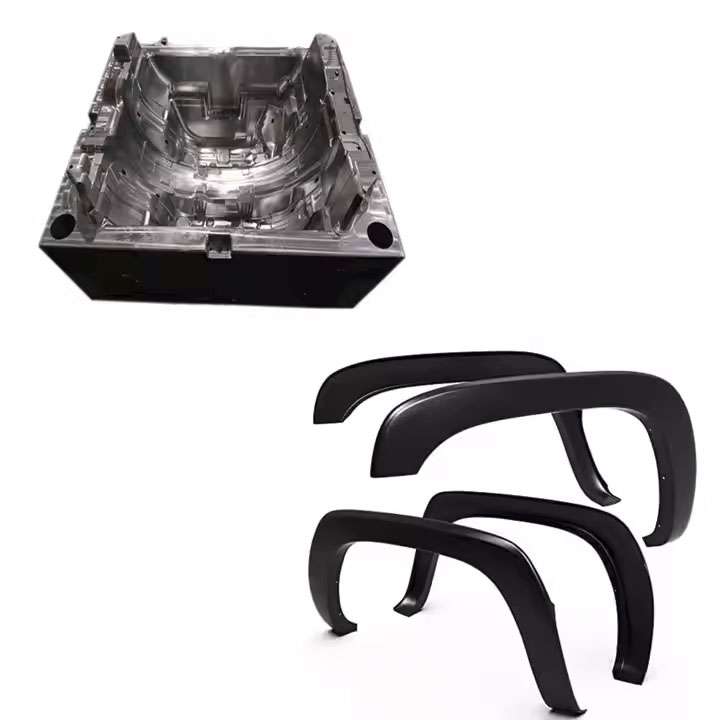
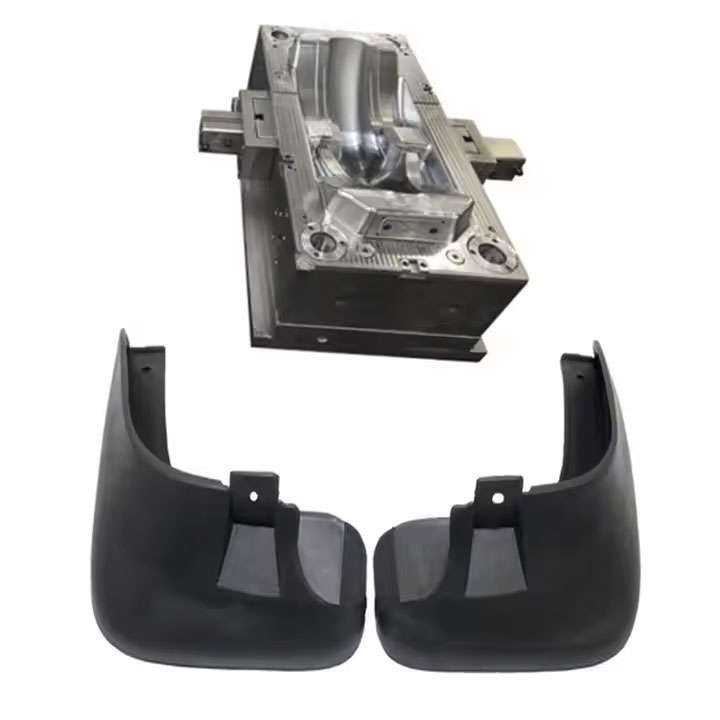
Application of Automobile Mudguard Molds
- Function of Mudguards:Mudguards are mainly used to prevent mud and stones from splashing, protecting the lower part and sides of the vehicle, extending the paint’s lifespan, and improving driving safety. The design of mudguards not only considers protection but also aesthetics and aerodynamics. Proper design can reduce wind resistance and improve the vehicle’s fuel economy.
- Types of Mudguards:According to different vehicle models and usage environments, mudguards can be divided into hard and soft types. Hard mudguards are usually made of plastic or metal and have high durability; soft mudguards are mostly made of rubber and have good flexibility and protection. Hard mudguards are suitable for ordinary vehicles and harsh road conditions, while soft mudguards are more suitable for urban roads and daily use. Some vehicles also use adjustable mudguards, which can be adjusted according to different usage situations to provide better protection.
- Maintenance of Automobile Mudguard Molds:To ensure the long-term service life of automobile mudguard molds, regular maintenance is necessary. Maintenance work includes cleaning the mold surface, checking the wear condition of mold parts, and applying anti-rust oil to prevent rust. Cleaning should be done after each use to avoid the accumulation of mud and debris on the mold surface. Regular inspection and replacement of severely worn parts can extend the mold’s service life and improve production efficiency.
Automobile Mudguard Molds Design and Development
- Design Principles:When designing automobile mudguard molds, the following basic principles must be followed: reasonable structure, material selection, and manufacturing precision. The automobile mudguard molds structure must be reasonable to ensure that all parts fit tightly and prevent deformation or breakage during use. Selecting materials with high wear resistance and strength improves mold life and production efficiency. Precise manufacturing and strict tolerance control ensure the mold’s precision, thus guaranteeing the quality of the mudguard products.
- CAD/CAM Technology Application:Modern mold design widely uses CAD (Computer-Aided Design) and CAM (Computer-Aided Manufacturing) technologies. These technologies not only improve design efficiency but also allow for simulation to detect and solve design problems in advance, avoiding unnecessary waste in subsequent production. CAD technology can quickly generate design drawings and 3D models, facilitating modification and optimization; CAM technology can directly convert design data into machining programs, improving machining efficiency and precision.
- Mold Development Process:Mold development generally includes the steps of requirement analysis, conceptual design, detailed design, manufacturing and testing, and improvement and perfection. First, through requirement analysis, understand the design requirements and usage environment of the mudguard, and determine the basic design parameters of the mold. Then carry out conceptual design, initially designing according to requirements, and using CAD software to draw sketches and models. In the detailed design stage, refine the preliminary design, determine the specific dimensions and tolerances of each part, and conduct strength and rigidity calculations. The manufacturing and testing stage involves processing and manufacturing the mold based on the detailed design, followed by trial and functional testing to ensure the mold’s performance meets the requirements. Finally, make necessary improvements and optimizations based on the test results, and deliver the final mold.
How to ensure the consistency between Automobile Mudguard Molds and product design?
To ensure consistency between the mold and product design, the following aspects should be considered:
- Clarify Design Requirements: Before Automobile Mudguard Molds design and manufacturing, it is essential to fully understand the product’s design requirements, including dimensional tolerances, shape requirements, performance standards, etc. These requirements should be detailed in the product design documents, serving as the basis for mold design and manufacturing.
- Use High-Precision Design Tools: Adopting advanced CAD (Computer-Aided Design) software for mold design can significantly improve accuracy and efficiency. CAD software can precisely simulate the geometric shape and dimensions of the product, providing accurate data support for mold design.
- Select Quality Materials and Processes: The choice of mold materials is crucial for ensuring product size consistency and shape accuracy. Materials with sufficient strength and rigidity should be selected to ensure that the mold does not deform or generate excessive stress during the injection process. Additionally, using precise processing techniques such as CNC machining and precision grinding can enhance the machining accuracy and surface quality of the mold.
- Strict Quality Control: A rigorous quality control system should be established during the mold manufacturing process, monitoring and inspecting each stage. This includes raw material inspection, production process monitoring, and finished product sampling inspection to ensure the mold’s quality and performance meet design requirements.
- Regular Maintenance and Calibration: Molds may experience wear or deformation during use, affecting their precision and consistency. Therefore, regular maintenance and calibration of the mold are necessary to keep it in good working condition.
- Enhance Communication and Collaboration: Good communication and collaboration among mold designers, product engineers, and production staff are essential to address issues encountered during mold design and manufacturing. By regularly holding project meetings and technical exchanges, adjustments to the design scheme and optimization of production processes can be made promptly, improving the consistency between the mold and product design.
- Utilize Advanced Technologies: With the continuous development of technology, some advanced technologies such as 3D printing and intelligent manufacturing can also be applied in the field of mold design and manufacturing. These technologies can improve mold design precision and manufacturing efficiency, further reducing production costs and enhancing product quality.
>>You may also like
Standards & References
The following industry standards are referenced in this article: